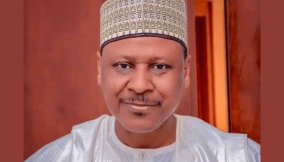
Nigeria’s fiscal reforms have delivered significant improvements in government revenue generation, foreign reserves, banking sector capital and non-oil earnings, according to Bamidele Atoyebi, convener of the Bola Ahmed Tinubu Ideological Group (BAT-IG).
Atoyebi said reforms introduced by President Bola Tinubu’s administration have strengthened revenue collection systems, reduced dependence on crude oil earnings and improved the country’s economic outlook.
He said the reforms reflected a similar approach to the economic transformation strategy that shaped Lagos State during Tinubu’s tenure as governor.
“True nation-building often requires difficult decisions and structural adjustments before the benefits become visible. The results emerging across revenue generation, foreign reserves and investment flows suggest that those reforms are beginning to yield measurable outcomes,” Atoyebi said.
Tax Revenue Growth
The Federal Inland Revenue Service (FIRS) recorded strong growth in tax collections, with revenue rising from N4.95 trillion in 2020 to N6.41 trillion in 2021, before reaching N10.1 trillion in 2022.
The figure increased further to N12.37 trillion in 2023 and N21.7 trillion in 2024, exceeding the government’s target by 11 per cent.
Between October 2023 and September 2025, total tax collections reached N47.39 trillion, with non-oil taxes contributing more than 76 per cent of the revenue.
Atoyebi said the growing contribution of non-oil sources showed that Nigeria’s revenue base was becoming more diversified.
“The shift toward non-oil revenue is one of the most important developments in Nigeria’s fiscal landscape. It demonstrates that government revenue is increasingly being supported by broader economic activity rather than dependence on crude oil earnings alone,” he noted.
Oil Sector Remittances Rise
The petroleum sector also recorded changes following the implementation of the Petroleum Industry Act and the removal of fuel subsidy in 2023.
The Nigerian National Petroleum Company Limited (NNPC) resumed stronger remittances to the Federation Account after years of deductions linked to subsidy costs and fuel expenses.
Oil-sector contributions increased further in 2025 as crude production rose to about 1.68 million barrels per day, with remittances exceeding N10.07 trillion between January and August and crossing N12 trillion within ten months.
The implementation of Executive Order 9 in February 2026, which directed royalties, taxes and Production Sharing Contract profits to be paid directly into the Federation Account, further improved government receipts.
Following the policy change, monthly receipts rose by 60 per cent from N1.8 trillion in February to N2.88 trillion in March 2026.
Customs Revenue Expands
The Nigeria Customs Service also recorded significant revenue growth during the reform period.
Collections increased from N1.56 trillion in 2020 to N2.24 trillion in 2021 and N2.69 trillion in 2022.
Revenue rose to N3.2 trillion in 2023 and reached N7.28 trillion by late 2025, bringing total collections between 2020 and 2025 above N26 trillion.
More than N17 trillion was remitted to the Federation Account during the period.
The growth was partly attributed to changes introduced under the Nigeria Customs Service Act 2023, which replaced the previous seven per cent cost-of-collection deduction structure with a new framework.
Mining Sector Attracts Investment
Nigeria’s solid minerals sector also recorded increased activity following reforms by the Ministry of Solid Minerals Development and the Solid Minerals Development Fund.
Through the EMERGE programme, government focused on mineral exploration, critical minerals development, research and local processing.
Mining revenue increased from N16 billion before the reforms to N38 billion in 2024 and surpassed N70 billion by late 2025.
The reforms also led to the revocation of more than 3,000 inactive mining licences, attracted about $2.2 billion in new investments and generated additional investment commitments worth $1.3 billion.
Foreign Reserves Strengthen
Nigeria’s foreign reserves improved after years of pressure, rising from $34.2 billion in 2023 to $40.8 billion by the end of 2024 and $45.5 billion in late 2025.
The reserves reached a 13-year high of $50.45 billion in February 2026 before settling at about $49.49 billion in May.
Net foreign exchange reserves stood at $34.8 billion.
According to Atoyebi, the improvement reflected stronger investor confidence and increased capital inflows.
“Rising reserves strengthen the country’s ability to withstand external shocks, support exchange-rate stability and enhance investor confidence in the economy,” he said.
Banking Sector Recapitalisation
The Central Bank of Nigeria’s 24-month banking recapitalisation programme also concluded successfully, with all 33 licensed banks meeting the new minimum capital requirements.
The exercise attracted N4.65 trillion in fresh capital, equivalent to about $3.36 billion.
Domestic investors accounted for 72.55 per cent of the funds raised, while foreign investors contributed 27.45 per cent.
Under the new capital framework, banks with international licences are required to maintain a minimum capital base of N250 billion, national banks N125 billion and regional banks N25 billion.
Atoyebi said the stronger banking sector would provide greater capacity for financing investment and economic expansion.
“The successful completion of recapitalisation by all institutions demonstrates resilience within the financial system and positions banks to support larger investments across the economy,” he said.
He added that the combination of stronger tax revenues, improved oil remittances, rising mining receipts, higher reserves and a better-capitalised banking sector points to a more diversified and resilient Nigerian economy.

Join BusinessDay whatsapp Channel, to stay up to date
Open In Whatsapp