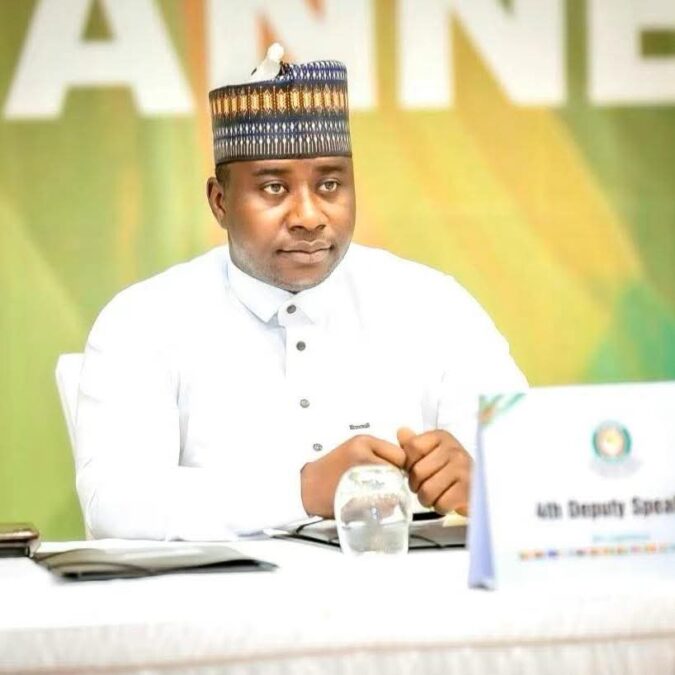
Billay Tunkara, Fourth Deputy Speaker of the ECOWAS Parliament, has urged West African countries to strengthen regional cooperation and harmonise energy policies to accelerate rural electrification, insisting that access to electricity should be treated as a fundamental right rather than a privilege.
Speaking on the sidelines of the ongoing ECOWAS Parliament Delocalised Joint Committee Meeting in Dakar, Tunkara said the region must intensify efforts to ensure that every community has access to reliable electricity by 2030, describing energy access as critical to economic development, poverty reduction and social inclusion.
The meeting, which brings together lawmakers from the committees on energy and mines, infrastructure, agriculture, environment and natural resources, is focused on the theme: “Harnessing Renewable Energy for Rural Electrification and Empowerment of Rural Economies in the ECOWAS Region: The Role of the ECOWAS Parliament.”
According to Tunkara, the ECOWAS Parliament is committed to supporting initiatives that will expand electricity access across the sub-region, particularly in underserved rural communities where millions of people remain disconnected from national grids.
“Our aim and objective is that by 2030, West Africa should have 100 per cent coverage in terms of access to electricity.
“We want member states to renew their commitment, especially towards rural communities, because these areas require greater attention”, he said.
He stressed that electricity remains a powerful driver of economic growth, entrepreneurship and job creation, particularly for young people and women engaged in agricultural activities.
Tunkara argued that reliable power supply could significantly reduce post-harvest losses that continue to undermine agricultural productivity across the region.
He noted that many rural women spend months cultivating vegetables and fruits only to lose a substantial portion of their harvest due to inadequate storage and preservation facilities.
“We see electricity not as a privilege, but as a right. Every child, whether living far or near, should have access to electricity,” he said.
According to him, access to electricity-powered refrigeration facilities would help preserve agricultural produce, improve food security and ensure that farmers receive better returns on their investments.
“If there are refrigeration facilities powered by electricity, the pains and hardship of labour can be preserved through better storage, ensuring that the efforts of rural women are not wasted,” he added.
The Gambian lawmaker identified the West African Power Pool (WAPP) as one of the most important instruments for achieving the region’s energy integration goals, describing it as a practical example of how regional collaboration can improve energy access and security.
He cited the Sambangalou Dam project in Guinea, which supplies electricity to Senegal and The Gambia, as evidence of the benefits of cross-border energy partnerships.
According to him, cooperation among neighbouring countries is often the most efficient way to provide electricity to border communities, where geographical realities make cross-border connections more practical and cost-effective than extending national grids independently.
“The West African Power Pool is a manifestation of regional integration. Cross-border cooperation allows member states to address deficiencies and strengthen energy security”, Tunkara said.
He noted that in some cases Senegal supplies electricity to complement The Gambia’s national efforts, while Gambian infrastructure also supports electricity access in certain Senegalese communities located near shared borders.
Despite progress recorded in regional energy integration, Tunkara said significant challenges remain, particularly differences in regulatory frameworks and electricity tariffs across member states.
He argued that the absence of harmonised legal and policy frameworks continues to slow down renewable energy projects and complicate cross-border electricity trade.
“We need to harmonise our legal frameworks and advocate common tariffs so that we can all speak the same language in terms of legal instruments governing electricity,” he said.
He warned that wide disparities in electricity pricing among ECOWAS countries make it difficult to ensure equitable access and create a seamless regional energy market.
“Where one country charges excessively high rates and another charges lower rates, it becomes difficult.
“As parliamentarians, we are looking at these regulations and seeking ways to harmonise them for the benefit of the entire region,” he added.
Tunkara expressed confidence that deliberations in Dakar would yield practical recommendations aimed at accelerating renewable energy deployment and expanding electricity access in rural communities across West Africa.
He explained that recommendations emerging from the joint committee sessions would be presented before the ECOWAS Parliament for debate and adoption before being transmitted to the ECOWAS Commission and subsequently to the Authority of Heads of State and Government for consideration and implementation.
“The discussion will not stop here. The recommendations will be tabled before the Community Parliament, and after deliberations, resolutions will be forwarded to the Commission for onward transmission to the Authority of Heads of State and Government,” he said.
As West Africa intensifies efforts to bridge the region’s electricity deficit and expand renewable energy infrastructure, Tunkara maintained that stronger regional solidarity, policy coordination and cross-border partnerships would be essential to achieving universal energy access.
“If we are to integrate and cooperate, cross-border cooperation is indispensable.
“Together, we can ensure that every West African child grows up with access to electricity and the opportunities it brings,” he said.

Join BusinessDay whatsapp Channel, to stay up to date
Open In Whatsapp