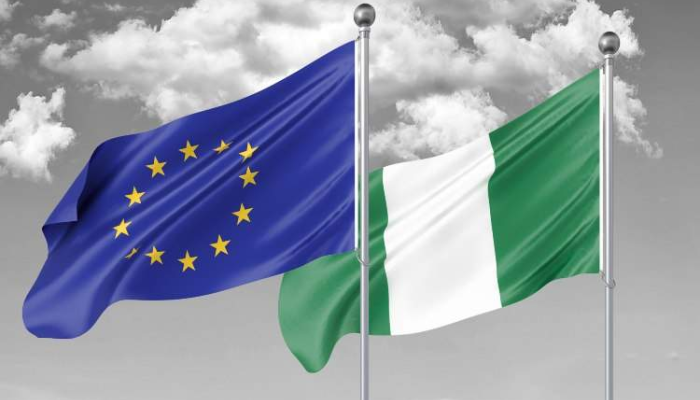
When the 10th Nigeria–EU Business Forum convenes in Lagos on June 25, 2026, it will not be just another high-level gathering between policymakers and business leaders. It comes at a moment when both Nigeria and Europe are reassessing how long-term economic partnerships should function in an increasingly competitive and uncertain global economy.
For Nigeria, the priorities are clear. The country is seeking investment capable of supporting infrastructure, energy access, industrial growth, digital expansion, and employment. For Europe, the Forum reflects a broader effort to deepen economic engagement with its close neighbour – Africa, and one of Africa’s largest and most strategically important markets.
The significance of the Forum therefore lies not simply in diplomacy, but in economics.
Nigeria remains central to Africa’s long-term growth story. With a population of more than 220 million people, expanding urban centres, growing entrepreneurial activity, and increasing digital adoption, the country continues to attract international interest despite persistent macroeconomic pressures and infrastructure gaps.
That interest is increasingly driven by economics rather than development assistance alone.
Across sectors such as renewable energy, agribusiness, digital infrastructure, manufacturing, transport, logistics, healthcare, and financial technology, Nigeria presents opportunities that are difficult for global investors to ignore. Lagos alone has emerged as one of Africa’s most important technology and commercial centres, while the country’s energy demand continues to create substantial opportunities for investment in distributed and off-grid power solutions.
At the same time, Nigeria’s economic reforms are being watched closely by international markets. Measures linked to exchange rate reform, fiscal adjustment, and efforts to improve the investment climate have strengthened perceptions that the country is attempting to reposition itself for longer-term economic stability and growth.
The challenge now is how to convert policy momentum into sustained investment activity and commercially viable partnerships.
That is where the Nigeria–EU Business Forum becomes important.
Business forums are often judged by attendance numbers and political visibility. Increasingly, however, their relevance depends on whether they can support practical outcomes after the speeches conclude. Investors are looking for credible engagement, market clarity, institutional coordination, and pathways to implementation. Governments are looking for investment capable of supporting jobs, infrastructure, productivity, and economic expansion.
The Forum creates a platform where those interests can meet directly.
This matters particularly for Europe.
For many years, Europe’s engagement with Africa was largely framed through development cooperation and governance support. Those areas remain important, but economic relationships are increasingly shaped by infrastructure, investment, connectivity, technology, energy systems, industrial value chains, and private sector partnerships.
The European Union’s Global Gateway strategy reflects this shift. Through Global Gateway, the EU is placing greater emphasis on sustainable investment across infrastructure, clean energy, transport, digital systems, healthcare, education, and economic resilience.
Nigeria occupies an important position within that broader engagement.
European companies continue to maintain a strong presence across sectors of the Nigerian economy, bringing investment, technical expertise, industrial experience, and long-term market engagement. At the same time, global competition for infrastructure investment and strategic economic partnerships across Africa has intensified significantly.
Countries and institutions are increasingly competing not only for markets, but also for influence within supply chains, energy systems, digital infrastructure, and emerging industries.
Nigeria’s scale makes it central to those conversations.
Energy illustrates this clearly. Reliable electricity remains fundamental to industrial productivity, manufacturing, healthcare, education, and economic competitiveness. Nigeria’s renewable energy sector, particularly off-grid electrification and distributed energy systems, continues to attract strong interest from investors because of both demand and long-term growth potential.
The digital economy presents another area of opportunity. Nigeria’s fintech and technology ecosystem has demonstrated significant growth over the past decade, attracting international capital and expanding regional influence despite broader economic volatility.
Agriculture, manufacturing, logistics, transport infrastructure, healthcare, and the creative economy also continue to present substantial opportunities for long-term investment and partnership.
Yet investors remain focused on implementation, consistency, and long-term confidence.
Ultimately, investment decisions are shaped not only by opportunity, but also by predictability, institutional coordination, infrastructure reliability, and the broader business environment. This is why sustained engagement between governments, investors, regulators, financial institutions, and businesses remains important.
The Nigeria–EU Business Forum provides one of the few platforms where those conversations can take place at scale.
Its long-term significance will depend on the extent to which discussions translate into sustained investment activity, implementation, and commercially viable partnerships.
That is also why the Forum increasingly reflects a broader shift in the Nigeria–EU relationship itself. The conversation is no longer centred only on development cooperation in the traditional sense. It is increasingly focused on competitiveness, investment, infrastructure, enterprise, and economic growth.
For both Nigeria and Europe, that shift matters.
The strongest message emerging from the Forum may therefore be the simplest one: be where Europe and Nigeria do business.
Its significance lies not only in the conversations taking place in Lagos, but also in the partnerships, investment pathways, and long-term economic relationships that may continue long after the event concludes.
Dr. Komolafe is the CEO of Media Insight, an integrated marketing communications firm.

Join BusinessDay whatsapp Channel, to stay up to date
Open In Whatsapp