Nigeria has become one of Africa’s most competitive ride-hailing markets, attracting global mobility players eager to tap into a population of over 240 million people and a rapidly growing digital economy. Yet amid increasing competition, rising operating costs, and growing conversations around driver welfare, inDrive has carved out a distinct position by championing what it calls the “freedom of choice” for both drivers and passengers.
Rather than relying solely on algorithm-driven pricing, the company allows drivers and riders to negotiate fares directly while maintaining some of the lowest commission rates in the industry. More than five years after entering Nigeria, inDrive says the strategy has helped it become one of the country’s leading ride-hailing platforms and one of its largest markets in Africa.
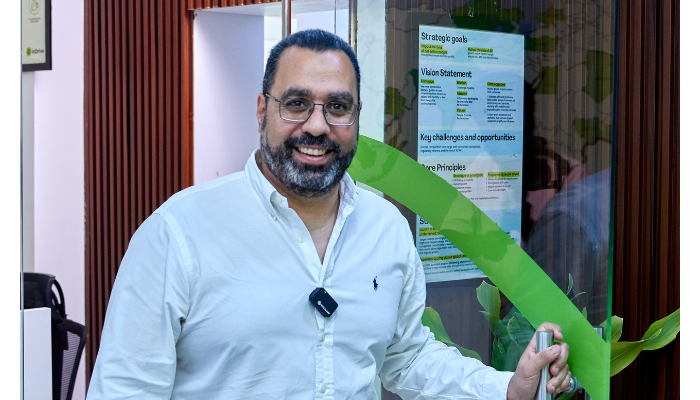
In this interview, Wael Ibrahim, the regional director, Europe, Middle East, and Africa (EMEA) at inDrive, discusses the company’s growth in Nigeria, driver empowerment, mobility trends, regulation, and why Africa remains central to its future ambitions. BusinessDay’s Chinwe Michael brings excerpts.
Nigeria’s mobility landscape is highly dynamic and competitive. What makes the Nigerian market strategically important for inDrive?
inDrive was established with a clear mission: to challenge injustice by creating fair, transparent peer-to-peer mobility services that people can rely on every day. Nigeria, a leading African economy with a population of 240 million, is a market where most ride-hailing platforms charge drivers a 20-25 percent commission, resulting in higher transportation prices to cover those commissions.
Since we started operating in Nigeria more than five years ago, we have enabled our drivers to earn on our platform at nearly half the commission levels. Our model, where the driver and passenger negotiate the fare directly, has brought new levels of transparency to the market and given both drivers and passengers the freedom of choice.
This freedom of choice has enabled us to grow quickly into one of the leading ride-hailing platforms in Nigeria. Today, Nigeria is one of our largest African markets, where millions of users trust our platform for their mobility needs.
How would you assess inDrive’s growth journey in Nigeria so far, and what key milestones stand out?
inDrive brought a new mobility model to Nigeria, a model where drivers and passengers have the freedom of choice. Drivers can earn on our platform at a fraction of the commission they’re used to on other platforms, while maintaining full transparency into the rides they accept.
While other platforms might not show drivers the destination of their rides, we offered drivers full transparency so they could choose their rides. Equally important, we gave passengers a choice. We enabled passengers to name their price and choose their drivers, a choice they never had before in Nigeria.
Providing our users with this freedom of choice has enabled us to grow in less than five years into a leading mobility platform in Nigeria. Drivers and passengers choose inDrive every day because they want to choose their fare, their car, and their ride.
We are very proud today to be the preferred choice for many Nigerians, positioning Nigeria as one of our largest African markets.
What gaps in the Nigerian mobility ecosystem is inDrive specifically trying to solve?
inDrive expanded globally into more than 48 markets because of its unique mission to enable fair and transparent peer-to-peer mobility solutions. Nigeria is no different.
Our model, where the driver and passenger negotiate the fare transparently, was a much-needed solution for millions of users. We have created an opportunity for drivers to earn on our platform at a fraction of the commission rates charged by many existing ride-hailing platforms while giving them the freedom to choose their rides.
Equally critical, passengers can choose their fares and cars, both of which were much needed for a more efficient daily mobility experience in Nigeria.
Many Nigerians are exploring digital platforms for income opportunities. How is inDrive empowering drivers economically?
With the lowest commission in the market and the freedom to choose your own rides, inDrive stands out as the preferred platform for drivers in Nigeria.
Our drivers operate entirely on their own terms. We do not set the fare — the driver negotiates the price directly with the passenger. We do not impose conditions requiring drivers to accept rides, unlike many other platforms.
Drivers can choose their rides, set acceptable prices, and work at times that are convenient for them. This is the kind of freedom drivers cannot easily find elsewhere.
Today, tens of thousands of drivers in Nigeria use our platform to earn income on their own terms at some of the lowest commission rates in the market.
Driver welfare remains a major conversation in the mobility sector. How does inDrive balance profitability with fair earnings for drivers?
This is the beauty of inDrive’s model. The driver decides what fare is fair for their time and effort, while passengers choose rides transparently from available offers.
This direct negotiation between the driver and passenger establishes what we believe is a fair market price based on actual market conditions. It is not determined by an algorithm or system that could introduce bias.
What feedback from Nigerian users has influenced the company the most?
Over the past five years in Nigeria, we focused on offering a single ride type to build scale and efficiency. Increasingly, however, our users — both drivers and passengers — asked for expanded offerings that differentiate newer cars and provide more comfortable rides.
In response, we recently launched our Comfort ride category, allowing passengers to choose newer vehicles for more comfortable journeys.
At the same time, it differentiates drivers with newer cars, enabling them to earn higher incomes. This expansion is a direct result of user feedback seeking more comfortable rides at a fair price.
What policy reforms would help mobility platforms thrive while also protecting consumers and drivers?
In most of our 48 markets globally, inDrive works closely with regulators to ensure ride-hailing regulations protect consumers and drivers while enabling innovation that accelerates economic growth.
Our global scale allows us to share best practices on how ride-hailing platforms can contribute to development.
Ride-hailing supports economic growth directly by providing efficient transportation services to local and international users. It also contributes indirectly by creating flexible earning opportunities for millions of people around the world.
Africa is often described as the next frontier for digital innovation. What excites you most about the continent’s future?
Africa, and Nigeria in particular, enjoys some of the key ingredients for digital innovation: a rapidly growing, educated population and an incredible level of digitalisation across many aspects of everyday life.
This combination provides fertile ground for innovation that can tackle everyday challenges.
That is why inDrive considers Africa one of its largest future growth markets and continues to invest significant resources to remain at the forefront of innovation on the continent.
What trends do you believe will define mobility in Africa over the next five years?
Africa is shaping its own definition of mobility in a world moving toward electrification and digitisation, alongside major investments in urban mass-transit infrastructure and a strong push for regional policy harmonisation.
We are seeing many African countries adopt ride-hailing regulations that enable new services tailored to local realities. These adaptable regulatory frameworks are helping the mobility sector grow at unprecedented levels.
At the same time, governments are making significant infrastructure investments because mobility is increasingly recognised as a key enabler of economic growth.
As regional director for EMEA, what leadership lessons have shaped your approach to emerging markets?
Leading across EMEA’s diverse emerging markets requires balancing global strategy with hyper-local adaptation. Three core lessons have shaped my approach.
First, embrace radical localisation. Global playbooks rarely work out of the box. Success depends on empowering local teams to adapt products, messaging, and go-to-market strategies to the cultural and economic realities of each market.
Second, prioritise agility. Emerging markets are characterised by evolving regulations, changing customer needs, and economic realities. Adapting continuously is critical.
Third, understand local culture. As a global platform, inDrive aims to fit the local cultures and needs of every market where it operates.
What has been your biggest learning from operating across culturally diverse markets?
The biggest learning is that context dictates everything.
Operating across culturally diverse markets has taught me that universal strategies do not translate neatly across borders. What is perceived as professional, persuasive, or clear in one region can be viewed differently in another.
That is why it is important to build a culture of inclusivity. Organisations that embrace diverse perspectives are better positioned to innovate and solve problems.
Diversity is not an obstacle; it is an advantage. The more diverse the team and their experiences, the stronger the perspective and approach to solving challenges.
What advice would you give African startups looking to scale across multiple markets?
For African startups expanding across borders, the most important strategy is depth before distance.
Africa is not a single market. Successful expansion requires understanding local regulations, customer behaviour, and economic realities in each country.
The startups that succeed will be those that tailor their solutions to local needs rather than applying a one-size-fits-all approach across the continent.

Join BusinessDay whatsapp Channel, to stay up to date
Open In Whatsapp