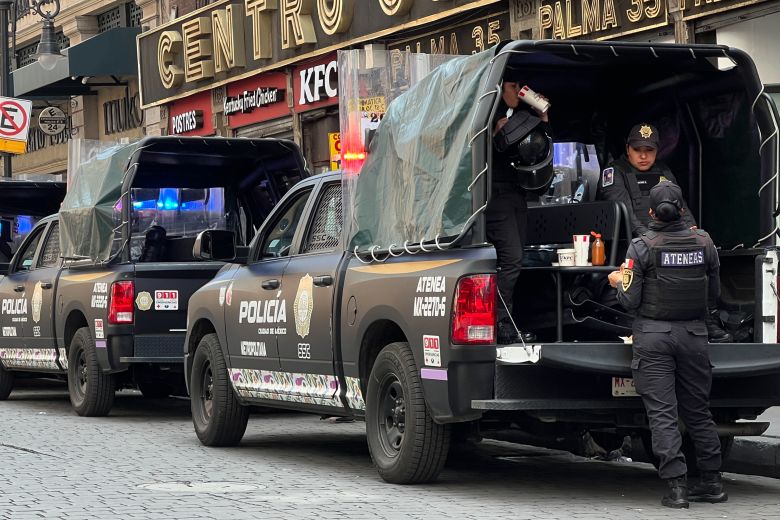
Thousands of armed police have been deployed across Mexico City as tourists arrive for the FIFA 2026 World Cup, with authorities insisting that security is fully under control ahead of the tournament’s opening match.
The global tournament begins on Thursday with hosts Mexico facing South Africa in the capital, marking the start of a competition co-hosted with Canada and the United States.
Mexico is expecting more than five million visitors during the World Cup, as it prepares to stage matches in one of football’s biggest global showcases.
The tournament comes just three months after violent clashes following the killing of a powerful drug lord triggered shootouts and highway blockades in western Mexico, leaving more than 60 people dead and exposing ongoing security challenges in parts of the country.
Major Security Operation Under “Plan Kukulkan”
Authorities say nearly 100,000 personnel, including military units, police officers and private security firms, have been deployed under “Plan Kukulkan” to safeguard the tournament.
“The city has a lot of experience organising these types of events and doing crowd management. There’s trust,” Mexico City police chief Pablo Vázquez told AFP.
Mexico is hosting the World Cup for the third time in its history.
Protests Add Pressure Ahead of Opening Match
Security concerns have been compounded by ongoing protests, with thousands of teachers blocking highways and forcing authorities to cordon off the historic Zócalo square with metal barricades.
The square will host an official fan zone where supporters can watch live broadcasts on a giant screen, with President Claudia Sheinbaum expected to attend the opening match.
Authorities fear protests could intensify in the final days before kick-off, further worsening already severe traffic congestion in the capital.
“We are going to guarantee that the World Cup inauguration is well-executed, in peace and tranquillity,” Sheinbaum said.
Violence Concerns Remain Despite Assurances
Recent cartel-related violence in western Mexico has highlighted persistent security risks. Following the killing of cartel leader Nemesio “El Mencho” Oseguera in February, armed groups carried out widespread attacks across multiple states, burning businesses and blocking highways.
The violence underscored the challenges facing authorities, particularly in regions such as Sinaloa, Guanajuato, Michoacán and Jalisco, where World Cup matches are also scheduled.
Police have been deployed heavily in tourist districts such as Roma and Condesa, while the historic centre remains under tight surveillance as fans move through protest zones.
Some tourists expressed unease at the heavy security presence, while residents said the scale of deployment was unusual but necessary.
Despite concerns, FIFA has maintained confidence in Mexico’s security arrangements, insisting that all necessary measures are in place to ensure the safe staging of the tournament.

Join BusinessDay whatsapp Channel, to stay up to date
Open In Whatsapp