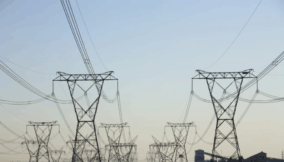
Nigeria’s upstream infrastructure: recoverable crude sits at the bottom of storage tanks, written off as unavoidable waste when the chemistry to recover it already exists. An Akwa Ibom operation demonstrates what the industry is leaving behind.
A sector rich in resources, constrained by technical gaps
Nigeria holds approximately 37 billion barrels in proven crude oil reserves, among the largest in the world. In the first quarter of 2025, production averaged 1.62 million barrels per day, recovering from years of decline driven by theft, infrastructure deterioration, and underinvestment.
The trajectory is improving. But a parallel problem, quieter and less visible than pipeline vandalism or metering fraud, continues to drain billions in value that has already been produced.
In April 2026, the Nigerian Upstream Petroleum Regulatory Commission (NUPRC) warned that the growing dominance of indigenous operators in Nigeria’s upstream oil and gas sector, following the exit of many international oil companies, has exposed a widening technical‑skills gap.
Oritsemeyewa Eyesan, NUPRC’s Chief Executive, stated that without deliberate investment in human capital development, training, and knowledge transfer, the industry risks a crisis driven not by a shortage of oil but by a shortage of the capacity to manage it safely, efficiently, and to internationally acceptable standards.
60 million tonnes of waste and the hydrocarbons locked inside
Crude oil storage tank sludge is a dense, viscous mixture of heavy hydrocarbons, water, sand, and suspended particulates that accumulates naturally over time as heavier crude fractions settle and bind. Left unaddressed, it reduces tank capacity, accelerates internal corrosion, forces extended operational shutdowns, and traps significant quantities of recoverable crude that has already been produced but cannot be moved or sold.
The scale of this global problem is instructive. Petroleum operations worldwide generate an estimated 60 million tonnes of oily sludge every year. More than one billion tonnes have accumulated in storage sites across the globe. A medium-sized refinery processing between 12,000 and 15,000 cubic metres of crude per day generates approximately 30,000 tonnes of oily sludge annually.
Research also confirms that every 500 tonnes of crude oil processed generates approximately one tonne of oily sludge waste.
Applied to Nigeria’s production context, that ratio is significant. With the country averaging around 1.5 million barrels per day across upstream and midstream operations, and with dozens of storage and processing facilities operating across the Niger Delta and offshore, the volume of sludge accumulating annually represents hundreds of thousands of barrels of recoverable crude.
At current prices, that is tens of millions of dollars in value that is neither formally written off, nor tracked, nor recovered. Critically, this sludge is not inert. It is a hydrocarbon-dense material.
Research confirms recovery efficiencies above 92 percent when specialist chemical treatment is applied: in one documented case, over 30,200 barrels of crude were recovered from approximately 32,800 barrels of tank bottom sludge. For operators with the right chemical technology, sludge is not a disposal problem. It is an untapped revenue stream.
What the Ibeno operation proved
At the TSB Platform in Ibeno, Tulcan Exploration faced a familiar problem: dense, viscous sludge with high hydrocarbon content sitting untreated in a storage vessel.
Blue Seal deployed MEB PT7222, its proprietary micro-emulsion breaker formulated for Nigerian crude: the protocol combined controlled chemical dosing, a minimum three-hour soaking cycle, and mechanical agitation. Recovered crude was decanted and passed through a reactivated hydrotreater, restoring quality and returning a dormant asset to service.
The result? Over 2,000 barrels recovered from deposits previously considered unprocessable, with emulsions fully broken and sludge volume substantially reduced. The client realised over $250,000 in crude value from material that had been a disposal liability. Across Blue Seal’s projects, the economics hold: for every 10,000 barrels of sludge treated with MEB PT7222, clients recover in excess of $1 million in crude value.
Ibeno results at a glance
2,000+ barrels of crude recovered from sludge deposits, $250,000+ in crude oil value realised by the client, $1M+ in recovered crude value per 10,000 barrels of sludge treated
Why the gap persists
The NUPRC’s April 2026 warning identifies the structural issue clearly. The exit of international oil companies has transferred operatorship to indigenous firms that, in many cases, have not yet built equivalent depth in production chemistry, maintenance standards, or specialist chemical application. For decades, multinational firms provided that technical expertise. Their departure has left a gap that procurement decisions and internal capability have not yet filled.
Three factors compound the problem. The first is the knowledge gap: IOC exit has removed decades of specialist chemical expertise from Nigerian field operations, and the alternatives have not been adequately developed. The second is procurement culture: generic, low-cost chemical solutions are routinely selected over proven speciality formulations, with the cost of inaction never appearing on a balance sheet. The third is measurement: recoverable crude trapped in sludge is not tracked, not reported, and not assigned an economic value, so there is no visible incentive to recover it.
Nigeria’s broader production record makes the stakes clear. Between January 2025 and January 2026, the country missed its OPEC quota in ten of twelve months, at a documented cost of 1.76 trillion naira. Daily crude losses from theft and metering issues, though now at a 16-year low of 9,600 barrels per day following major regulatory interventions, still represented 2.04 million barrels lost in the first seven months of 2025 alone. Those losses receive significant political attention. Tank sludge losses receive almost none.
What operators must do differently
All three factors are correctable, and the regulatory environment is creating the conditions to correct them. The NUPRC’s push for indigenous operators to meet IOC-equivalent operational standards is an opening: sludge recovery performance should be part of that standard. Recovery rates, stranded hydrocarbon volumes, and intervention frequency are measurable. They should be measured.
Operators who begin quantifying the hydrocarbon content of sludge accumulations across their storage infrastructure and assigning those volumes an economic value will find the investment case straightforward. Sludge volume multiplied by hydrocarbon content, which published research places between 25 and 75 percent of total sludge mass depending on crude type and tank conditions, multiplied by the prevailing crude price, produces a number that changes the conversation from waste management to asset recovery.
Specialist micro-emulsion breakers, formulated for the specific crude chemistry of Nigerian production, are the technically proven approach. Generic treatment methods generate stable emulsions that are difficult to process and yield low recovery rates. The difference in outcome is not marginal. It is the difference between writing off 2,000 barrels and recovering them.
The decision is straightforward
Nigeria cannot produce its way out of a utilisation problem. The crude is there. In many cases, it has already been produced and is sitting in a tank, untreated. The technology to recover it exists, its returns are documented, and the regulatory environment is pushing indigenous operators towards exactly the kind of technical standards that make recovery possible.
At Ibeno, the answer came in the form of 2,000 barrels and $250,000 in realised revenue. The next facility does not need to wait for the same lesson.
Nnaemeka Uchenna is a senior application engineer at Blue Seal Energy Group.

Join BusinessDay whatsapp Channel, to stay up to date
Open In Whatsapp