Every major economy today is grappling with a profound shift in how energy is produced, distributed and consumed. The global energy tripartite, which demands a simultaneous pursuit of energy security, energy affordability and environmental sustainability, now sits at the heart of policy debates from Washington to Tokyo. The causes of this shift are well documented. Geopolitical realignment, particularly after the disruption of Russian gas supplies to Europe, forced nations to scramble for alternative sources.
The accelerating climate crisis compelled governments to embed decarbonisation targets into law. Meanwhile, the rapid fall in the cost of renewables made clean energy competitive, even as the world recognised that oil and gas would remain indispensable for decades.
Developed nations have responded with characteristic urgency. Germany, long dependent on Russian pipeline gas, fast-tracked the construction of multiple floating liquefied natural gas terminals in under two years. The United Kingdom paired a massive offshore wind expansion with renewed domestic oil and gas licensing, explicitly linking the two to national energy security. The United States passed the Inflation Reduction Act, mobilising hundreds of billions of dollars for clean energy manufacturing and hydrogen, while continuing to permit oil and gas exports. Japan, lacking domestic resources, placed a strategic bet on hydrogen and ammonia co-firing to keep its industries competitive. Each of these nations is managing a deliberate, sequenced transition, one that protects their people and their economies from sudden shocks.
Nigeria cannot afford to be an exception. The same tripartite confronts us, and the choices made today will determine whether we become a victim of the global energy transition or a beneficiary of it. It is in this light that we must assess three developments that speak directly to our energy security.
First, the successful transfer of Shell’s onshore assets to the Renaissance Africa Energy consortium. This was not a routine divestment. It was a multi-billion-dollar transaction 1.3bn dollars plus up to 1.1 billion dollars in adjustments that moved the operatorship of some of the Niger Delta’s most prolific oil blocks from an international supermajor to a consortium of Nigerian independents. The process ensured that a ring-fenced decommissioning fund was established, that production stability was maintained, and that local capacity was given a genuine platform to lead. The acquisition has contributed to the rise in national crude output and proves that Nigerian companies, properly capitalised and regulated, can manage complex onshore operations.
Second, the progress in the liquefied natural gas sector. The Train 7 expansion at Nigeria LNG Limited, which will lift total production capacity from 22 to 30 million tonnes per annum, has 92% physical completion as of May 2026 and is on track for first cargo in the third quarter of 2026. Pre-investment work on Train 8 has been accelerated, and a final investment decision was taken on Nigeria’s first indigenous floating LNG project, which will monetise flared gas from the Yoho field. The management has also secured new long-term LNG sales agreements with European buyers, opened an LNG bunkering pilot at the Lagos port complex, and committed the entirety of its domestic liquefied petroleum gas allocation to the Nigerian market, a decision that has cut the retail price of cooking gas by a quarter and advanced the clean cooking agenda.
Third, the Africa-Atlantic Gas Pipeline project. This 6,900-kilometre corridor reported by multiple sources, running along the West African coast to Morocco and potentially into Europe, has moved decisively forward. Front-end engineering design has been completed, transit country agreements have been strengthened, and a portion of the recently signed Chinese investment framework has been dedicated to the pipeline’s first phase. When operational, it will deliver Nigerian gas across West Africa and into the European market, turning our vast reserves into a strategic export and a tool for regional industrialisation.
The enabling environment that made progress possible
None of these advances would have materialised without a deliberate effort to create an enabling environment for investment and operations. The policy reforms introduced in 2024 have begun to bear fruit. Of particular note is Executive Order No. 9 of 2024, signed by President Bola Ahmed Tinubu on 6 March 2024. This order, focused on local content compliance requirements, was part of a package that also slashed the contracting cycle to a maximum of six months and introduced fiscal incentives for non-associated gas, midstream and deepwater projects. Executive Order No. 9 directly addressed long-standing investor concerns that local content mandates were driving up costs and delaying projects. It directed that local content requirements be applied in a manner that maintains competitiveness and cost-efficiency, it harmonised the roles of regulators to eliminate duplicative processes and bureaucratic hurdles, and it signalled to international oil companies that Nigeria was serious about restoring investor confidence.
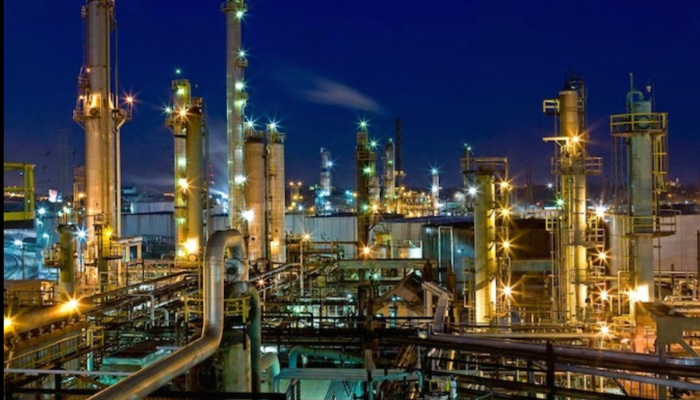
The results are visible. The regulatory landscape has been streamlined, and this has directly encouraged the springing up of modular refineries and the completion of the Dangote Refinery, a 650,000-barrel-per-day plant that is now refining crude under a naira-denominated supply framework. Beyond the big-ticket projects, the enabling environment has also transformed the daily business of the sector. Trade unions, petroleum marketers, suppliers and regulators report that operational bottlenecks have eased. Industrial relations have stabilised, supply chains have become more predictable, and the collaboration that was once elusive is now a routine feature of the industry. When the rules are clear and the process is fair, the entire ecosystem functions more smoothly.
For decades, the story of Nigeria’s state-owned refineries has been a story of national heartbreak. Successive administrations poured an estimated 25 billion dollars into rehabilitation and turn-around maintenance. The Port Harcourt, Warri and Kaduna refineries consumed these colossal sums and delivered almost no petrol, diesel or kerosene. Nigerians watched as the plants became graveyards of stripped parts, as workers drew salaries to guard rusting pipes, and as the public purse was repeatedly bled without accountability. The verdict across the country was blunt, the refineries were scrap, dead assets that would never work again. Many honest voices called for them to be sold or scrapped entirely rather than swallow another kobo.
The present management of the NNPCL has taken a fundamentally different approach. It has not allocated a single kobo of government money to fresh refinery rehabilitation. Instead, it has signed a Memorandum of Understanding with a consortium of Chinese firms, identified as Sanjiang and Xinqianchen, a move that changes the entire rehabilitation narrative. The MoU establishes a non-binding framework for collaboration and provides a pathway toward definitive agreements. Its scope covers the completion of remaining rehabilitation work at the Port Harcourt and Warri refineries, operations and maintenance to achieve best-in-class performance in reliability, safety and efficiency, capacity expansion and yield optimisation, petrochemical integration, compliance with clean fuel standards, and the exploration of gas-based industrial projects in Nigeria. The Chinese partners will conduct technical, operational, commercial, financial and legal due diligence, after which the parties will negotiate definitive transaction agreements subject to internal and regulatory approvals.
The model contemplates potential equity participation, similar to the Nigeria LNG structure, and a long-term partnership rather than a short-term contractor relationship. Repayment will be structured from future operational profits, completely shielding the treasury from further haemorrhage.
The question before Nigerians is therefore straightforward. Should we allow these refineries to remain in their state of decay and comatose irrelevance, or should we support a partnership that demands no sacrifice from the public purse and offers the prospect of finally turning these assets to national service.
. MOHAMMED IS A PUBLIC ANALYST AND WRITES FROM ABUJA

Join BusinessDay whatsapp Channel, to stay up to date
Open In Whatsapp