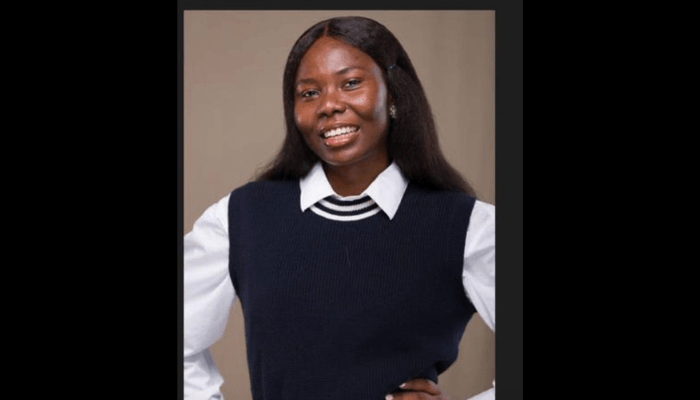
As a student of Accounting at the University of Benin, Ihunmehai Isaac struggled academically and felt disconnected from who she was.
“When I studied Accounting in Nigeria, I struggled a lot. I did not understand the balancing sheets, cost accounting, taxation – I just did not get it. For a long time, I thought it meant I wasn’t intelligent. My academic challenges then affected my confidence and sense of self-worth. I started believing that I was incapable or not good enough,” she added.
Today, Ihunmehai Isaac, popularly known as Ihums, works in documentary filmmaking and post-production in New York. She has credits on Emmy-nominated and Oscar-shortlisted projects, as well as participation in a mentorship programme by Netflix.
“Sometimes people are not incapable; they are simply in environments that do not align with their strengths. That realisation changed my life,” she said.
After graduating from the University of Benin, Edo State, Nigeria, Ihums took courses at the School of Media and Communication at Pan-Atlantic University and Lagos Business School, where she began working with photography, video editing, and storytelling.
“That was where I began to fully explore my creative instincts through photography and video editing,” she said.
The decision eventually took her to New York, where she pursued a master’s degree in Media Management at The New School. She described the experience there as transformative. “I performed exceptionally well academically and creatively, and it gave me a level of confidence I had never experienced before.”
Isaac said mentorship and exposure played a major role in helping her see herself differently within the creative industry.
One person who played a major role in opening doors for her early in her journey was her professor at The New School, Vinay Chowdhry. “Through his guidance and belief in my abilities, I was able to step into spaces and projects that shaped my career in documentary filmmaking and post-production,” she said.
‘Starting over’ and finding a creative voice
Moving to New York also meant confronting realities that rarely make it into the stories people tell back home.
“I experienced all of those things — cultural shock, loneliness, financial pressure, and uncertainty,” she said.
“There were moments where I genuinely did not know how things would work out after graduation or what my future in the industry would look like.”
“As an African student abroad, especially when you are young, you also carry the awareness that people sacrificed for you to be there. In my case, my parents were my backbone. My mother, especially, encouraged me constantly. She prayed for me every day and reminded me to keep going, even during difficult moments.”
“Practically, I also learned the importance of building relationships and staying open to opportunities.”
“A professor at my school later connected me to documentary filmmaking opportunities that eventually led me to work on projects that became Emmy-nominated and Oscar-shortlisted.”
“For me, the biggest lesson is that the opportunities do exist, but sometimes the real battle is surviving the emotional and practical realities long enough to reach them,” she said.
During the COVID-19 pandemic, Ihums launched “Graduate Life Uncut,” a platform focused on conversations around graduate school experiences and immigrant realities.
“I wanted to create a platform and community where graduate students from different parts of the world could openly share their experiences of studying abroad and navigating life as international students.”
In New York, Ihums moved gradually into documentary filmmaking and post-production, where she is building a career.
“As a storyteller and editor, I naturally see documentaries from an emotional lens. Whenever I am piecing a story together, I am constantly thinking about emotional truth and human connection. Women often bring a unique emotional intelligence and empathy into storytelling spaces,” she said.
“We tend to pay attention to emotional nuance, vulnerability, silence, relationships, and the subtle layers of human behaviour that can make stories feel more authentic and impactful.”
Navigating New York as a Nigerian creative
Working in New York’s media and film industry as a Nigerian immigrant came with pressures she had not fully anticipated.
“The pressure is there. Being a Nigerian woman in the highly competitive film and media industry in New York comes with a unique set of challenges,” she said.
Language was one of the first surprises.
“Even though I speak English, communication is still deeply cultural,” she said. “I sometimes felt like I could not fully express myself the way I wanted to because I was constantly overthinking how I sounded or how I was being perceived.”
There were also moments of being looked past. “Sometimes you can sense that people question whether you belong in certain rooms or opportunities,” she said. But over time, her confidence grew.
“I have become much more confident in my voice and in my ability to navigate different environments while still remaining authentic to myself,” she said.
Ihums is grateful for her Nigerian roots, which she said shaped her.
“I started off my career in Nigeria, despite the limitations. Then, I did not fully understand what the industry had in store for me. but seven years later, I’m working on Netflix projects and projects connected to some of the highest recognitions in the film industry globally.
“I have worked with some of the best people in the global film industry, and sometimes I don’t even realise it until I leave the room.”
Currently, Ihums is set to work on a major documentary project for a company owned by Tom Brady. She expressed gratitude for how far she has come in her career, reflecting on her journey from Benin, Nigeria, to working on global film projects.
“For me, it speaks to hard work, resilience, talent, exposure, and opportunity. Along the way, I have also met people like me — African women breaking barriers in those spaces. I’m proud of my achievements, but more importantly, I am deeply grateful.”
“Those experiences have strengthened me, given me resilience, adaptability, and perspective — qualities that continue to shape the way I work and tell stories.”
Despite building her career in New York, Ihums says her Nigerian identity is not something she left behind.
“My Nigerian identity is not something separate from my career or my life abroad,” she said. “It is the foundation that I carry with me wherever I go.”
Living in Brooklyn, New York has reinforced rather than diluted that connection. As she is surrounded by Nigerian culture – music, food, and the presence of African creatives across industries.
“I am constantly inspired by Nigerians around me,” she said. “We are hardworking people. We are resourceful. We are creative. We are resilient.”
Beyond her film career, Ihums runs Only Girl Foundation, a nonprofit focused on mentorship and empowerment for young girls of colour.
“My message to young girls would be simple: Be relentless and believe in yourself. Life will present you with many obstacles. But sometimes the biggest challenge is not what other people think of you — it is what you think of yourself. I’ve learnt that confidence is not something you wait to feel before taking action.”
She also wants African families and communities to broaden what they consider a legitimate career.
“Creative careers are valid careers. Storytelling exists everywhere. It exists in film, television, journalism, social media, marketing, technology, education, and even industries that traditionally had little connection to creative work,” she said.
For young African women still weighing whether an unconventional path is worth the risk, her advice is: “Believe in yourself, keep going, and be relentless. Your circumstances do not have to determine your future.”

Join BusinessDay whatsapp Channel, to stay up to date
Open In Whatsapp