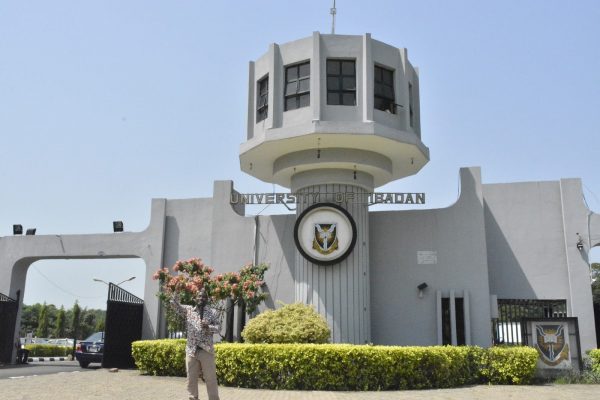
The University of Ibadan has reclaimed the top spot in Nigeria’s higher education rankings, displacing Covenant University to lead the country’s 2026 Times Higher Education (THE) University Rankings, a shift that reflects broader movement across the sector.
The 2026 rankings, which assessed 24 Nigerian universities across five performance pillars, teaching environment, research environment, research quality, industry engagement and international outlook, show a landscape in flux, with several institutions breaking into the top ten for the first time while established names slip down the table.
UI returns to the summit
Founded in 1932 and Nigeria’s oldest university, the University of Ibadan rose from second position in 2024 to first place in 2026. The Oyo State institution, which runs 16 faculties and hosts what is recognised as Africa’s largest postgraduate school, has a student population of approximately 36,851 and a student-to-staff ratio of 17.6.
UNILAG follows suit
The University of Lagos followed in second place, advancing from fourth in 2024. With roughly 36,484 students spread across campuses in Yaba and its College of Medicine in Surulere, UNILAG maintained its reputation as a key driver of research and talent development in West Africa’s commercial capital.
Bayero University, Kano, make ground
One of the more striking movements in the 2026 rankings is the strong showing from northern Nigerian institutions. Bayero University, Kano, entered the top ten for the first time since 2024, claiming third place. With a student population of about 29,362 and a student-to-staff ratio of 16.9, the Kano-based federal university has built academic strength across multiple disciplines, including health and pharmaceutical sciences.
Covenant University
Covenant University is a private Pentecostal Christian institution located in Ota, Ogun State, Nigeria. It began operations in 2002 and has since become one of the most prominent private universities in Africa, built on a mission-driven foundation rooted in Christian values and leadership development.
Covenant University has a total student population of about 9,690, with a gender distribution of 61percent male and 39 percent female students. The student-to-staff ratio stands at 22.2. In recent rankings, the university moved from first position in 2024 to fourth place in 2026.
ABU comes sixth
Ahmadu Bello University, Zaria also re-entered the top ten at sixth position. One of sub-Saharan Africa’s largest universities with a student population of over 46,669 spread across a 7,000-hectare campus, ABU’s return underscores the growing competitiveness of northern institutions.
Similarly, the Federal University of Technology, Minna made its top-ten debut at seventh place — a notable milestone for the 1983-established institution, which has a science and engineering-focused curriculum and a student body of about 26,887.
Private universities feel the pressure
The rankings mark a significant reversal for Covenant University, which fell from first position in 2024 to fourth in 2026. Despite the drop, the Ota-based private institution, known for its disciplined, mission-driven academic model, remains among Nigeria’s most prominent universities. It has a student population of about 9,690 and a student-to-staff ratio of 22.2.
Landmark University, another private Christian institution, bucked the trend by entering the top ten for the first time in 2026. Established in 2011 by the Living Faith Church Worldwide in Kwara State, the university has a comparatively lean student population of 3,426 but maintains one of the more favourable student-to-staff ratios in the rankings at 13.
Mixed fortunes for established federal universities
The University of Ilorin slipped two places, from sixth in 2024 to eighth in 2026, despite remaining one of the country’s most stable institutions. With nearly 48,498 students and a 50/50 gender split, the Kwara State institution faces growing pressure from rising peers.
The University of Jos entered the top ten at ninth place, having not featured in the 2024 list. The Plateau State-based university, which serves over 37,000 students across 12 faculties, recorded a student-to-staff ratio of 23.6.
The University of Nigeria, Nsukka, rounded out the top ten at tenth place, sliding from seventh in 2024. Founded in 1955 by Nnamdi Azikiwe, Nigeria’s first president, UNN remains one of the country’s most historically significant institutions.
It operates four campuses, offers 82 undergraduate and 211 postgraduate programmes, and records one of the strongest student-to-staff ratios in the rankings at 11.1.

Join BusinessDay whatsapp Channel, to stay up to date
Open In Whatsapp