… to be honoured in Ghana in September
Five African institutions have secured a combined $15 million in funding to accelerate higher education transformation initiatives, supporting innovative approaches to teaching, learning, research and skills development across the continent.
The AHEFT Prize’s inaugural winning institutions are Addis Ababa University (Ethiopia); the International Institute for Water and Environmental Engineering (Burkina Faso); Kwame Nkrumah University of Science and Technology (Ghana); Muni University (Uganda); and the University of Rwanda (Rwanda).
The Mastercard Foundation announced the launch of the Africa Higher Education for Transformation (AHEFT) Prize, a first-of-its-kind annual award, supported by a $500 million commitment over its first decade.
The AHEFT Prize recognises higher education institutions in Africa that are driving sustained, systemic institution-wide transformation and expanding opportunities for young people.
Each recipient will receive $3 million to scale transformative work, through initiatives agreed with each institution to advance education opportunities for young people in Africa.
Sewit Ahderom, president and CEO at Mastercard Foundation, said, “For twenty years we have seen African institutions rethink what higher education can deliver.
“The AHEFT Prize turns that proof into momentum: we are backing homegrown excellence with a decade-long commitment, so that universities across the continent become engines of opportunity for millions of young people.”
The 2026 AHEFT Prize Laureates are Addis Ababa University (AAU), Ethiopia, winning the excellence in research and innovation category.
The institution was recognised for its ability to align research with national priorities, strengthen workforce development, and connect scientific knowledge directly to economic opportunity, public services, and community wellbeing.
AAU’s integration with Tikur Anbessa Specialized Hospital, which serves approximately 884,000 patients annually, enables large-scale clinical training, research, and service delivery.
International Institute for Water and Environmental Engineering (2iE), Burkina Faso, won the excellence in teaching and learning category.
It was recognised for innovation in practice-based engineering and technical education and demonstrating how hands-on, problem-driven learning can produce highly employable graduates.
Established by 16 African countries operating in the Sahel region, 2iE has trained more than 13,000 graduates, with 70 percent securing employment within 12 months of graduation and more than 95 percent remaining and working in Africa in sectors including water, climate, energy, and infrastructure.
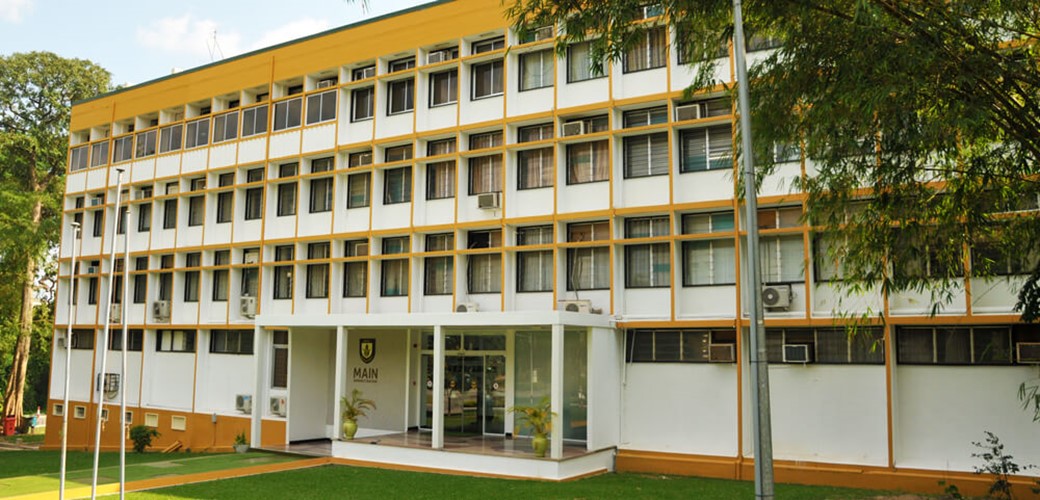
Kwame Nkrumah University of Science and Technology (KNUST), Ghana, got the excellence in research and innovation category.
KNUST is being recognised for building one of Africa’s leading research-to-innovation ecosystems.
Through platforms such as the Kumasi Business Incubator, Innovation Centre, and Technology Consultancy Centre, KNUST translates research into startups, industry solutions, and public impact, demonstrating how science, technology, and entrepreneurship can drive economic transformation and job creation.
Muni University (MU), Uganda, got the transitions to employment category.
It was recognised for creating effective pathways from education to employment for refugees and underserved youth.
Through its Refugee and Host Community Youth Empowerment and Transformation Initiative (RETI), the university has enabled up to 70 percent of participants to secure employment within three months of completing the programme.
University of Rwanda (UR), Rwanda, wins excellence in health sector.
The institution was recognised for its pivotal role in strengthening Rwanda’s health system and health workforce by training more than 26,000 health professionals.
Its community-based training model reaches nearly 500,000 people through clinical placements, outreach programs, and university health services. Today, the University of Rwanda has evolved into a regional leader in digital health, vaccinology, biomedical engineering, and health systems innovation
The AHEFT Prize recognises institutions delivering transformational impact across thematic categories including Teaching and Learning, Transitions to Employment, Research and Innovation, and Entrepreneurship or within priority sectors including Climate and Environment, Agriculture and Agri-food Systems, Health, and STEM/Digital/Artificial Intelligence.
Over the next decade, the Prize will recognize and award at least 150 institutions in Africa.
John Nkengasong, executive director at Higher Education Initiatives, Mastercard Foundation, said, “This is the moment to reimagine what higher education institutions can do as engines of human capital development – not only as a place of learning, but as a direct route to work, to economic participation, and to a better future for young people across Africa.’’
The winning institutions will be awarded at the Higher Education Transformation Convening to be held in Accra, Ghana, on September 22, 2026.
The Mastercard Foundation is a registered Canadian charity, one of the largest foundations in the world, and the leading funder of education in Africa.

Join BusinessDay whatsapp Channel, to stay up to date
Open In Whatsapp