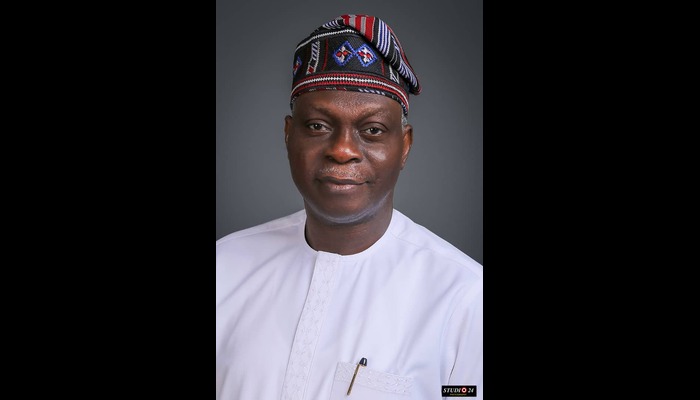
Prince Adedapo Benjamin Adelegan is the 14th president and chairman of the council of the Nigerian-British Chamber of Commerce (NBCC), and convener of the popular Lekki Sunsplash musical concert, Africa’s biggest musical event in 1988. He speaks to BusinessDay about his over two decades of experience in music and live events, politics and his new book titled “Behind the Curtain.” Excerpts:
You’ve built a career across marketing, public relations, entertainment, business leadership, and politics. When you look back, what is the central thread that connects all these phases of your life together?
I believe the central thread is innovation and conviction. I’ve never believed situations should remain static. My journey into business was an innovative attempt to create something out of nothing.
When I started, I had no experience organising concerts beyond school parties, and I had no money. But I had the belief that whatever comes into my mind is possible if I take the first step. If your vision is clear and you can articulate it, people begin to support you.
That conviction led me into entertainment and transformed the industry for nine years. Five years later, I introduced electronic advertising in Nigeria. Since then, every few years, I’ve always tried to introduce something new.
Politics, however, came from compassion. Growing up with my grandmother from the age of two shaped my sense of responsibility and spirituality. I experienced communal living on Queen Street in Lagos, where everybody cared for one another.
That experience shaped my belief that leadership must provide affordable healthcare, transportation, housing, and education for people. Compassion became my motivation for politics, while innovation became the foundation of my business journey.
You’re often described as a pioneer in electronic outdoor advertising in Nigeria. What gap did you see in the market and how difficult was it introducing that innovation?
My entry into entertainment and electronic advertising was an accident of fortune. I was not in advertising; I was in the music business.
During a trip to England, I saw electronic billboards at Victoria Station in London. The company was called Automaiden, one of the biggest advertising companies in the UK then. I immediately wanted to bring that innovation to Nigeria.
I took a video of Lekki SunSplash to them and showed them the massive crowds and branding opportunities. At that age, I already had a sense of duty to bring useful innovations back home.
It wasn’t necessarily about identifying a gap in a mature industry. It was about innovation and improving society.
Thankfully, I received support from Lagos State Governor Raji Rasaki, who encouraged the modernisation of outdoor advertising. That support helped us dominate the market for years.
As President and CEO of PR Africa International Limited and Executive Chairman of Celtron Group, what has been your guiding philosophy in building businesses?
I never worked for anyone or applied for a job. At 25, I became an MD and had to learn financial management, HR, and marketing on the job.
My major turning point was attending the Owner Management Programme at Lagos Business School in 2002. It gave structure to everything I had learned through experience.
In all my businesses, the philosophy has always been to innovate, disrupt, and create impact. Profit was never the first motivation. My first concert was free because the strategy was to build something unprecedented first, then allow value to follow.
Everything I’ve done — from entertainment to advertising to Made-in-Nigeria exhibitions — has been driven by the desire to make a difference.
Did you know Lekki SunSplash would become such a landmark cultural platform when you started it?
No, I could never have imagined it.
I was preparing to resume as a law student after studying English. I was simply organising beach parties for clients when we discovered Lekki Beach, which was then a pristine coastline.
What started as a bigger beach party projected for 50,000 people attracted nearly one million people. There was planning and vision, but God’s favor made it what it became.
For nine years, Lekki SunSplash became the biggest entertainment platform in the country. The entire entertainment industry was involved. Many people even worked pro bono just to be part of it.
What do you remember most about that era of Nigerian music and live entertainment?
Lekki SunSplash represented the best of Nigerian music across every genre — Fuji, Apala, Juju, reggae, highlife, and Afrobeat. Artists like Fela, Majek Fashek, King Sunny Ade, Oliver De Coque, and Wasiu Ayinde all performed there.
Today, Afrobeat dominates globally, but many other genres have been neglected. Concerts have also become too expensive for ordinary families.
The vision of bringing back Lekki SunSplash is to restore an affordable annual family festival that represents all Nigerian music genres and gives emerging artists a platform.
What will the revived Lekki SunSplash look like?
It will remain a live music festival, but on a much bigger scale. We’re looking at models like Glastonbury and Coachella.
The idea is to create a multi-day festival with music, fashion, food, camping, and different stages for different genres and audiences. One day could focus on gospel music, another on traditional music, and another on youth culture and rave performances.
We are already discussing partnerships and sponsorships, and hopefully, the revival will happen soon.
Nigeria’s creative economy is gaining global attention. What must the country do to convert that visibility into sustainable economic value?
Nigeria has already gained substantial value from the globalisation of our music, food, fashion, and culture. What is important now is sustainability.
We need better infrastructure — bigger concert halls, studios, and stronger investment in theatre and live performance industries. Theatre alone can create massive employment across costume design, choreography, lighting, music, and production.
We should leverage international partnerships, especially with countries like the UK, to develop Nigeria’s theatre and creative industries into sustainable job-creating sectors.
What does “Brand Nigeria” mean to you beyond slogans and campaigns?
For me, Brand Nigeria has always been about projecting Nigeria positively through business, entertainment, and innovation.
Lekki SunSplash promoted Nigerian music. Electronic billboards modernised Nigerian cities. The Made-in-Nigeria exhibitions in London and South Africa promoted Nigerian products internationally.
I challenged British business leaders in 1999 by asking why Nigerian products were not on UK shelves. That conversation led to the Made-in-Nigeria exhibitions, which helped open international markets for Nigerian businesses.
Can a country be successfully branded if its domestic systems remain weak?
Yes, it can. Branding adds value to existing value.
Nigeria is still evolving politically and economically like every great nation once did. America, Britain, and Germany all went through difficult periods before becoming global powers.
Despite our challenges, Nigeria dominates Africa in banking, entertainment, music, and film. We built the largest refinery in the world, and projections suggest Nigeria could become the fifth-largest economy globally by 2075.
The problem is that many young Nigerians have lost hope because there has not been enough deliberate effort to educate them about Nigeria’s trajectory and potential.
What we need is compassion in governance — affordable healthcare, transportation, housing, education, and policies that directly improve people’s lives.
What did business teach you that Nigerian politics urgently needs?
Nigerian politics has become too expensive for competent professionals and technocrats to participate effectively.
Politics needs more collaboration with the private sector. President Bola Tinubu’s government has shown that technocrats can play important roles in governance.
I believe our Senate and House of Representatives should include honorary technocratic members from sectors like finance, media, and industry — people with proven expertise who can contribute to policy debates without going through expensive elections.
There is currently a disconnect between policymaking and private sector realities, and bridging that gap would improve governance significantly.
What did your experience contesting in the 2020 governorship election reveal about internal party democracy in Nigeria?
Poverty heavily influences Nigerian politics. Many people no longer trust politicians because they have been disappointed repeatedly.
Until Nigeria builds a strong social welfare system with affordable housing, transportation, healthcare, and employment support, voters will continue to support whoever can meet their immediate needs during elections.
That reality makes politics extremely expensive and difficult for non-career politicians.
How has your Ondo background shaped your view of leadership and public responsibility?
I come from a humble background, and that shaped my resilience and work ethic. Those are qualities common among Owo people.
I disagreed at some point with the leadership style of the late Governor Rotimi Akeredolu and even asked him to step down and support me. Eventually, we became close and worked together.
I admired the Lagos model, where leadership succession has consistently produced technocrats like Fashola, Ambode, Sanwo-Olu, and Hamzat, all aligned with a long-term vision for the state.
For me, compassion remains the driving force behind politics. I want a society where people can afford the basic necessities of life.
Your new book, Behind the Curtain, reflects on your entrepreneurial journey. What made this the right moment to tell that story, and what parts of the journey did you feel Nigerians needed to understand beyond the public image of success?
I think the timing is right because many young Nigerians are losing faith in the country and in the possibility of success without shortcuts. There is too much focus on the glamour of success without understanding the journey behind it.
One of the things I explain in the book is that my entry into entrepreneurship was accidental. I call it an accident of fortune. I never worked anywhere or applied for a job. Providence pushed me into becoming an MD at 25.
People see the success today, but they don’t understand the confusion, fear, learning process, and risks behind the curtain. When I started Lekki SunSplash, I had no experience, no money, and no certainty about the future. The same thing happened with electronic advertising. It was conviction, faith, innovation, and courage that kept pushing me forward.
The book is also about Nigeria itself. Despite our challenges, I still believe Nigeria is a country of tremendous opportunity. So Behind the Curtain is really about resilience, innovation, faith, and believing in possibilities even when nothing around you suggests success is possible.
The title “Behind the Curtain” suggests access to the unseen struggles, risks and decisions behind enterprise-building. What is the most important lesson in the book for young Nigerian entrepreneurs trying to build enduring businesses in a difficult economy?
The book launch itself will reflect the message of the book. It may become a two-day event, more like a seminar than the regular book launches we see. The idea is to bring young people together for serious conversations around entrepreneurship, politics, leadership, and the future of Nigeria.
The most important lesson in the book is that entrepreneurship is not just about making money. It is about mindset, resilience, sacrifice, innovation, and responsibility.
Parents must imbibe values of humility, discipline, and hard work in their children. My mother never taught me theory. She gave me difficult tasks and insisted I find solutions. Looking back now, she was building resilience and entrepreneurship in me.
Young people must also read widely. Reading opens the mind, and travel is actual education. It is about learning cultures, systems, and how other societies work.
So, “Behind the Curtain” is directed at young Nigerians, students, and aspiring entrepreneurs to help them understand that successful journeys are built through struggle, uncertainty, faith, and persistence.

Join BusinessDay whatsapp Channel, to stay up to date
Open In Whatsapp