… NDP names flag-bearer two days after timeframe
The race for Nigeria’s presidency has formally gathered steam following the conclusion of presidential primaries by political parties ahead of the 2027 general election.
In line with the timetable released by the Independent National Electoral Commission (INEC), political parties were required to conduct their presidential primaries between April 23 and May 30, 2026, and submit the names of their candidates for the election.
Although some parties and political actors challenged INEC’s authority to dictate the timing of internal party processes in court, the majority complied with the directive and produced presidential candidates before the May 30 deadline.
With the primaries now concluded, attention is shifting from intra-party contests to the broader battle for votes as candidates begin to unveil their visions for the country.
Among the 21 registered political parties, several major contenders have emerged, setting the stage for what is expected to be a fiercely contested election. The presidential election has been slated for January 16, 2027, while campaigns are expected to commence on August 19, 2026.
Below are some of the key parties, the dates they held their presidential primaries, the candidates who emerged, their backgrounds and the promises they have made to Nigerians:
APC
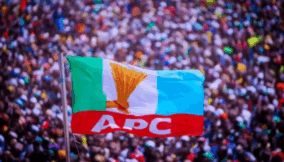
The ruling All Progressives Congress (APC) held its presidential primary on May 23 after adjusting its timetable from an earlier date. President Bola Tinubu emerged as the party’s candidate after defeating his only challenger, Stanley Osifo, in a nationwide direct primary.
Tinubu is Nigeria’s incumbent president and a former governor of Lagos State. He was elected president in 2023 and is seeking a second term in office.
Tinubu’s campaign focuses on consolidating ongoing economic reforms, infrastructure development, security improvements and job creation. His supporters argue that his administration’s policies require more time to yield results.
ADC
The African Democratic Congress (ADC) conducted its presidential primary on May 25, with former Vice President Atiku Abubakar emerging victorious after defeating former Rivers State governor, Rotimi Amaechi and banker, Mohammed Hayatu-Deen.
Atiku served as vice president between 1999 and 2007. He has contested for the presidency multiple times and remains one of Nigeria’s most prominent opposition figures.
Atiku has pledged his commitment to economic revival, private-sector-led growth, restructuring, job creation and national unity. He also pledged to tackle poverty and improve the business environment.
NDC
The Nigeria Democratic Congress (NDC), held its presidential primary on May 29, and ratified Peter Obi, former Anambra State governor as its presidential candidate. Obi was presidential candidate of the Labour Party in the 2023 poll.
In his acceptance speech, Obi pledged to increase Nigeria’s electricity generation and distribution by at least 10,000 megawatts within four years if given the mandate in 2027. He also pledged to tackle corruption, insecurity, transform the economy, create jobs and end widespread hunger through targeted investments in key sectors.
Labour Party
Labour party held its presidential primary on May 30, and picked Chibuzo Okereke as its presidential candidate. The Labour Party concluded its primary process on the final day permitted by INEC.
Chibuzo Okereke is a businessman and political figure who emerged from the party’s internal selection process after months of uncertainty within the Labour Party.
He pledged to build on the party’s message of good governance, transparency, youth inclusion and economic opportunities for Nigerians. He also promised reforms aimed at improving education and healthcare.
APM
The Allied Peoples Movement (APM) also picked Oyo State governor, Seyi Makinde, as its presidential candidate on May 30, during its prrimary in Ibadan.
Makinde is serving his second term as governor of Oyo State. Widely regarded as one of the country’s influential opposition governors,
Makinde pledged to expand economic opportunities, strengthen education, modernise infrastructure and improve national security through institutional reforms.
AAC
However, the African Action Congress (AAC), returned human rights activist and publisher, Omoyele Sowore as its presidential candidate during its presidential primary held in Abuja on May 26.
Sowore founded the Sahara Reporters. He has contested previous presidential elections on the AAC platform. He promised a radical overhaul of governance, anti-corruption measures, youth empowerment, accountability in public service and increased investment in education and social welfare.
SDP
The SDP also formally submitted the name of its presidential candidate, Adewole Adebayo, to the Independent National Electoral Commission (INEC) ahead of the 2027 poll.
In a letter signed by the SDP National Secretary, Olu Agunloye, and addressed to INEC following the party’s national convention and presidential primary held in Bauchi on May 9, 2026, the party said it was officially forwarding the details of its elected presidential flag bearer for the 2027 presidential poll.
Adebayo is a lawyer and businessman who was the SDP’s presidential candidate in the 2023 election. He has promised to focus on economic diversification, industrialisation, support for small businesses, agricultural development and constitutional reforms aimed at strengthening governance.
PRP
The People’s Redemption Party (PRP) on May 26,, declared a former governor of Cross River State, Donald Duke, as its presidential candidate for the 2027 poll.
Hakeem Baba-Ahmed, the party’s National Chairman, announced at the PRP national secretariat in Abuja that Duke secured the presidential ticket after scoring the highest number of votes in the primary election.
Duke governed Cross River State from 1999 to 2007. He promised to prioritise economic growth, tourism development, infrastructure, investment promotion and improved governance standards.
PDP
The Peoples Democratic Party (PDP) remains engulfed in internal divisions. A faction aligned with FCT Minister Nyesom Wike, however, announced former lawmaker, Senator Sandy Onor as its presidential candidate, while another faction associated with Kabiru Turaki declared former President Goodluck Jonathan as its candidate.
Onor emerged on May 26, while Jonathan emerged on May 30, 2026 in Abuja. Onor represented Cross River Central in the Senate and was the PDP governorship candidate in Cross River in 2023. Jonathan served as Nigeria’s president from 2010 to 2015 and remains one of the country’s most recognisable political figures.
Both camps have emphasised national reconciliation, economic recovery, security and democratic reforms, although the party’s crisis has overshadowed policy discussions.
NRM
Nollywood actress and film producer, Esther Okereke, also emerged as the presidential candidate of the National Rescue Movement (NRM) for the 2027 general election.
Okereke secured the party’s ticket at the NRM National Convention and presidential primary held in Abuja on May 29, becoming the party’s first female presidential flag bearer. She promised to prioritise security and economy among others.
ADP
The Action Democratic Party (ADP) equally fielded Aliyu Abbas, a former political aide to ex-Vice President Atiku Abubakar, as its presidential candidate.
Abbas, founder of the National Youth Alliance, clinched the party’s ticket at the ADP National Convention held in Abuja on May 30. He said his leadership would be ommitted to national renewal, inclusive governance, economic transformation, and the empowerment of Nigerian youths.
AA
The Action Alliance (AA) also nominated its National Chairman, Adekunle Rufai Omoaje, as its presidential candidate for the 2027 general election, formally positioning the party in the race for Nigeria’s highest office.
Omoaje, a grassroots politician from Ede in Osun State, accepted the nomination at a ceremony in Abuja May 30, where he pledged to provide purposeful leadership and strengthen the party’s agenda on good governance, unity and national development.
Accord Party
Gbenga Hashim also emerged the presidential candidate of the Accord Party during the party’s direct primaries held across the federation at the weekend.
Hashim is a businessman, human rights activist and former member of the Peoples Democratic Party (PDP). His agenda centres on security, economy, social welfare among others.
BOOT Party
The National Chairman of the Because of Our Tomorrow (BOOT) Party, Sunday Adenuga, has also emerged as the party’s presidential candidate for the 2027 general elections.
Adenuga secured the party’s ticket unopposed after no other aspirant entered the race, making him the sole contestant in the presidential primary.
In his acceptance speech, he thanked party members for entrusting him with the mandate and pledged to champion a transformative agenda aimed at reshaping governance and addressing the country’s pressing challenges if elected president.
YPP
The Young Progressives Party (YPP) on May 30, the final day approved for party primaries, adopted its National Women Leader, Anita Zugwai-Chukwu, as its presidential candidate for the 2027 general election.
Zugwai-Chukwu emerged unopposed during the party’s presidential primary, securing the YPP ticket without contest. Party leaders described her emergence as a strategic move aimed at strengthening the party’s position and expanding its appeal ahead of the 2027 polls.
In her acceptance speech, Zugwai-Chukwu promised to work towards national unity, economic growth, and improved welfare for Nigerians.
This brings the number to 15.
NDP
Meanwhile, fresh confusion has emerged over the 2027 presidential election after Ada Fredrick was announced as the presidential candidate of the National Democratic Party (NDP) two days after the expiration of the Independent National Electoral Commission (INEC) deadline for the conduct of party primaries.
The NDP on Monday unveiled Ada Fredrick as its candidate for the 2027 presidential poll during a press conference in Abuja, raising questions about the party’s eligibility to participate in the presidential contest.
INEC had directed political parties to conduct their presidential primaries and submit candidates within the window of April 23 to May 30, 2026. However, Fredrick’s emergence came on June 1, two days after the deadline had lapsed.
The development has created uncertainty around the party’s participation in the election, although a court case challenging INEC’s authority to impose timelines on political parties is still pending at the appeal court.
Addressing journalists, the party’s National Publicity Secretary, Dr. Emeka Wachuku, said Fredrick emerged through a consensus affirmation process conducted across the 36 states and the Federal Capital Territory.

Join BusinessDay whatsapp Channel, to stay up to date
Open In Whatsapp