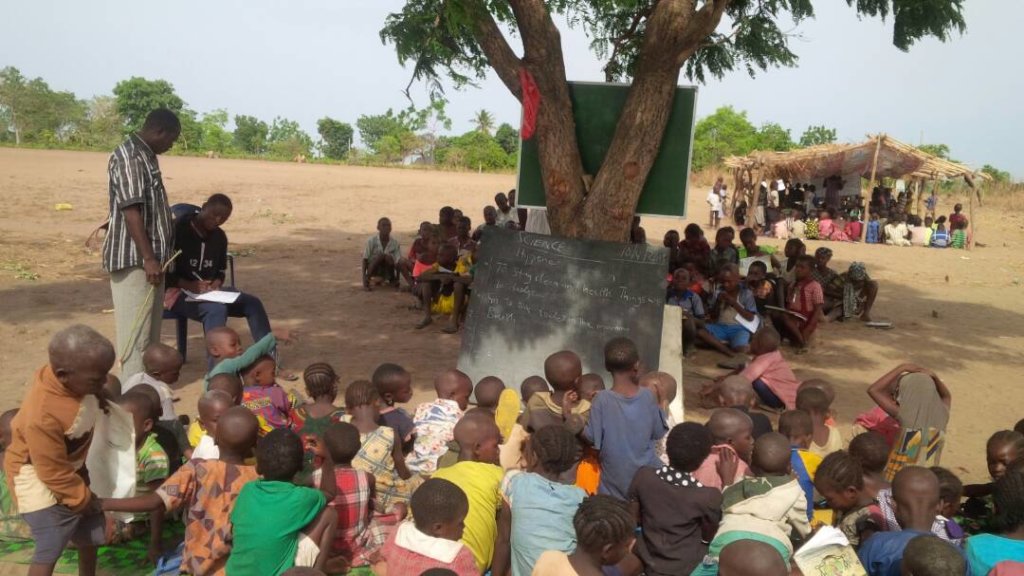
More than 7.15 million Nigerian children have been forced from their homes in the past three years, exposing a deepening humanitarian crisis driven by conflict, insecurity, natural disasters, and economic hardship.
For many of the displaced children, life has become a daily struggle for safety, shelter, education, and survival, with aid agencies warning of the long-term impact on an entire generation growing up amid instability and uncertainty.
According to data from ReliefWeb, leading humanitarian information service provided by the United Nations Office for the Coordination of Humanitarian Affairs (OCHA), in the northeast, northwest and north-central regions of Nigeria, humanitarian conflict or armed violence continues to affect 8.8 million people, including 4.9 million children, who need protection and access to health, nutrition, education, water, hygiene and sanitation (WASH) essential services.
There are 2.9 million people displaced across the three regions, including two million in the northeast in areas affected by armed conflict; 514,490 in three violence-affected states in the northwest; and 401,403 in Benue State in north-central Nigeria.
In 2023/24, there were an estimated 1.65 million internally displaced children in Nigeria due to conflict, according to a report by Intelpoint.
Not less than 1.8 million children were internally displaced in Nigeria due to conflict, armed violence, and severe flooding last year, and in the first five months of 2026, 400,000 internally displaced persons (IDPs), children make up the majority of the number, facing severe protection risks and acute malnutrition.
Among other challenges, most of the displaced children in Nigeria, especially those impacted by violence, lack access to uninterrupted education.
Education stakeholders expressed concern that the surging rate of displaced children in Nigeria, which they say is being fuelled by insurgency, armed banditry, and climate-related disasters, among others, poses a big threat to a child’s academic excellence.
Chikioke Okpara, a parent, emphasised that the stolen childhood that comes with displacement leaves children with severe academic challenges.
“Children may be forced to travel long distances to access education, exposing them to physical danger or deterring attendance altogether. “In many cases, the risks are particularly high for girls, whose education is further hindered by cultural norms and safety concerns,” he said.
Joy Labran said, “Internal displacement poses the gravest threats to the future of millions of Nigerian children. As they navigate loss, trauma, and instability, education can serve as both a lifeline and a ladder to recovery.
“In many cases, displaced children are denied even the most basic learning opportunities. Meeting their educational needs is not just a humanitarian obligation; it is a strategic investment in the country’s peace, prosperity, and long-term development.”
Industry experts believe that poor access to quality education escalates poverty and criminal activities.
In Nigeria, a study reveals that most of the states that lack quality education are also infested with a high rate of poverty and crime.
The quality of education in Bauchi, Gombe, Jigawa, Sokoto, Yobe, and Zamfara States can best be described as poor compared to other states such as Imo, Lagos, Ekiti, and Rivers.
Isaiah Ogundele, an educationist, affirmed that a poor educational system gives rise to a knowledge gap, which is a serious disease in Nigeria.
“Lack of proper education paralyses economic activities because when the unqualified people are occupying some sensitive positions in the absence of qualified people, they will mismanage the resources to the detriment of the masses,” he noted.
Stanley Alaubi, a senior lecturer at the University of Port Harcourt, sees education as the window to the world; poor education, he said, leads to impoverishment, though he argues education is not an end on its own.
“Yes, education is the window through which we see the world. It’s not an end on its own but a means to an end.
“The poorly educated are more dangerous than those not educated at all. The quack doctors, half-backed teachers, road side engineers constitute dangers to the economic development of the country,” he said.
According to the World Bank report in 2024, “Nigeria’s over 3.5 million internally displaced persons are a growing crisis that puts a significant strain on the nation’s economic growth.
“The Nigerian economy faces significant challenges due to the internally displaced persons crisis. One of the most pressing issues is the loss of a productive workforce.”
The figures behind Nigeria’s displacement crisis point to more than a humanitarian emergency; they signal a generational challenge that could shape the country’s social and economic future for decades. With more than 7.15 million children uprooted in just three years, the risk is not only the loss of homes, but the erosion of education, security, mental well-being, and opportunity for an entire generation.
Going forward, the response must move beyond temporary relief to long-term recovery strategies that prioritise child protection, access to education, healthcare, and community reintegration. Without sustained investment and stronger coordination between the government, humanitarian agencies and local communities, today’s displaced children could become tomorrow’s lost workforce and vulnerable population.
Yet, with urgent action and targeted support, Nigeria still has an opportunity to turn displacement into recovery, ensuring that millions of children are not defined by conflict and crisis, but by resilience, stability, and renewed hope.

Join BusinessDay whatsapp Channel, to stay up to date
Open In Whatsapp