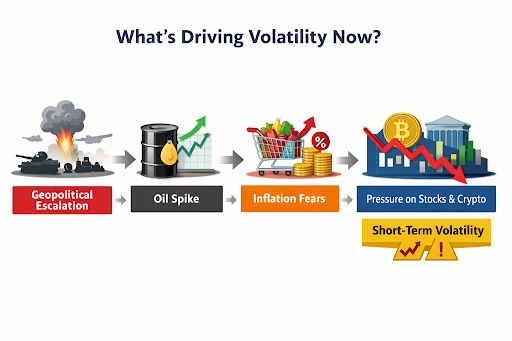
Short-term traders do not need a calm market — they need a market that is moving for a clear reason. Right now, that reason is the Middle East oil shock. Brent has surged this month, volatility across stocks, bonds, gold, and energy has jumped, and execution conditions have become more uneven as liquidity thins. That is exactly the kind of environment where IQ Broker can be used as a focused, multi-asset workspace for tactical decisions rather than broad long-term bets.
What’s Driving Volatility Now?
The current theme is simple: war risk has turned into an energy-market shock. Reuters reports that the conflict involving Iran has pushed Brent up nearly 60% this month, while the Strait of Hormuz disruption has removed a large amount of supply from normal flows. That matters because oil is not just another chart — it feeds directly into inflation expectations, rate expectations, transport costs, and overall risk appetite.
That is why the reaction is spreading across asset classes instead of staying inside commodities. Equities have become more fragile, especially in import-heavy regions; Morgan Stanley cut its view on global equities as investors moved toward Treasuries and cash; and Reuters says volatility indices in oil, bonds, stocks, and gold have all moved toward crisis-era levels.
Crypto is reacting too, but not in a clean one-way pattern. When macro fear rises this quickly, digital assets can behave like high-beta risk assets for a few sessions, then rebound sharply as flows rotate back into liquid speculative instruments. That is why crypto news volatility is not only about crypto-specific headlines right now. It is also tied to oil, rates, and broader risk sentiment.
Which assets are reacting fastest
- Oil and energy-linked instruments are moving first and hardest.
- Stock indices are reacting to inflation and growth fears.
Tech and other risk assets are vulnerable when oil squeezes valuations. - Crypto is seeing fast intraday swings as traders reprice macro risk.
This is what creates real volatility trading opportunities: one macro theme, multiple assets, and fast sentiment shifts.
Tactical Trading Strategies for This Theme
When volatility is event-driven, traders usually do better with simple logic than with complicated forecasts. The point is not to predict the whole month. It is to identify which reaction is immediate, which reaction is lagging, and where the next short window may open.
1. Trade the first reaction, not the whole narrative
In an oil-shock market, the cleanest setup is often the first directional move after a fresh escalation headline or supply-risk update. Oil spikes, indices weaken, and traders look for short term trading opportunities in the assets that are slowest to adjust.
A practical version of this setup:
- watch oil-linked instruments and major indices together;
- mark the first breakout after a confirmed geopolitical headline;
- avoid entering in the middle of a panic candle;
- wait for a small pullback or consolidation;
- trade only if momentum stays aligned across related assets.
This is one of the most useful tactical trading strategies in a headline market because it is based on reaction speed, not on opinion.
2. Use crypto as a secondary volatility play
There are also short term crypto trading opportunities when traders start rotating between fear and rebound mode. Crypto often overreacts to macro stress, which creates sharp two-sided movement instead of smooth trends. That makes it useful for traders who want to trade crypto volatility rather than hold a long-term view.
What to look for:
- a large macro-driven drop followed by weaker follow-through;
- sudden rebounds after market-wide positioning gets too one-sided;
- intraday breaks of key levels during high-volume sessions;
- stronger relative behavior in Bitcoin versus smaller coins.
The key is to treat crypto as a tactical instrument, not as a belief trade. In this kind of market, short term trading opportunities appear when macro stress and positioning collide.
Where earnings fit in
This is not classic earnings season trading, but the same logic applies. A stock or sector is hit by an external catalyst, volatility expands, and traders focus on reaction quality: gap, follow-through, rejection, reversal. The method is tactical, even if the headline is geopolitical rather than corporate.
Using IQ Broker to Execute Your Tactics
This is where IQ Broker becomes practical. In a fast market, traders need a platform that lets them move from theme to chart without friction. The goal is not to monitor everything. It is to narrow down the assets most exposed to the theme and work with clear execution rules.
A useful process on IQ Broker looks like this:
- build a short watchlist around oil, major indices, and liquid crypto pairs;
- use one chart layout across all assets so decisions stay consistent;
- keep indicators simple — price, momentum, and one volatility filter are enough;
- mark headline-driven highs and lows before entering anything;
- focus on short windows, not heroic forecasts.
For traders who want a volatility trading platform, speed matters, but so does restraint. Fast access only helps if your process stays narrow.
A simple tactical chart routine
- Identify the day’s headline driver.
- Choose 2-3 assets tied to that theme.
- Mark the first impulse move.
- Wait for either breakout confirmation or failed continuation.
- Enter only when the chart and the macro theme still match.
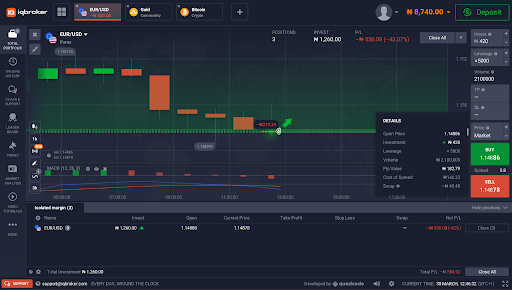
That is how IQ Broker is best used in this environment: as a platform for selective, event-driven trades, not random clicking.
Managing Risk in Volatile Markets
The biggest mistake in a live volatility spike is assuming more movement automatically means more opportunity. It can also mean worse entries, wider spreads, and emotional overtrading. Reuters noted that current conditions have already brought wider bid-ask spreads and thinner liquidity in major markets, which is exactly why risk management in volatile markets has to tighten, not loosen.
A tactical risk framework should be simple:
- cut position size when candles expand;
- lower leverage when the market starts skipping levels;
- place stop-loss and take-profit before the trade becomes emotional;
- stop trading after one or two poorly executed decisions;
- avoid stacking multiple trades on the same headline.
This matters even more if you want to trade crypto volatility, because fast reversals can punish oversized positions quickly. Adjustable leverage, clear stop placement, and controlled position sizing help keep the trade tactical instead of reactive.
FAQ
Why is the market so volatile right now?
Because the current Iran-linked conflict has disrupted energy markets, pushed oil sharply higher, and increased inflation and recession fears across multiple asset classes.
Which assets offer the best short-term setups in this theme?
Oil-linked instruments, major stock indices, and liquid crypto pairs are reacting most clearly to the current macro shock.
Is this a good time for short term crypto trading opportunities?
Yes, but only tactically. Crypto is volatile enough to create opportunity, but the moves are being influenced by broader macro fear, not just coin-specific news.
How are tactical trading strategies different from normal trading?
They focus on short-lived reactions to a specific catalyst, such as war headlines, supply shocks, or earnings, rather than long-term direction.
What is the main risk in this market?
Overtrading fast headlines with too much size. In unstable conditions, survival and selectivity matter more than trade frequency.

Join BusinessDay whatsapp Channel, to stay up to date
Open In Whatsapp