
Every food creator has that one recipe that shifts everything. For Tolulope Fadare, it came in early November 2024, when he drove back out into a Warsaw winter to buy the cow liver he had forgotten at the shops, because Nigerian fried rice without liver is not Nigerian fried rice. He made the dish, filmed it, and posted it. That video now has over 40 million views across platforms and more than one million saves, and it belongs to a man who was, not long before, driving for four days to flee a war just to stay alive.
Tolulope Fadare, who creates under the name Jeunpelumi, is from Ifaki-Ekiti and studied Philosophy at Adekunle Ajasin University in Akungba-Akoko. He was living in Ukraine when Russia invaded in 2022. After crossing the border, he was denied a Canadian visa twice, treated poorly in Switzerland because of his nationality, and spent years moving between countries before settling in Warsaw two years ago. He describes the decision to stay as a deliberate one, a choice to build something purposeful from where he was rather than wait for conditions that might never come.
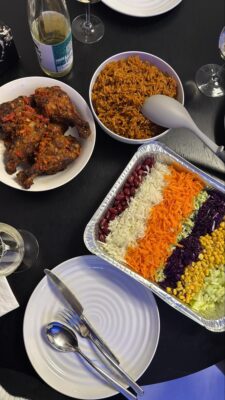
What he built is Jeunpelumi, a food content brand with over one million combined followers on Instagram, TikTok, Facebook, and YouTube. Jeunpelumi means eat with me in Yoruba, and it was chosen with intention. His grandmother cooked with an open door, different pots of soup almost every day, always with extra for whoever needed it. She sourced fish from Igbokoda and a particular breed of goat called Rago from Northern Nigeria because quality was not negotiable for her. She took him to the market as a child, and both the habit and the hospitality followed him everywhere he went.
The content started quietly. Fadare had been making food videos for three years before he began sharing them formally in February 2024, building a backlog that gave him material from day one. Growth came, but the real turning point was not a viral moment. It was a language decision. He stopped narrating in English, which felt scripted and distant to him, and switched to Yoruba. When he re-edited older videos with Yoruba voiceovers and posted them to TikTok, one reached nearly one million views without any paid promotion. He had not changed what he was cooking. He had changed how he was presenting it.
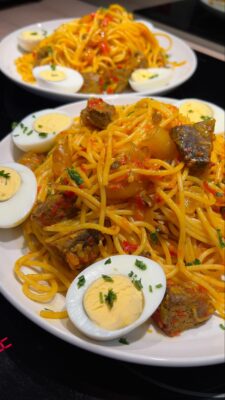
Narrating in Yoruba did something no amount of polished production could. It told a specific audience that this content was theirs, made from inside the culture, while also carrying Nigerian food to a global audience that had never encountered it that way before. In a space crowded with food creators chasing the same aesthetic, Fadare’s unscripted voice became his signature. He narrates the way you talk through a recipe with someone standing beside you, and his viewers feel it. Some have gone as far as buying whole goats to recreate his Asun fried rice at home, a dish he considers his go-to when teaching someone a recipe worth replicating.
Food, to Fadare, is not just something you make. He studies heat variation, texture, and shelf life with the same seriousness he brings to sourcing ingredients. He reads other culinary traditions and borrows from them thoughtfully, applying techniques from other parts of the world to recipes that remain Nigerian in soul. Less is more is the philosophy he returns to consistently, and it shows in food that lets its ingredients speak.
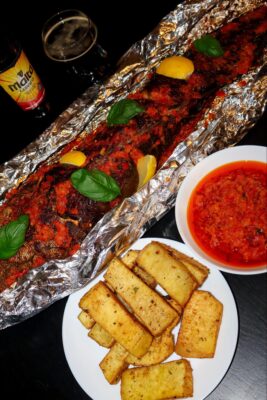
Success on that scale creates its own demand, and Fadare has met it by expanding what Jeunpelumi offers. Beyond his content, he coaches food creators on how to build scroll-stopping, value-driven videos, covering everything from structure to narration to the small decisions that determine whether someone watches or moves on. He runs one-on-one cooking consultations and a cooking class covering more than 30 dishes, both focused on technique and understanding rather than instruction alone. He is also developing a multi-volume Nigerian cookbook. All of it grew from what his audience asked for, and all of it carries the same belief: that knowledge passed on is hospitality in another form.
That hospitality is also where his faith lives. He speaks about God the way he speaks about his grandmother, as a foundation rather than a flourish, and often says that God is the master chef and simply shows off through him.
Jeunpelumi is a success story, but it is also something quieter than that. It is what happens when a person decides that what they have is enough to begin with. Forty million views later, the invitation remains the same. “Wa jeun”. Come and eat.

Join BusinessDay whatsapp Channel, to stay up to date
Open In Whatsapp