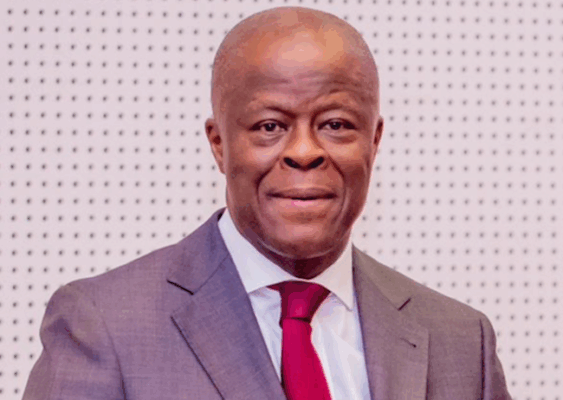
Wale Edun, finance minister and coordinating minister of the economy, on Tuesday, called for urgent reforms across African fiscal systems, warning that illicit financial flows cost the continent nearly $88 billion annually and undermine development prospects.
Speaking in Abuja at the opening of the 5th session of the African Union sub-committee on tax and illicit financial flows, Edun said that stemming these losses and mobilising domestic resources is now critical for Africa’s economic future, as the continent can no longer rely primarily on debt, aid, or external investment to finance growth.
“We gather at a defining moment for Africa’s economic future – one in which the question is no longer whether we must reform, but how urgently and how boldly we are prepared to act,” Edun said, emphasising that Africa’s ability to translate its demographic and natural potential into sustained prosperity depends on the strength of its own institutions and the efficiency of domestic resource mobilisation.
He stressed that Agenda 2063, the African Union’s blueprint for a self-reliant continent, provides a clear pathway for reform, including strengthening tax systems, enhancing domestic savings and financial inclusion, developing capital markets, and combating illicit financial flows.
Read also: Edun signals PIA review as Tinubu’s executive order 9 takes effect
According to him, “achieving this will require not incremental change, but systemic reform.” The continent must also reduce dependency on external financing, tackle tax evasion, and embrace bold economic diversification.
Highlighting Nigeria’s recent reforms as an example, Edun described steps taken under President Tinubu, including comprehensive tax reforms implemented in January 2026, the removal of fuel subsidies, and the unification of the exchange rate.
He also pointed to enhanced transparency measures in the country, including the remittance of all oil and gas revenues into constitutionally designated accounts and the launch of a National Single Window system to curb trade-based illicit financial flows.
These reforms, he said, are already yielding results. “Nigeria has recorded notable improvements in revenue performance, particularly in non-oil revenues, alongside stronger fiscal buffers and increased investor confidence,” he noted.
Edun argued that these practical, country-led reforms are essential to advancing Africa’s collective fiscal resilience, as he called for regional cooperation, coupled with information exchange to recover revenues lost through illicit financial flows,
“The changing global landscape presents both challenges and opportunities. It calls on us to act with urgency, but also with confidence. Africa has the resources. Africa has the talent. Africa has the institutional foundation to succeed,” he stressed.
The two-day session gathers African Union officials, revenue authorities, multilateral agencies, and experts to design strategies to combat illicit financial flows and strengthen fiscal systems, in line with Agenda 2063’s vision of a prosperous, integrated, and self-reliant Africa.
Welcoming the delegates, Zacch Adedeji, executive chairman, Nigeria Revenue Service (NRS), also reinforced the urgency of addressing illicit financial flows.
He warned that this remains one of Africa’s most pressing challenges, diverting billions of dollars annually that could fund schools, hospitals, infrastructure, and other investments.
“The scale of the problem was highlighted in the influential High Level Panel on Illicit Financial Flows from Africa Report, which brought global attention to the magnitude of financial leakages affecting African economies,” Adedeji told the audience.
He urged stronger coordination across African countries and institutions, noting that illicit flows exploit regulatory gaps and differences in jurisdiction.
He emphasised that effective tax systems are essential not just for generating revenue, but strengthening governance, deepening the relationship between citizens and the state, and providing the resources required for sustainable development.
Adedeji cited Nigeria’s ongoing modernisation of its revenue administration, which is increasingly technology-driven, transparent, and aligned with national development objectives.
In her remarks, Mary Baine, executive secretary at African Tax Administration Forum (ATAF), highlighted the urgent need for Africa to finance its own development amid rising fiscal pressures and persistent illicit financial flows.
She corroborated that billions of dollars are lost each year to tax evasion, aggressive avoidance, and opaque corporate structures, siphoning resources from infrastructure, healthcare, and education.
She further raised the concerns that African countries face tightening fiscal space amid global instability, including the impact of conflicts and post-COVID recovery pressures.
Baine stressed that African tax administrations are central to addressing these gaps, citing that ATAF-supported interventions in 2025 generated $907.8 million in new assessments, of which $685.8 million was collected. “The Africa we want will not be built for us; it will be built by us,” she said.

Join BusinessDay whatsapp Channel, to stay up to date
Open In Whatsapp