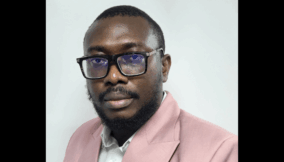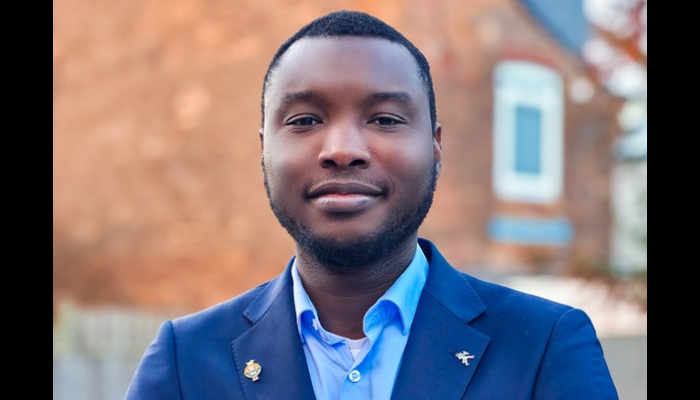
As infrastructure projects grow more complex and capital-intensive, artificial intelligence is emerging as a critical tool for improving safety, efficiency, and execution certainty. At the forefront of this shift is Abideen Sobanke, a Nigerian civil engineer and digital delivery specialist at Mott MacDonald, where he develops AI-powered solutions for major global infrastructure programmes. From high-speed rail to smart urban systems, his work integrates data intelligence into engineering design and assurance processes. In this exclusive interview with BusinessDay’s Stephen Onyekwelu, Sobanke discusses AI’s growing role in preventing infrastructure failure, improving project delivery, and expanding opportunities for Nigerian professionals in global infrastructure innovation. Excerpts
Were there any instances or stories in your childhood that revealed patterns of your becoming?
There are a lot of stories. Often, I tell people that my strength in mathematics stems from growing up in solitude and from developing a strong curiosity. I remember my sister taking a course in Engineering Drawing at the university, which gave me access to materials like Engineering drawing boards. Remember those old cassettes? I used them and boards to create building prototypes. Although it would break my heart whenever my sister resumed school because she would take her board and destroy the house I built. But I was always passionate about building things from scratch.
My ability to recognise patterns and manipulate numbers was particularly helpful in structural engineering, especially in load transfer within buildings, from the slab to the beam, column, and foundation. That also helped me when I got into Artificial Intelligence, because an aspect of it, say, computer vision, is pattern recognition. For instance, if a model recognises your face as human, it means it has been trained to recognise patterns that make up a face.
Beyond leadership roles, were there any awards, recognitions, or competitions in your early years that shaped your academic journey?
During the end-of-session ceremony in elementary school, the first three positions were consistent for me, but I particularly excelled in mathematics. And that transitioned into high school, too. In my high school, which had about 6,000 students, by the way, I was a very active member of the Jet Club and also a very active football player. I represented my school in several competitions. I remember Cowbell Competitions, American Mathematics, International Olympiad, and other local competitions, such as the Akinfimojuaye Annual competitions and the like. I think being involved in those competitions led to being named one of the top 100 students in mathematics in Nigeria.
Take us further into the journey of your university days. What was the experience like, and how did you balance leadership roles with industrial training?
Before I entered the university, I took the Cambridge Advance Level exam to prepare for my second year of university studies. There, I had the best results in mathematics and physics. But getting into the university was humbling. I arrived thinking I was exceptional, only to realise I was surrounded by other high performers. That pushed me to collaborate more and raise my standards.
I graduated second in my class while gaining hands-on experience in foundation, structural, and bridge engineering through industrial training and consulting roles. At the same time, I progressed through leadership roles from General Secretary to Vice President, and eventually to President in my final year. While still being the South West coordinator of Civil Students in Nigeria. Balancing both came down to delegation and coordination. I learned to leverage people effectively, sharpening my oversight and critical thinking while navigating the engineering profession with growing confidence.
After graduation, what was your NYSC experience like, and how did it shape your professional development?
I spent just three weeks at the NYSC camp in Cross River State in 2018 before relocating back to Lagos. While in camp, a few friends would challenge me with numbers. At one point, I was calculating square roots of call-up numbers on the spot during a social night. It became a defining memory of that short stay. Although the state coordinator wanted me to remain and teach, I had already secured two job offers in Lagos and was focused on gaining industry experience. During my service year, I worked in telecoms infrastructure, where I accelerated my growth. I was involved in audit maintenance and infrastructure optimisation, implementing solutions around foundation mapping and structural strengthening. I also contributed to steel design projects, including grillage systems and rooftop tower structures, for example, the steel towers at the top of Dangote office in Falomo.
That phase marked a transition from academic excellence to practical engineering impact, laying the groundwork for my later pivot to data-driven, AI-enabled solutions.
In your early career, were there any pivotal moments that surfaced as a result of your track record?
Yes, I think one thing that sets me apart is my brilliance, not only in academics but also in practice. I have been fortunate to be wanted on multiple projects. I recall my first company post-university, when two project managers were competing to bring me on their projects. They met the CEO to try to poach me.
Most of my experiences in telecoms infrastructure and Engineering Construction were a factor in my decision to transition into Artificial Intelligence. We conducted extensive structural health monitoring, and before you can do that, you need data. Whenever we sent people out to take readings in the field, we realised we were not getting accurate data. And if you’re not getting accurate data, your analysis and recommendations won’t be as accurate or solid as they should be. Those were the gaps I realised were affecting our ability to provide accurate recommendations as consultants. I feel issues like infrastructural collapses are a result of the inconsistencies in the validity of the data these individuals were collecting. And that is why I decided to explore technological applications.
What informed your decision to pursue an MSc in Artificial Intelligence, and were you able to develop solutions applicable to infrastructure challenges in Nigeria?
I took a career break to pursue my MSc in Artificial Intelligence because I had begun to see critical loopholes in the civil engineering industry. Most infrastructure failures aren’t necessarily caused by bad engineering; they’re caused by bad data. When the inputs are wrong, even the best designs become unsafe. I wanted to understand how AI could address those gaps, especially in areas like structural health monitoring, quality assurance, and engineering decision-making. I completed my Master’s on scholarship, with partial funding from the university.
From the outset, my focus was practical. Many of the large-scale infrastructure solutions I’ve worked on across the UK, Europe, the UAE, and other regions worldwide are highly transferable. The environments may differ, but the core challenges around data accuracy, compliance, productivity, and risk remain similar. I believe there’s significant overlap and that these AI-enabled solutions can be effectively adapted to tackle infrastructure challenges in Nigeria and across Africa.
Now that you’re in the Artificial Intelligence industry, do you still encounter similar problems from that time?
I’ve seen many different problems in Civil Engineering, which was the basis for my MSc research, where I looked at Artificial Intelligence applications in Civil Engineering. From construction quality management, productivity tracking, and on-site safety management to cross-examination and planning, I’ve seen applications of Artificial Intelligence, both in theory and practice.
So, I am convinced that most of the challenges can be solved using Artificial Intelligence. Some of the most impactful AI engineers won’t come from computer science backgrounds, but from industries like construction, energy, and transport. Where problems are real, physical and urgent.
Now that I am working in an organisation where my role is to develop AI solutions for infrastructure development, I have begun implementing them in my day-to-day work.
Many assume a prestigious Master’s degree simplifies the job search, but what was your actual journey like? Was your first role secured through academic merit, active job hunting, or direct recruitment?
My first job was in the Energy industry in the UK. I was not yet finished with university when I landed a job in energy networks, where I worked on Artificial Intelligence for detecting faults in energy networks.
The organisation came to the university, and the University asked everyone in my department to apply. Over a hundred applied. They called about seven of us for the interview, and three of us got the internship. One person was meant to get a full-time role, and eventually, I was the one who received the full-time offer and stayed with them for about a year.
Let’s revisit your most recent award, the Global Excellence in Digital Delivery, Rising Star. Talk to us about the process and your emergence as the winner.
The award is open to professionals within their first ten years of practice, and because my company operates globally, that means competing with applicants from every region of the world. Making it to the finals alone was a huge milestone.
From there, a panel of global leaders across Artificial Intelligence and Digital Delivery interviewed four finalists, and I eventually emerged as the winner. The recognition was based on four key areas: efficiency, impact, innovation, and legacy. Highlighting my work in building solutions that improve processes, deliver measurable results, introduce new ways of working, and leave a lasting digital footprint for clients, businesses, and Mott MacDonald.
As someone who works with a global firm, can you provide examples of projects you’ve worked on across different continents?
In my role within my organisation, I’ve contributed to large-scale infrastructure and digital delivery initiatives across multiple regions, primarily in the UK and Europe, with solutions designed to be transferable across geographies. A significant part of my work has focused on improving technical assurance and decision-making within complex programmes by embedding advanced analytics and automation into existing delivery environments.
These initiatives aimed to reduce manual effort, improve consistency, and surface insights earlier in the project lifecycle. Alongside this, I have worked on initiatives to improve access to technical standards and guidance for multidisciplinary teams.
By enabling faster interpretation and application of complex requirements, this work supported better design consistency, reduced rework, and helped teams make more informed decisions. I have also contributed to projects in the Middle East, where I supported the development of intelligent approaches to requirements management. This work focused on automating the extraction, validation, and ongoing management of engineering requirements from complex documentation, helping teams maintain control and traceability throughout delivery. The impact of this work was recognised internally for its AI implementation.
In the UK, I have been involved in projects that applied advanced analytics to infrastructure asset monitoring, supporting the automation of traditionally manual inspection activities. These initiatives improved safety outcomes, increased accuracy, and accelerated delivery timelines, and were later recognised through industry awards, such as Best Use of Technology at the Scottish Chamber of Commerce Awards 2025.

Join BusinessDay whatsapp Channel, to stay up to date
Open In Whatsapp