The United Nations Children’s Fund (UNICEF), the Federal Ministry of Information and National Orientation, and critical stakeholders in the education sector have urged media practitioners to adopt a solution-based approach to address pressing child rights issues in the country.
The children’s agency urged the media to tell stories about child rights with passion rather than treating them as mere numbers, noting that journalists wield the unique power of storytelling to mobilise and drive change in any society.
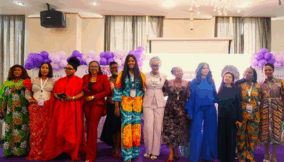
This call was made during a two-day training for northeast and northcentral media practitioners organised by UNICEF: Ethical Reporting of Children in Gombe, which emphasised the media’s role in upholding the highest ethical and professional standards, especially in reporting children’s issues in Nigeria.
Sussan Akila, UNICEF Communication Specialist, said the training underscores the importance of amplifying the voices of vulnerable children.
She noted that children face various forms of deprivation, including poor health and lack of education. It is imperative to protect and promote children’s rights. Ethical reporting builds trust and heals division, especially in nations or societies with diverse ethnicities, religions, and perspectives, such as Nigeria.
“The choices the media make every day on what to report, how to report it, and whom to protect— will directly shape the narrative of the children and the future, either to make or to mere. Hence, there is a need for the media to protect the children from any report that will hurt their future.”
Earlier in his welcome address and objective, Tote Falayi, director of the Child Rights Information Bureau (CRIB) of the Federal Ministry of Information and National Orientation, said the programme is in collaboration with UNICEF.
He stressed the initiative aims to equip journalists with the ethical frameworks governing the reporting of children in Nigeria, including the Child Rights Act, identify and mitigate risks associated with reporting on children, and ensure their safety, privacy, and dignity are protected.
Also, Jide Johnson, director of Special Programme, Nigeria Institute of Journalism, explained that the focus of the training is not on the media playing their roles, but on equipping them with the right tools to protect children.
“What we want is the media to use what is called the right-based approach to reporting issues affecting the children, so that we protect those that we need to protect, and we call to action those that we need to call to action.
“And you must agree with me that we must always learn if we to grow as individual, as an institution. We must train and be retrained for us to be a better to be a better journalists,” Jide explained.

Join BusinessDay whatsapp Channel, to stay up to date
Open In Whatsapp