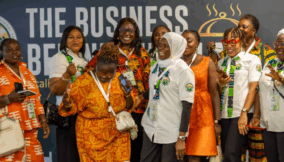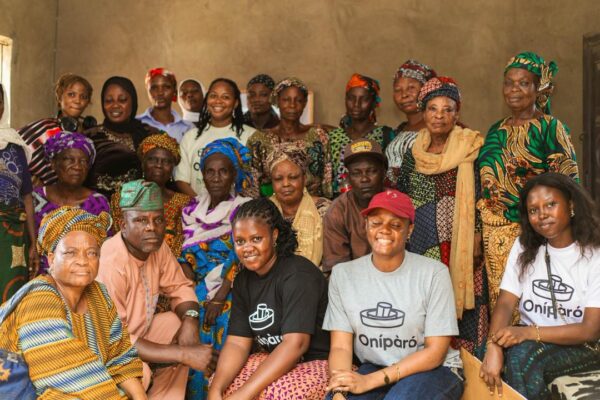
EcoSmart Club, a youth-led grassroots organisation championing climate action, is launching the Oniparo Project to cut down on Nigeria’s growing textile waste.
The nine-month project aims to shed light on the impacts of fast fashion on the circular economy and the contribution of Oniparo Women to curbing textile waste in Nigeria and Africa at large.
Hannah Omokhaye, founder of EcoSmart Club, said these women are not only the pioneers of the circular economy in Nigeria, but they are also providing affordable clothing for low income-communities both in Nigeria and other West African countries, as well as livelihoods for themselves and their families.
“This vital business is rapidly declining due to economic shifts and climate change. In particular, unpredictable weather affects their mobility and heatwaves impact their health, and a growing preference for disposable clothing among people, which is influenced by cultural shifts and even religious beliefs,” Omokhaye said.
“There is little to no documentation or advocacy about Oniparos, leaving them overlooked in informal circular economy discussions. Yet, they play a critical role,” she added.
Supported by the African Climate Alliance — a youth-led, movement-based, grassroots organisation acting and advocating for Afrocentric climate justice — the project is to span from March to October 2026.
Read also: Women are necessary partners in development
Globally, textiles represent the second-largest industrial sector that creates employment for people. Apart from job provision, the industries feed several other manufacturing industries in producing materials for human and non-human consumption.
However, according to the United Nations Environmental Programme (UNEP), roughly 92 million tons of textile waste is generated worldwide each year. This is equivalent to a truckload of clothing being incinerated or sent to landfills every second.
Textile waste generates about 10 percent of global Greenhouse Gas (GHG) emissions and 20 percent of wastewater. Nearly five percent of the waste in landfills is textile waste, and approximately 35 percent of all oceanic primary microplastic pollution is caused by the fashion industry operations.
According to Hannah, the project will create public awareness of the co-benefits of zero textile waste, livelihoods, and cultural preservation. “The Oniparo trade is a generational livelihood system. The women play a significant role in clothing redistribution and circular economy practices.”
On her part, Oluwatoyin Ajao, project manager of Oniparo, said the initiative would spark conversations around textile waste, sustainable fashion, and policy inclusion of women who actively drive the circular economy.
“This project is a shift from the previous ones executed by the team. Not only are we using inclusive storytelling to preserve culture, through this project, we are also showcasing afrocentric solutions to global issues such as textile waste and the broader conversion of environmental sustainability,” Ajao said.
Read also: Women drive Africa’s $59bn creative economy – BCG report
Oniparo is a Yoruba term for people involved in exchange trade, referring to women who move from house to house, collecting discarded or secondhand clothes, which they exchange for money or household items such as buckets and basins.
EcoSmart Club aims to instil environmental consciousness in communities via community building, guidance, upcycling, recycling, advocacy, tree planting and green skills.

Join BusinessDay whatsapp Channel, to stay up to date
Open In Whatsapp