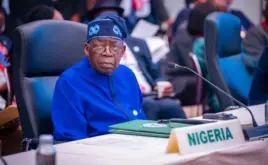
The country’s education sector is one major sphere awaiting the promised change by the All Progressives Congress (APC) led Federal Government. Whoever succeeds in becoming the minister of education in the weeks ahead will be charged with the responsibility of overhauling the nation’s education sector towards the enthronement of quality standards across levels, and restructuring tertiary education to meet the needs of industry and the larger society.
Stakeholders say the rot in the nation’s education sector stems largely from a faulty teacher training and re-training process, a poor teacher selection process, low teacher motivation in terms of pay and conditions of service.
They thus say the incoming minister of education will need to focus on empowering teachers, as any education system can only be as good as the teachers involved.
Experts project that Nigeria requires close to two million more teachers to meet basic teaching needs in the schools system.
Peter Okebukola, former executive secretary at the National Universities Commission (NUC) now a professor at the faculty of Science and Technology Education of the Lagos State University (LASU), laments that “the poor quality of teachers in the Nigerian school system is a major force steering education in the wrong direction.” Okebukola strongly believes that “until our teachers are better trained and well motivated, all efforts to improve the quality of the education system will be severely compromised”.
On tertiary education, stakeholders, especially employers of labour, are worried that over the decades, graduates from the nation’s tertiary education system enter the labour market without the requisite skills for valuable contribution to industry.
This has forced some companies to invest so much resource in setting up academies to retrain these graduates. The obsolete curricula in place in the tertiary education system, the deficiency in the teaching faculty and an absence of proper synergy between the ‘Town’ and ‘Gown’ in the training of students have been identified as clogs in the wheel of the nation’s tertiary education system.
Henrietta Onwuegbuzie, academic director, Owner-Manager programme, Lagos Business School (LBS) commenting on curriculum in public universities says that “the curriculum we continue to use were appropriate for the colonial and post-colonial era, where universities were intended to prepare graduates to fill posts in ministries”. For Onwuegbuzie, “society has changed fundamentally…” She recomends that to make universities respond to the new needs of the society, “the re-training of lecturers, as well as making fundamental changes to the curriculum” will be necessary.
There is also a call for a better supervisory function in the education system, towards ensuring quality standards and delivery. The proliferation of primary, secondary schools and tertiary institutions, especially with growing private sector involvement in the provision of education in the last two decades has created a need for a stronger and more responsive supervisory framework in the education ministries across the country. This also needs to happen in tertiary supervisory bodies like the NUC stakeholders say.
Observers say that supervision has been weak and compromised. Many private primary and secondary schools which litter the country do not employ qualified teachers, as quality is often sacrificed on the altar of profit.
Stakeholders note that some private universities are also found wanting in the area of maintaining minimum standards of quality.
Adetunji Ogunyemi, Economic Historian and Lecturer at the Obafemi Awolowo University Ile-Ife, Osun State says that “some private universities are a disservice to the education sector and the academia generally, in terms of the content of their curricula and the way they implement them.
Ogunyemi further laments that “most of the lecturers they assemble are either not qualified or have not gained the requisite experience to occupy the offices they allocate to them.”
Experts believe that if Nigeria would take its rightful position in the comity of nations, matters of education and human capital development must be taken seriously. The new education minister must set his or her priorities right and take the bull by the horn.
IKENNA OBI

Join BusinessDay whatsapp Channel, to stay up to date
Open In Whatsapp