

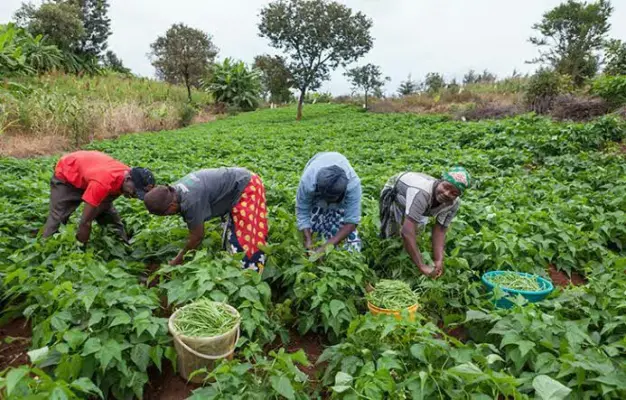
The Federal Government on Wednesday unveiled a ₦300,000 interest-free loan scheme targeted at smallholder farmers, in a move aimed at improving agricultural productivity, enhancing food security and deepening financial inclusion.
The initiative, tagged the FarmerMonie Dry/Wet Season Programme, was launched alongside the Renewed Hope Government Enterprise and Empowerment Programme (RH-GEEP 3.0) on Wednesday in Abuja under the National Social Investment Programmes Agency (NSIPA).
Bernard Doro, minister of humanitarian affairs and poverty reduction, said about 22, 000 farmers across the 774 local government areas will benefit in the first phase of the scheme.
Under the arrangement, eligible farmers will access loans of up to ₦300,000 without interest or collateral, with a three-month moratorium before repayment. The funds are expected to support the purchase of seeds, fertilisers, equipment and other inputs critical to both dry and wet season farming.
The programme is part of the administration’s broader social investment strategy and comes at a time when food inflation remains elevated and access to affordable credit continues to constrain small-scale agricultural production.
Doro said the intervention is designed to strengthen smallholder farmers and position agriculture as a viable pathway out of poverty.
“By empowering farmers with resources across both planting cycles, we are boosting food security and ensuring agriculture remains a sustainable source of livelihood,” he said.
He also disclosed that 9.3 million households have so far benefited from the government’s conditional cash transfer (CCT) scheme, with plans to scale the number to 16 million households by the end of 2026. According to him, the beneficiaries were drawn from the National Social Register.
Badamasi Lawah, acting national coordinator of NSIPA, described the programmes as strategic interventions to place economic empowerment and productive livelihoods at the centre of national development.
RHGEEP 3.0, he said, will provide structured access to finance and enterprise support for micro, small and informal businesses, while FarmerMonie focuses on sustaining agricultural output across seasons.
“Agriculture remains a critical driver of food security, employment and rural development. Supporting farmers across planting cycles ensures income stability and production continuity,” Lawah said.
Hamza Baba, national programme manager of GEEP, said the FarmerMonie portal has been opened for applications. He noted that the scheme targets existing small-scale farmers, not large commercial operators.
Eligibility requirements include Nigerian citizenship, minimum age of 18, evidence of farming activity (owned or rented land), bank account details, National Identification Number (NIN), and membership of a recognised farming cooperative or association.
Baba said the programme is expected to cover all 774 local governments, with a target of at least 28 farmers per LGA in the current phase, translating to over 22,000 beneficiaries.
To strengthen transparency and repayment compliance, participating banks will leverage digital identity tools, including BVN and NIN verification.
Timileyin Obisesan, head of partnerships at Wema Bank, one of the financial institutions involved in disbursement, said the bank would validate beneficiaries before releasing funds.
“We are not just distributing money. There will be proper identity verification to ensure the funds reach the intended beneficiaries,” he said.
He added that the bank has deployed agents and trained personnel to reach farmers in rural communities, working with cooperatives and other local structures to facilitate onboarding and monitoring.
The government said the digitised registration and verification process, combined with collaboration with farmer associations and financial institutions, is intended to minimise political interference and ensure the loans reach genuine smallholder farmers.

Join BusinessDay whatsapp Channel, to stay up to date
Open In Whatsapp


