…to become the world’s most populous country
…says lending capacity expanded by about $100bn
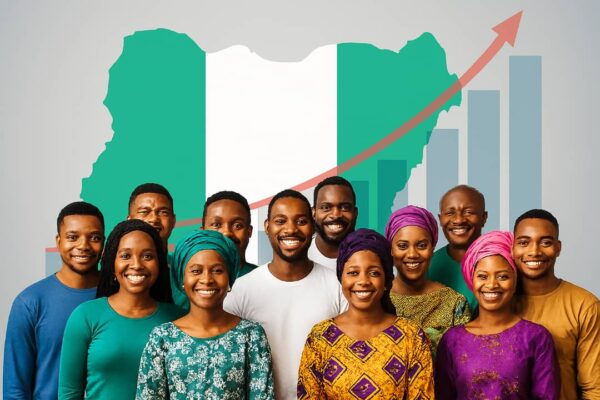
Washington, DC || Nigeria’s population is projected to swell by about 130 million by 2050, firmly establishing the country as one of the most populous nations in the world, according to the World Bank Group.
Ajay Banga, President of the World Bank Group, disclosed this during the 2025 Annual Meetings Plenary held in Washington, D.C., where he described Africa as the epicentre of one of the greatest demographic shifts in human history.
He noted that the pace of population growth on the continent is staggering, with Africa expected to be home to one in four people in the world by 2050. The World Bank also highlighted that Zambia will add about 700,000 people every year, while Mozambique’s population will double within the same period.
Banga said, “We are living through one of the great demographic shifts in human history. By 2050, more than 85 percent of the world’s population will live in countries we call ‘developing’ today.” He warned that in just the next 10 to 15 years, 1.2 billion young people will enter the global workforce, competing for only about 400 million available jobs, a situation he described as a widening gap with far-reaching implications.
“Four young people will step into the global workforce every second over the next 10 years. So in the time it takes to deliver these remarks, tens of thousands will cross that threshold, full of ambition, impatient for opportunity,” he said.
The World Bank President emphasised that these young people, with their energy and ideas, will define the next century. He stressed that with the right investments focused not on need but on opportunity, the world can unlock a powerful engine of global growth. However, without purposeful effort, he warned, youthful optimism could easily turn into despair, fueling instability, unrest, and mass migration with consequences for every region and economy.
“This is why jobs must be at the centre of any development, economic, or national security strategy,” he said, adding that a job represents more than a paycheck; it embodies purpose, dignity, and stability. “It’s the anchor that holds families steady and the glue that keeps societies together. It is the straightest line to stability and the hardest progress to reverse once achieved,” he added.
Banga explained that the World Bank Group has restructured its operations to better address this reality, refocusing its approach to development around job creation. He said the institution has moved with greater speed, simplicity, and substance over the past two years.
Project approval times, he noted, have been reduced from 19 months to 12, with some projects now approved in less than 30 days. Leadership in 40 country offices has been consolidated, giving each client country a single point of contact, a structure expected to be extended to all countries by June next year. He also said the World Bank’s Knowledge Bank is being streamlined across the Group to replicate scalable solutions, while corporate services such as budgeting, human resources, procurement, and real estate have been unified.
According to him, 153 internal metrics have been replaced with a corporate scorecard containing 22 outcome indicators. Through financial optimisation and new instruments, the Bank’s lending capacity has been expanded by about $100 billion.
The Multilateral Development Bank (MDB) co-financing platform has built a pipeline of 175 projects, of which 22 worth $23 billion have already been financed. The Bank also achieved full mutual reliance with the Asian Development Bank, reducing duplication for clients, and is working to expand this partnership to other MDBs. Banga added that the World Bank is developing an IFC2030 strategy aimed at strengthening private capital mobilisation.
“The mission is jobs,” Banga emphasised. “Most jobs, nearly 90 percent, ultimately come from the private sector, but they don’t all begin there. Early on, the public sector drives job creation, and over time, private capital and entrepreneurship take the lead. But the private sector, whether large or small, local or global, can’t do it alone. Entrepreneurs need the right conditions to start, grow, and hire, and those conditions don’t happen by accident.”
He explained that the World Bank Group’s three-pillar strategy is designed to help countries move from potential to paychecks. The first pillar focuses on governments leading with the support of the private sector to build critical infrastructure such as roads, ports, electricity, education, digitization, and healthcare.
These are financed by the International Bank for Reconstruction and Development (IBRD) and the International Development Association (IDA), which also help countries use resources effectively and establish public-private partnerships. The second pillar is centred on creating a predictable business environment with clear rules, secure land rights, transparent institutions, and responsible economic management.
The third pillar focuses on helping the private sector scale through financing, equity, guarantees, and risk insurance provided by the International Finance Corporation (IFC) and the Multilateral Investment Guarantee Agency (MIGA), supported by the International Centre for Settlement of Investment Disputes (ICSID).
Banga said the World Bank has identified five sectors with the greatest potential for job creation: infrastructure and energy, agribusiness, healthcare, tourism, and value-added manufacturing, including critical minerals. He emphasised that these sectors are not aid-dependent but are engines of growth capable of generating locally relevant jobs without displacing employment in developed economies. They also help to build the middle class that will drive future global demand, including for goods and services from developed markets.
He explained that several strategic initiatives have already been launched across these sectors. The Bank’s electricity strategy focuses on accessibility, affordability, and reliability, while managing emissions responsibly. Under “Mission 300,” the World Bank aims to connect 300 million Africans to electricity by 2030. Countries will be free to choose energy sources that fit their context, ranging from grid upgrades to solar, wind, hydro, gas, and geothermal projects. The Bank is also working with the International Atomic Energy Agency (IAEA) to reintroduce nuclear power as an option for countries seeking to expand generation capacity.
In healthcare, the World Bank plans to help deliver primary healthcare for 1.5 billion people. A global summit in Tokyo this December will bring together governments, investors, and innovators to drive the agenda forward. Banga cited Indonesia’s example of providing every citizen with an annual primary care visit on their birthday as a model that could reshape healthcare access for 300 million people.
He further revealed that through the AgriConnect initiative, the Bank is helping smallholder farmers transition from subsistence to surplus by integrating financing, connecting producers to markets, and harnessing digital tools like artificial intelligence. This initiative is supported by a pledge to double annual financing for agriculture to $9 billion and mobilise an additional $5 billion in private investment.
Banga announced that the World Bank is finalising a minerals and mining strategy to help countries move beyond raw extraction into local processing and regional manufacturing, ensuring that more value and jobs remain within the continent. The strategy, expected to be unveiled in the coming months, will further support the World Bank’s broader goal of turning Africa’s demographic surge into an economic opportunity that benefits both the continent and the world.

Join BusinessDay whatsapp Channel, to stay up to date
Open In Whatsapp