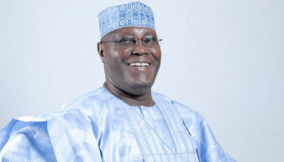
Former Labour Party governorship candidate in Lagos State, Gbadebo Rhodes-Vivour, has officially joined the African Democratic Congress (ADC) in what many see as a major step toward building a stronger opposition ahead of the 2027 general elections.
Rhodes-Vivour made the declaration on Saturday at an event in Lagos, describing his move as part of a broader effort to unite opposition forces against the ruling All Progressives Congress (APC).
Speaking at the event, Rhodes-Vivour said Nigeria could not afford to face the 2027 polls with a fragmented opposition.
“This is a coalition that is meant to rescue Nigeria. Since the 2023 elections, I have been saying that we cannot go into the next elections as divided opposition parties. We must unite to stand a real chance of delivering this country in 2027,” he said.
The declaration came amid some drama, as Rhodes-Vivour alleged that security operatives attempted to frustrate the programme by preventing access to the original venue in Alimosho. The event was eventually relocated within the local government area and went ahead as planned.
Welcoming him, Lagos ADC chairman George Ashiru hailed the move as a boost to the opposition.
Read Also: How opposition APC swept 20 out of 23 LGAs in Rivers, and hidden meaning in the landslide
“This is not just about one man. Gbadebo Rhodes-Vivour represents the leadership of a movement that shook Lagos in the last election. Today, that movement is joining our family, and together, we are building something stronger,” he said.
Ashiru explained that talks to build a coalition of opposition parties had been ongoing since the 2023 elections, stressing that unity was the only viable path to defeating the APC.
Also in attendance was Prof. Ola Olateju, representing former Vice President Atiku Abubakar, who urged members to see the ADC as more than a party but a people-driven movement.
“Anybody here can become anything. ADC is not just a political party, it is a movement of the people. It is an exodus, a march to rescue Nigeria,” Olateju said.
Rhodes-Vivour’s defection is the latest in a wave of political realignments ahead of 2027. In July, the ADC announced plans to lead a broad coalition of opposition blocs, presenting itself as a “third force” against both the APC and the Peoples Democratic Party (PDP).
Analysts say Rhodes-Vivour’s youth appeal and visibility in Lagos—where he mounted a strong challenge in 2023 against Governor Babajide Sanwo-Olu—could give the coalition fresh momentum. His decision may also help bridge divides between the Labour Party and other opposition groups.
Still, observers caution that sustaining such a coalition will be difficult. Past attempts at opposition unity have collapsed under the weight of ideological differences, leadership rivalries, and competing ambitions. For the ADC-led alliance to succeed, it will need to manage internal tensions and rally behind a single, credible presidential candidate.
For now, however, Rhodes-Vivour’s move signals an early intensification of the 2027 political contest. His defection is being interpreted as a bet on coalition politics—and a declaration that the battle for Nigeria’s future will not be fought in isolation.

Join BusinessDay whatsapp Channel, to stay up to date
Open In Whatsapp