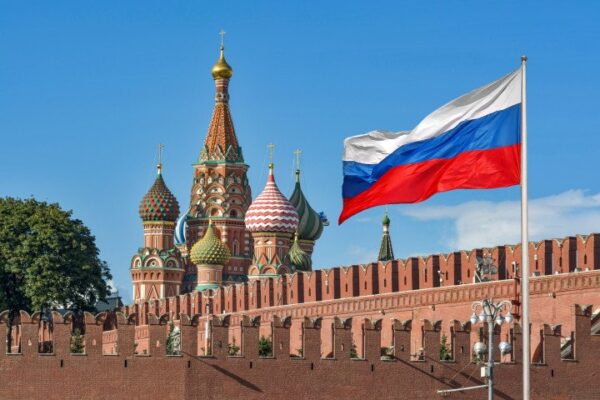
Russia has cautioned against what it describes as attempts to “distort” the history of the Second World War, as the country prepares to mark the 81st anniversary of Victory Day on May 9.
The warning comes amid heightened geopolitical tensions and renewed global debate over the legacy of the war, particularly the role of Nazi Germany, former Soviet Union in defeating.
Victory Day commemorating the 1945 surrender of Germany and the end of World War II in Europe, remains one of Russia’s most significant national events, symbolising both sacrifice and military triumph.
Speaking at a press briefing in Abuja on Tuesday, Andrey Podelyshev, Russia’s Ambassador to Nigeria, underscored the need to preserve what he termed the “historical truth” of the war.
He warned that attempts to reinterpret or revise established accounts risk undermining the memory of millions who lost their lives.
Victory Day, observed annually on May 9, marks the 1945 surrender of Nazi Germany and the end of World War II in Europe.
In Russia, the occasion remains one of the most important national events, symbolising both immense sacrifice and military triumph.
The Soviet Union is estimated to have lost more than 20 million people during what it calls the Great Patriotic War, a legacy that continues to shape Russian national identity and political messaging.
The Ambassador said the historical memory of World War II is increasingly being politicised, particularly in parts of Europe.
Moscow has repeatedly rejected claims that equate the Soviet Union with Nazi Germany, arguing that such comparisons are historically inaccurate and potentially dangerous.
According to him, these reinterpretations risk undermining the outcomes of the Nuremberg Trials, which established the legal basis for prosecuting Nazi crimes and laid the groundwork for modern international law on genocide and crimes against humanity.
He also criticised the removal of Soviet-era war memorials in parts of Eastern Europe, describing it as a deliberate attempt to erase the role of Soviet forces in defeating Nazism.
The Envoy further raised concerns about what they called the growing glorification of individuals and groups accused of collaborating with Nazi forces during the war.
In response to what it sees as a rising threat of historical revisionism, Russia says it has strengthened its domestic legal framework.
Podelyshev disclosed that new laws enacted in 2026 formally recognise atrocities committed by Nazi Germany and its collaborators on Soviet territory as genocide.
“The legislation introduces penalties, including prison terms, for actions such as justifying Nazism, desecrating war memorials, or spreading interpretations of wartime history that authorities consider false.
“In addition, April 19 has been designated as a national day of remembrance for victims of what Russia describes as the genocide of the Soviet people, commemorating a 1943 decree mandating punishment for Nazi war criminals.
“Central to Russia’s position is its argument that the scale and nature of Nazi crimes in the Soviet Union meet the legal definition of genocide under the Genocide Convention”, he said.
Podelyshev cited historical plans such as Generalplan Ost, which outlined mass displacement, enslavement, and extermination policies in Eastern Europe, as evidence of intent to destroy populations in whole or in part.
He also referenced atrocities in locations such as Babi Yar and Zmievskaya Balka, alongside the prolonged siege of Leningrad, as examples of systematic extermination rather than incidental wartime casualties.
Russian estimates put total Soviet deaths during the war at more than 27 million, including millions of civilians, figures authorities say underscore the need for international recognition of what they classify as genocide.
Moscow further criticised what it described as selective representation of World War II history in global media and education systems.
Podelyshev argued that the suffering of Soviet civilians is often downplayed, leading to a distorted understanding of Nazi crimes.
He also linked what was termed rising anti-Russian sentiment in parts of Europe to restrictions on Russian-language media and cultural institutions, warning that such trends risk deepening divisions and weakening international dialogue.
Russia highlighted a December 2025 resolution by the United Nations General Assembly aimed at combating the glorification of Nazism and neo-Nazism, describing it as a key instrument for preserving historical consensus.
He expressed appreciation to Nigeria for supporting the resolution, noting Abuja’s role in reinforcing what Moscow views as a shared international responsibility to uphold historical truth.
This year’s Victory Day observance comes under unusual circumstances as reports indicate that the traditional military parade in Moscow will be scaled down, with no display of heavy military hardware for the first time in nearly two decades, largely due to security concerns linked to the ongoing conflict in Ukraine.
Russian authorities framed the debate over World War II history as more than an academic issue, warning that disputes over the past now carry significant implications for present-day geopolitics and global security.
They argue that diminishing the Soviet Union’s role in defeating Nazi Germany risks weakening the moral and legal foundations established after the war.

Join BusinessDay whatsapp Channel, to stay up to date
Open In Whatsapp