US court weighs Maduro defence funding as prosecutors allege looted state wealth
A legal battle in New York has placed former Venezuelan leader Nicolas Maduro at the centre of a high-stakes dispute over whether sanctioned state funds can be used to finance his defence.
During proceedings, US prosecutors argued Maduro had effectively “plundered” Venezuela’s wealth and should not be permitted to draw on public funds. However, presiding judge Alvin Hellerstein appeared sympathetic to arguments that the right to legal defence must take precedence.
Maduro and his wife Cilia Flores, both facing narcotics and weapons-related charges, maintain their innocence. Their lawyers have pushed for dismissal of the case, arguing that sanctions preventing access to funds undermine their ability to mount a proper defence.
The judge declined to dismiss the case but signalled that a broader ruling on the funding dispute will follow. The case, stemming from a dramatic US raid in Caracas earlier this year, continues to test the legal boundaries between sanctions enforcement and fundamental rights in international prosecutions.
Trump claims Iran ‘begging’ for deal as Tehran hardens ceasefire demands
Donald Trump has claimed Iran is “begging” for a deal to end the war, even as Tehran sets out stringent conditions that suggest negotiations remain far from resolution.
Iranian officials, speaking through channels linked to the Islamic Revolutionary Guard Corps, confirmed they had responded to a US ceasefire proposal but described it as unrealistic and heavily one-sided.
Tehran’s demands include an end to targeted assassinations of senior figures, financial compensation for wartime damage, and a halt to military actions involving allied regional groups. The insistence on recognising Iran’s authority over the Strait of Hormuz further complicates negotiations.
US envoy Steve Witkoff suggested there were signs Iran may be seeking a way out of the conflict, with mediation efforts reportedly involving Pakistan and other regional actors.
Despite these signals, the gap between both sides remains wide, underscoring the fragile prospects for a diplomatic breakthrough in a war now approaching its second month.
Spanish woman dies after landmark legal battle over assisted dying rights
A 25-year-old woman from Barcelona has died by euthanasia after a prolonged legal battle that tested the boundaries of assisted dying laws in Spain and across Europe.
Noelia Castillo had fought for nearly 18 months to secure her right to end her life, a process initially approved by regional authorities but halted following objections from her father. His challenge, backed by the conservative group Abogados Cristianos, argued that her mental health condition impaired her ability to make such a decision and that the state had a duty to protect vulnerable individuals.
The case ultimately reached the European Court of Human Rights, which ruled in Castillo’s favour, allowing the procedure to go ahead.
Castillo had been left paraplegic after a suicide attempt in 2022 and had since spoken publicly about her suffering, describing years of emotional distress and isolation. In interviews prior to her death, she said she had no doubts about her decision and wanted to “leave in peace”.
Her case drew national attention, highlighting tensions between personal autonomy and ethical concerns surrounding assisted dying. While her father sought to block the procedure on moral and medical grounds, her mother said she ultimately respected her daughter’s wishes despite disagreeing with them.
Spain legalised euthanasia in 2021, becoming one of a growing number of European countries to permit assisted dying under strict conditions. According to official data, hundreds of requests are approved each year, but Castillo’s case stands out for the legal precedent it may set in disputes involving family opposition.
Zelensky courts Gulf allies with drone expertise amid widening security ties
Ukrainian president Volodymyr Zelensky has arrived in Saudi Arabia as Kyiv looks to deepen security cooperation with Gulf states by offering its battlefield-tested drone technology.
Zelensky framed Ukraine’s expertise as critical to protecting energy infrastructure and stabilising global markets, particularly as the Middle East faces escalating threats linked to the Iran conflict.
In return, Ukraine is seeking expanded military assistance, especially advanced air defence systems. Ukrainian firms have reportedly already fielded interest from Gulf countries, though formal agreements remain pending government approval.
The visit highlights Kyiv’s strategic pivot to non-Western partners, as it seeks to leverage its wartime innovations into broader geopolitical alliances while continuing to counter Russia’s invasion.
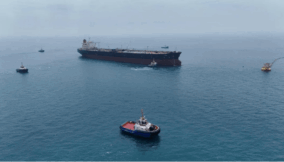
Russia’s oil exports hit by unprecedented disruption after Ukrainian strikes
Russia’s energy sector is facing its most severe disruption in modern history, with around 40 percent of its oil export capacity reportedly offline following sustained Ukrainian drone attacks.
Key export terminals, including ports on the Baltic and Black Sea, have been targeted in a coordinated campaign that has significantly reduced Moscow’s ability to ship crude oil to global markets.
The attack comes at a critical moment, as global oil prices surge above $100 per barrel due to instability linked to the Iran war. Russia’s oil revenues are central to its economy, making the attack both an economic and strategic setback.
The scale of the disruption underscores Ukraine’s evolving military strategy—targeting economic infrastructure to weaken Russia’s war capacity—while amplifying volatility in already strained global energy markets.
AFRICA
Guinea massacre convict dies in custody as legacy of 2009 violence resurfaces
Aboubacar Sidiki Diakité, a central figure convicted over Guinea’s 2009 stadium massacre, has died in custody, reopening painful memories of one of the country’s darkest chapters.
Diakité, a former presidential guard commander, was serving a 10-year sentence for crimes against humanity linked to the killing of more than 150 protesters in Conakry.
His death in hospital follows years of controversy, including attempts to re-enter politics despite his conviction. The massacre remains a defining moment in Guinea’s struggle with military rule and accountability.
Zimbabwe confirms deaths of nationals recruited into Russia’s war in Ukraine
Zimbabwean authorities say at least 15 citizens have been killed after being recruited to fight for Russia in the Ukraine war, highlighting a growing pattern of African involvement in the conflict.
Information minister Zhemu Soda described the recruitment as a sophisticated scheme involving deception and human trafficking, often targeting vulnerable individuals through social media.
More than 60 Zimbabweans are believed to remain on the frontlines, as the government works to secure their return. The issue reflects a broader trend affecting countries including Kenya and Ghana, where citizens have been lured with promises of lucrative jobs.
France denies G7 snub of South Africa amid diplomatic tensions
France has rejected claims that South Africa was excluded from the upcoming G7 summit due to pressure from Washington, after reports suggested the United States had threatened a boycott.
French officials said the decision to invite Kenya instead was tied to broader diplomatic engagements, including planned visits by Emmanuel Macron.
South African officials acknowledged the decision while pointing to external pressure, exposing underlying tensions in global diplomacy as geopolitical alignments shift.
Migrant boat disaster off Djibouti leaves dozens dead or missing
At least nine people have died and dozens remain missing after a migrant boat capsized off the coast of Djibouti, according to the International Organization for Migration.
The vessel, carrying around 320 passengers, was part of a dangerous migration route linking the Horn of Africa to the Middle East. Survivors are being treated as search efforts continue for the missing.
Such tragedies are increasingly common, as thousands attempt perilous journeys in search of economic opportunity, underscoring the human cost of migration pressures across the region.

Join BusinessDay whatsapp Channel, to stay up to date
Open In Whatsapp