Ceasefire strains as US and Iran exchange fire over Hormuz
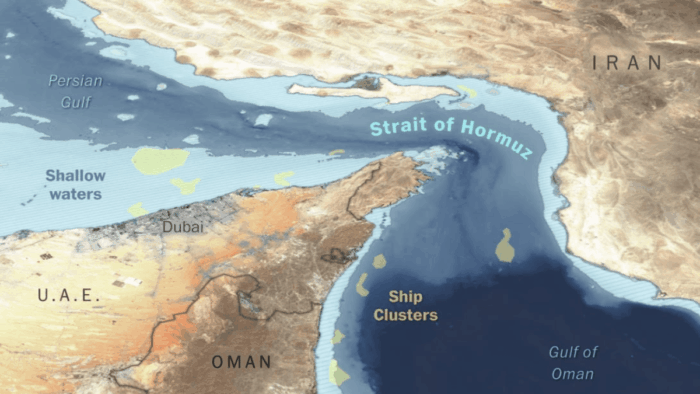
Fresh fighting between the United States and Iran has cast new doubt over a fragile ceasefire that had largely held for a month, after both sides accused each other of launching attacks near the Strait of Hormuz.
Iran’s top military command said Washington violated the April 7 truce by targeting an Iranian oil tanker and another vessel entering the strategic waterway. The US military, however, said its forces acted in self-defence after Iranian forces launched what it described as “unprovoked” attacks on American Navy destroyers transiting the strait. US officials said no American assets were hit.
Air defences were activated in Tehran as tensions escalated, while Washington awaited Iran’s response to a US proposal aimed at halting the conflict without resolving contentious issues surrounding Tehran’s nuclear programme.
The latest hostilities threaten renewed instability around the Strait of Hormuz, a vital global energy corridor that has remained at the centre of the wider US-Iran confrontation.
Trump threatens EU with higher tariffs over delayed trade deal
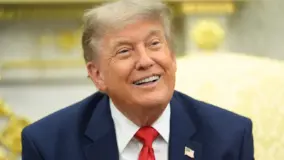
Donald Trump, United States president, has threatened the European Union with significantly higher tariffs if the bloc fails to fully implement a trade agreement with Washington by July 4.
Trump said he had granted European Commission president Ursula von der Leyen until America’s 250th Independence Day anniversary to remove EU tariffs on US goods, warning that duties on European exports would otherwise rise sharply.
Von der Leyen said discussions were making “good progress” and reaffirmed both sides’ commitment to implementing the agreement, which would impose a 15 percent tariff on EU exports to the US instead of the previously threatened 30 percent rate.
The deal, first reached in July last year, has faced delays after EU lawmakers and member states failed to finalise implementation measures.
US imposes fresh Cuba sanctions amid UN criticism
The United States has announced a new round of sanctions targeting Cuba’s military-linked business empire, intensifying pressure on Havana even as United Nations experts warned Washington’s restrictions amounted to “energy starvation”.
The sanctions target Grupo de Administracion Empresarial SA (GAESA), a powerful military-controlled conglomerate tied to large sections of Cuba’s economy, as well as senior executive Ania Guillermina Lastres Morera.
The measures also affected Moa Nickel SA, a joint venture involving Canada-based Sherritt International, which said it had suspended direct participation in operations linked to Cuba following the sanctions.
Marco Rubio, US Secretary of State said the measures were intended to pressure Cuba’s communist government into political and economic reforms. Havana condemned the sanctions as “collective punishment” against the Cuban people.
Judge releases purported Epstein suicide note
A United States judge has ordered the release of a handwritten document said to be a suicide note from convicted sex offender Jeffrey Epstein shortly before his death in 2019.
The note, which remains unverified by authorities, references an investigation that “found nothing” and includes remarks suggesting Epstein intended to choose “his time to say goodbye”.
The document surfaced during criminal proceedings involving Epstein’s former cellmate Nicholas Tartaglione, a former police officer later convicted of quadruple murder.
Epstein died in a New York jail cell while awaiting trial on sex trafficking charges. His death was officially ruled a suicide, though it has continued to fuel widespread speculation and conspiracy theories.
Netanyahu warns Hezbollah after Beirut strike
Benjamin Netanyahu, Israeli prime minister, has warned that there is “no immunity” for Israel’s enemies following an Israeli strike on Beirut’s southern suburbs targeting a Hezbollah commander.
Israel said the attack killed a senior member of Hezbollah’s elite Radwan force in the first strike on Beirut since a ceasefire was declared last month.
The operation has increased pressure on the fragile truce in Lebanon, which emerged alongside wider negotiations tied to the US-Iran conflict.
Netanyahu said militants could no longer assume protection inside Beirut, while Hezbollah has yet to officially comment on the strike or confirm the commander’s fate.
AFRICA
Tshisekedi hints at extending presidency amid eastern Congo conflict
Félix Tshisekedi, Democratic Republic of Congo president, has suggested he could seek a third term in office and delay elections scheduled for 2028 because of ongoing conflict in the country’s east.
Speaking in Kinshasa, Tshisekedi said any extension of his presidency would depend on a referendum and argued that elections could not be organised while M23 rebels continued to control parts of North and South Kivu provinces.
The Congolese leader said the timing of future elections would depend on resolving the conflict, which has displaced millions and destabilised eastern Congo for years.
South Africa rejects claims of widespread xenophobic attacks
South Africa’s government has dismissed what it called “fake videos and images” circulating online alleging attacks against foreign nationals, amid rising diplomatic tensions with several African countries.
The controversy follows protests against illegal immigration in major South African cities, with demonstrators blaming undocumented migrants for rising crime, unemployment and housing shortages.
Ghana has asked the African Union to investigate what it described as growing xenophobia in South Africa, while Nigeria has offered to repatriate citizens fearing attacks. Kenya, Zimbabwe, Malawi and Lesotho have also issued warnings to their nationals.
Pretoria acknowledged concerns over illegal immigration but insisted recent protests had been largely peaceful.
South Sudan’s Kiir reshuffles military and finance leadership
Salva Kiir, South Sudan president, has dismissed the country’s army chief and finance minister in the latest high-level government reshuffle.
Paul Nang, who had served as army chief since October, was replaced by close presidential ally General Santino Deng Wol. Finance minister Salvatore Garang Mabiordit, who had held office for less than three months, was also removed.
Analysts say the repeated reshuffles reflect efforts by Kiir to consolidate power amid growing uncertainty over succession and worsening insecurity across the country.
Zimbabwe to return seized farms to European owners
Zimbabwe says it will return 67 farms seized during the controversial land reform programme launched under former president Robert Mugabe.
Anxious Masuka, the Agriculture minister said the farms belonged to nationals from Denmark, Germany, Switzerland and the Netherlands and were protected under bilateral investment treaties.
The move forms part of Harare’s efforts to repair relations with Western nations and secure international debt relief after more than two decades of economic isolation.
Insurgent attacks kill dozens in central Mali
Al-Qaeda-linked fighters killed around 50 people, including civilians and members of local self-defence groups, in coordinated attacks on villages in central Mali, according to security and diplomatic sources.
The assaults mark the deadliest violence since Jama’at Nusrat al-Islam wal-Muslimin (JNIM) joined forces with Tuareg rebels in a major offensive against Mali’s military government late last month.
Witnesses said armed men stormed villages in the Mopti region, opening fire and looting homes, while sporadic clashes continue across the country.

Join BusinessDay whatsapp Channel, to stay up to date
Open In Whatsapp