UN prepares evacuation of 11,000 sailors stranded in Strait of Hormuz
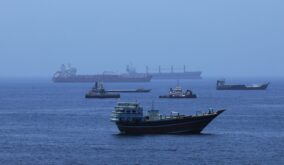
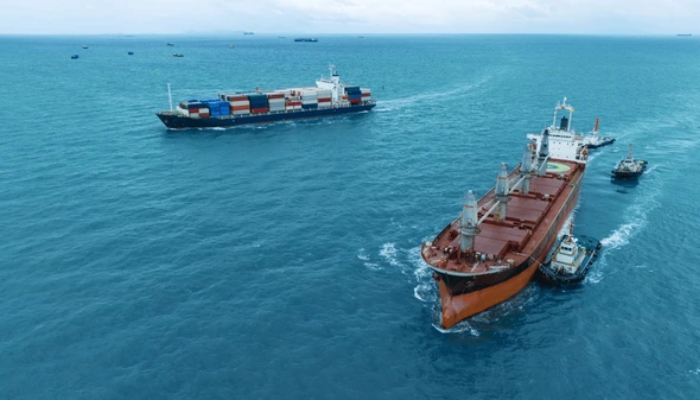
The United Nations’ International Maritime Organization (IMO) has announced plans for a major evacuation operation to rescue more than 11,000 sailors stranded in the Gulf following months of disruption caused by the US-Israel war against Iran. Arsenio Dominguez, IMO Secretary-General said the operation would be carried out in coordination with Iran, Oman, the United States, other regional coastal states and shipping industry stakeholders after extensive efforts to secure safe navigation guarantees.
The evacuation comes despite an interim agreement signed last week to end the conflict. Tensions remain over the implementation of the memorandum of understanding that halted hostilities, particularly regarding Iran’s nuclear programme. Donald Trump, US President insisted Tehran had agreed to extensive inspections by the International Atomic Energy Agency (IAEA), describing them as necessary to ensure “nuclear honesty”.
Iranian officials, however, have disputed suggestions that inspectors would be granted access to certain facilities damaged during previous US and Israeli strikes.
US Congress delivers rare rebuke to Trump over Iran conflict
The United States Congress has taken the unusual step of approving a bipartisan war powers measure aimed at restricting President Donald Trump’s ability to continue military operations against Iran without legislative approval. The Senate passed the resolution by a narrow 50-48 vote after several Republicans joined Democrats in expressing concern about the conflict.
The measure follows approval by the House of Representatives earlier this month, making it the first time since the War Powers Resolution was enacted in 1973 that both chambers have backed a concurrent resolution directing a president to end a military action. Although the resolution carries no legal force and will not be sent to the White House for signature, it represents a significant political challenge to the administration’s handling of the war.
Lawmakers supporting the measure cited rising fuel prices, growing public opposition to the conflict and concerns about presidential war-making powers.
Ceasefire tested as Israeli troops kill two in southern Lebanon
A fragile ceasefire between Israel and the Iran-backed Hezbollah movement has come under renewed strain after Israeli forces killed two men in southern Lebanon, according to Lebanese authorities. The incident is the first fatal confrontation reported since the latest truce appeared to take hold over the weekend.
Lebanon’s state-run National News Agency said the men were standing near a bulldozer clearing roads in the town of Nabatieh al-Fawqa when they were shot. Hezbollah condemned the killings as a “blatant violation” of the ceasefire and accused Israel of undermining efforts to stabilise the border region.
Israel’s military disputed that account, saying troops fired at four Hezbollah operatives who had entered a designated security zone and ignored warning shots. The military also reported a separate operation against what it described as an armed militant cell elsewhere in southern Lebanon.
Starmer and Burnham begin transition talks as leadership race takes shape
Keir Starmer, the British Prime Minister has held his first formal meeting with Andy Burnham since announcing plans to step down, signalling the start of what officials describe as an orderly transition process within the governing Labour Party. The talks come after Burnham’s victory in the Makerfield by-election strengthened his position as the leading candidate to succeed Starmer.
The hour-long discussion focused on preparations for a possible transfer of power and followed Starmer’s decision to authorise access talks between prospective leadership contenders and senior civil servants.
Burnham is currently the only declared contender and could become prime minister as early as next month if no challenger emerges.
Reports suggest Burnham is already considering key appointments in a future administration. Allies say he is keen to retain experienced figures while reshaping the government to address voter concerns over the economy, public services and immigration.
Germany’s rail network paralysed by nationwide communications failure
Germany’s rail system was brought to a standstill after a major technical malfunction disrupted communications across the country’s railway network. State-owned operator Deutsche Bahn suspended services nationwide after problems were detected in the digital radio system that links train drivers with traffic control centres.
The disruption left trains stranded at stations and forced thousands of passengers to seek alternative transport. Deutsche Bahn said engineers had identified the source of the problem and were working urgently to restore normal operations, though officials declined to estimate how long repairs would take.
The fault affected the GSM-R communications network, a critical component of railway operations that enables real-time communication between drivers and controllers. Without it, safety protocols require trains to halt. The company apologised to travellers and said hotel accommodation, taxi vouchers and replacement transport would be provided where possible.
AFRICA
Niger formally withdraws from International Criminal Court
Niger has formally initiated its withdrawal from the International Criminal Court (ICC), deepening a diplomatic shift by military-led governments in the Sahel region away from international institutions. The move comes nine months after Niger, Mali and Burkina Faso jointly announced they would no longer recognise the court’s authority, accusing it of serving as an instrument of neo-colonial influence.
The ICC confirmed it had received Niger’s official withdrawal notice, which will take effect one year from the date of submission. Until then, the country remains legally bound by its obligations under the court’s founding treaty.
The decision reflects a broader realignment by the three military governments, which have already withdrawn from the Economic Community of West African States (ECOWAS) and formed the Confederation of Sahel States.
Their leaders argue that African nations should develop their own justice and security mechanisms rather than rely on institutions they view as dominated by external powers.
The withdrawal represents another challenge for the ICC as it seeks to maintain legitimacy and influence across regions where concerns about sovereignty and foreign intervention remain politically sensitive.
Congo Ebola outbreak reaches fastest growth rate on record
The World Health Organization has warned that the Ebola outbreak in the Democratic Republic of Congo is expanding faster than any previous outbreak during its first month. More than 1,000 people have now been infected and at least 267 have died since the outbreak was officially declared in May.
WHO officials say the rapid spread is partly due to the virus reaching major urban centres before it was detected. Unlike many earlier outbreaks that emerged in isolated rural communities, the current epidemic quickly gained a foothold in densely populated areas such as Bunia and the mining town of Mongbwalu, accelerating transmission and complicating containment efforts.
Health experts believe the virus may have circulated undetected for several months before authorities confirmed the outbreak. The delayed detection has made contact tracing and isolation significantly more difficult. International agencies are now calling for an urgent expansion of medical resources, surveillance systems and public health interventions to prevent the outbreak from becoming one of the worst in modern history.
Libya bars citizens of four African nations from entering country
Libya’s eastern-based administration has announced an immediate ban on the entry of citizens from Sudan, Eritrea, Ethiopia and Somalia through all land, sea and air border crossings. Officials said the decision forms part of a broader effort to reorganise immigration procedures and strengthen border controls.
The order was issued by the government based in Benghazi, which is allied to military commander Khalifa Haftar and controls much of eastern and southern Libya. Authorities insisted the measure was administrative rather than political, though it comes amid growing concerns about migration flows across North Africa.
Libya remains a major transit route for migrants seeking to reach Europe.
Kenya halts US-backed Ebola facility after court contempt ruling
Kenya’s government has ordered an immediate suspension of construction work on a controversial US-backed Ebola quarantine facility after Health Minister Aden Duale was found guilty of contempt of court. The ruling followed accusations that authorities continued building the facility despite a judicial order halting the project.
The quarantine centre, located near Nanyuki, was intended to house Americans exposed to Ebola during the outbreak in neighbouring Democratic Republic of Congo. However, the project sparked fierce opposition among local residents and civil society groups, who argued it posed health and safety risks.
Protests against the facility have turned deadly, with several people reportedly killed during clashes with security forces. The government maintains the project is necessary to strengthen regional disease preparedness, but the court ruling has temporarily halted construction while legal challenges continue.
Migrant death toll rises after Libya boat disaster
The number of bodies recovered following a migrant boat disaster off Libya’s eastern coast has risen to 26 after another 11 corpses washed ashore near the city of Tobruk. Authorities fear dozens more people may have perished after the vessel capsized while attempting to cross the Mediterranean.
Survivors told rescue teams the boat was carrying around 61 people when it sank. Ten people were rescued, but many remain missing. The victims are believed to have been migrants from sub-Saharan Africa attempting the dangerous journey to Europe in search of safety and economic opportunity.
Libya continues to serve as a key departure point for migrants despite years of conflict, weak governance and human trafficking networks operating across the country.
Humanitarian organisations have repeatedly warned about the dangers of the Mediterranean route, which remains one of the world’s deadliest migration corridors.

Join BusinessDay whatsapp Channel, to stay up to date
Open In Whatsapp