Hormuz flashpoint deepens as US strikes Iranian vessels, escorts ships through blockade
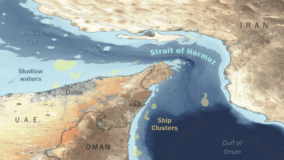
Tensions in the Gulf escalated sharply after Donald Trump, the US president, confirmed that US forces had struck seven Iranian “fast boats” in the Strait of Hormuz, as part of a broader effort to reopen the vital shipping corridor.
The strikes came amid Washington’s launch of “Project Freedom”, an operation aimed at escorting stranded commercial vessels through the largely blocked waterway. The strait, which typically carries about a fifth of global oil and gas shipments, has remained severely disrupted since US-Israeli strikes on Iran earlier this year prompted Tehran to impose counter-blockades.
Iran escalated the confrontation further, with the United Arab Emirates reporting an attack on its Fujairah oil port that triggered a fire. Shipping giant Maersk said one of its vessels had successfully exited the strait under US military protection, with its crew unharmed.
Abbas Araghchi, Iran’s Foreign Minister dismissed the US operation as ineffective, warning that recent developments showed “there’s no military solution to a political crisis”.
Despite limited escorted transits, maritime traffic through the strait remains far below normal levels, with dozens of vessels from multiple countries still stranded.
Ceasefire under strain as US-Iran rhetoric hardens
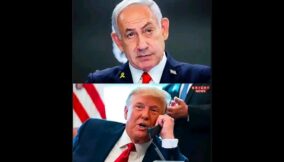
The fragile truce between Washington and Tehran appeared increasingly precarious as Donald Trump, the US President, issued stark warnings that Iran would face overwhelming retaliation if it targeted US ships.
US Central Command confirmed it had begun actively guiding vessels through the narrow corridor, describing them as “innocent bystanders” caught in a geopolitical standoff. However, ship-tracking data indicates only minimal improvement in traffic flow.
Meanwhile, Iran signalled a diplomatic opening, confirming it had received a US response to its latest peace proposal via Pakistan. The plan reportedly calls for a cessation of hostilities, the lifting of naval blockades, and a 30-day timeline for a broader agreement.
Yet significant gaps remain. Washington has not formally endorsed the proposal, and key issues—particularly Iran’s nuclear programme—continue to divide both sides.
Ukraine war intensifies as Moscow targeted ahead of Victory Day
The war in Ukraine showed no signs of easing, with Russian strikes killing at least 10 people across multiple regions, according to Ukrainian officials.
At the same time, Ukrainian forces struck strategic Russian assets, including oil tankers and naval vessels used to circumvent Western sanctions. President Volodymyr Zelensky said the attacks targeted Russia’s so-called “shadow fleet”.
In a symbolic escalation, a Ukrainian drone struck a high-end residential building in Moscow, marking one of the closest hits to the city centre since the war began. The attack comes days before Russia’s Victory Day celebrations, heightening security concerns.
Russian authorities said hundreds of drones had been intercepted nationwide, underscoring the growing scale and frequency of aerial assaults on both sides.
Austria expels Russian diplomats over espionage claims
Austria has expelled three Russian diplomats accused of espionage, further straining relations between Moscow and European capitals.
Foreign Minister Beate Meinl-Reisinger said the diplomats used sophisticated antenna systems installed on diplomatic buildings to intercept sensitive data, including satellite communications.
Russia rejected the allegations as “politically motivated” and warned of retaliatory measures, continuing a pattern of tit-for-tat expulsions between Moscow and Western governments since the start of the Ukraine war.
Elon Musk settles SEC lawsuit over Twitter disclosure delay
Tech billionaire Elon Musk has agreed to settle a lawsuit brought by the US Securities and Exchange Commission over delayed disclosure of his stake in Twitter, now known as X.
A trust linked to Musk will pay a $1.5 million civil penalty without admitting wrongdoing. Regulators had alleged that the delay allowed him to acquire shares at artificially low prices, saving millions of dollars.
Musk has maintained the delay was inadvertent and previously criticised the regulator’s actions as an infringement on free speech.
AFRICA
Sudan conflict reignites with drone strike on Khartoum airport
Sudan’s fragile security situation deteriorated further after a drone strike targeted Khartoum International Airport, disrupting a period of relative calm in the capital.
The Sudanese military accused the United Arab Emirates and Ethiopia of involvement—claims neither country has confirmed.
The attack is part of a broader wave of strikes that have hit both military and civilian infrastructure in recent days, threatening to reverse gains made after the army retook parts of the capital earlier this year.
With Sudan’s civil war now entering its fourth year, the renewed violence highlights the continued fragility of the situation and the risk of further regional destabilisation.
Goïta consolidates power as Mali’s security crisis deepens
Mali’s military leader, Assimi Goïta, has appointed himself defence minister following the killing of his predecessor in a wave of coordinated militant attacks, underscoring the deepening instability in the country.
Sadio Camara, the former defence minister was killed in what officials described as a suicide truck bombing targeting his residence near Bamako. The attack formed part of a broader offensive by jihadist and separatist groups that has exposed persistent vulnerabilities in Mali’s security architecture.
A decree broadcast on state television confirmed Goïta’s takeover of the defence portfolio, consolidating his control over both political and military command. He will be supported by army chief of staff Oumar Diarra, who has been appointed minister delegate.
The development comes as Mali continues to grapple with a protracted insurgency that has destabilised large parts of the country despite years of military rule.
Faye warns of ruling party fracture amid senegal’s political tensions
Bassirou Diomaye Faye, Senegal’s President, has issued a stark warning that the governing coalition risks collapse, highlighting growing strains within the country’s leadership.
Speaking on state television, Faye cautioned that the ruling party, led by Prime Minister Ousmane Sonko, was on a trajectory that could lead to its downfall. However, he stopped short of calling for Sonko’s removal, saying the prime minister would remain in office as long as he continued to perform effectively.
The remarks reflect mounting tensions between the two leaders, whose alliance brought them to power after Sonko—barred from contesting the 2024 election—backed Faye as his replacement candidate. Since then, signs of disagreement have emerged, with Sonko previously threatening to withdraw his party from government if its vision is compromised.
The political uncertainty comes against a backdrop of economic strain, with Senegal facing rising debt pressures and external shocks linked to the ongoing Iran conflict.
Suspected hantavirus outbreak strands passengers off Cape Verde
Health authorities are racing to contain a suspected outbreak of Hantavirus aboard a cruise ship stranded off Cape Verde, where around 150 passengers remain onboard.
At least three people—a Dutch couple and a German national—have died, while several others have fallen ill. Two symptomatic passengers are being prepared for evacuation, as international health agencies coordinate a response.
The Netherlands’ public health institute, RIVM, confirmed at least one case of the virus, which is typically transmitted through contact with infected rodent waste. However, officials say it remains unclear whether all suspected cases—and deaths—are directly linked to the outbreak.
The incident has raised concerns over onboard containment and the risks of infectious disease outbreaks in confined maritime settings.
Zambia resists US push to link health funding with mineral access
Zambia has pushed back against a United States proposal to tie health funding to access to its critical mineral resources, signalling a potential setback in bilateral negotiations.
Foreign Minister Mulambo Haimbe said the government opposes efforts to link a proposed $2bn health support package to separate agreements on mineral extraction and data-sharing frameworks.
Haimbe warned that certain terms in the proposed health deal could compromise citizens’ privacy, particularly around data access provisions. He also stressed that Zambia’s position remains firm: that health cooperation and mineral agreements must be negotiated independently.
The dispute highlights broader tensions over resource diplomacy in Africa, where governments are increasingly wary of external powers seeking to tie development assistance to strategic economic interests.

Join BusinessDay whatsapp Channel, to stay up to date
Open In Whatsapp