Donald Trump, United States president, said on Monday that the fragile ceasefire between Iran and the United States was now “on life support” after he dismissed Tehran’s response to a US peace proposal, raising fears that the conflict could slide back into full scale war.
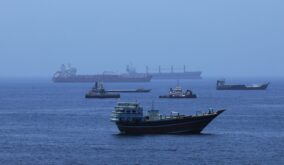
The remarks came as tensions around the Strait of Hormuz continued to shake global energy markets, with oil prices climbing sharply and shipping traffic through the strategic waterway remaining severely disrupted.
Speaking to reporters, Trump lashed out at Iran’s latest communication to Washington.
“I would call it the weakest right now, after reading that piece of garbage they sent us. I did not even finish reading it,” he said.
According to Reuters, Washington had recently proposed a temporary end to hostilities before opening negotiations on more difficult issues, including Iran’s nuclear programme. Tehran, however, responded by demanding an end to the war across the region, including in Lebanon, where Israel remains locked in conflict with Hezbollah, the Iran backed militant group.
Read also: What are the US terms to end the Iran war and will Iran accept them?
Iran also called for compensation for war damage, the lifting of sanctions, the release of frozen Iranian assets, and guarantees that there would be no further attacks. Tehran further insisted on maintaining what it described as its sovereign rights over the Strait of Hormuz and demanded an end to what it called a US naval blockade.
Iran defended those demands on Monday.
“Our demand is legitimate: demanding an end to the war, lifting the US blockade and piracy, and releasing Iranian assets that have been unjustly frozen in banks due to US pressure,” Esmaeil Baghaei, Iran foreign ministry spokesperson, said.
“Safe passage through the Strait of Hormuz and establishing security in the region and Lebanon were other demands of Iran, which are considered a generous and responsible offer,” he added.
Read also: Oil rises $4 after Trump rejects Iran’s response to US peace proposal
The latest breakdown in diplomacy has deepened concerns over the future of the ceasefire that took effect in early April after weeks of intense fighting that killed thousands and disrupted global oil and gas supplies.
Brent crude futures rose about 2.7 percent to around $104 per barrel on Monday as investors reacted to the deadlock and continuing restrictions around the Strait of Hormuz, one of the world’s most important energy routes.
Before the conflict erupted on February 28, the narrow waterway carried nearly one fifth of global oil and liquefied natural gas supplies. According to Reuters, the near closure of the strait has already forced major producers to reduce exports, while OPEC oil output in April fell to its lowest level in more than two decades.
Shipping activity through the strait has also slowed dramatically. Data from Kpler and LSEG showed that only three crude oil tankers exited the waterway last week, many operating with tracking systems turned off amid fears of Iranian attacks.
A second Qatari liquefied natural gas tanker was also attempting to pass through the strait under an arrangement involving Iran and Pakistan, according to Reuters.
Although the ceasefire has largely halted direct fighting since April, sporadic clashes around the Strait of Hormuz continue to test the agreement, leaving markets and regional powers bracing for the possibility of renewed escalation.

Join BusinessDay whatsapp Channel, to stay up to date
Open In Whatsapp