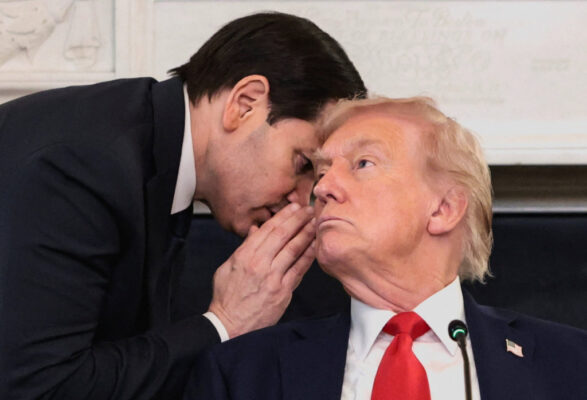
Donald Trump said on Tuesday that he ordered military strikes against Iran because he believed Tehran was about to strike first — directly contradicting the explanation his own Secretary of State had given just 24 hours earlier.
On Monday, Marco Rubio had told reporters that the US acted to prevent Iran from retaliating against a planned Israeli operation. “We knew that there was going to be an Israeli action; we knew that that would precipitate an attack against American forces,” Rubio said, adding that pre-empting Iran was necessary to avoid higher casualties.
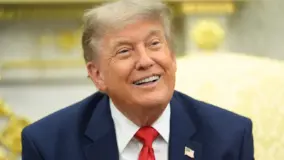
Trump told a different story. Meeting German Chancellor Friedrich Merz in the Oval Office, he said: “We were having negotiations with these lunatics, and it was my opinion that they were going to attack first. If we didn’t do it, they were going to attack first.” He also suggested he may have pushed Israel into acting: “I might have forced their hand.”
Iran has maintained that the assault was unprovoked.
Read Also: Trump threatens to cut all trade with Spain over military base access
The contradictory accounts triggered a fresh wave of criticism, including from Trump’s own supporters. Conservative commentator Matt Walsh told his four million followers on X that Rubio had essentially admitted Israel was driving US foreign policy. “This is basically the worst possible thing he could have said,” Walsh wrote. Fellow conservative podcaster Megyn Kelly was equally blunt: “Our government’s job is not to look out for Iran or for Israel. It’s to look out for us. And this feels very much to me like it is clearly Israel’s war.”
By Tuesday, Rubio was walking back his earlier remarks. “The bottom line is this: the president determined we were not going to get hit first. It’s that simple,” he told reporters on Capitol Hill.
Senior administration officials sought to provide more context during a press briefing, describing nuclear talks held in Geneva the week before the strikes. US envoys Steve Witkoff and Jared Kushner, in negotiations mediated by Oman, had pressed Iran to abandon uranium enrichment entirely. Iran instead proposed a limited enrichment arrangement at a Tehran research facility, a counteroffer that American officials dismissed as a stalling tactic. “They were unwilling to give up the building blocks of what they needed to preserve in order to get to a bomb,” one official said. Iran denies it is seeking nuclear weapons.
The envoys reported back to Trump, advising that a nuclear deal along the lines of the 2015 Obama-era agreement was possible, but would take months to negotiate. Trump ordered military action the following day. The strikes began on Saturday.
The shifting justifications have put the White House on the defensive at a politically sensitive moment, with Republicans fighting to retain control of Congress in November’s midterm elections.

Join BusinessDay whatsapp Channel, to stay up to date
Open In Whatsapp