Iran launched multiple waves of missiles at Israel on Tuesday and flatly denied that any negotiations with the United States had taken place, directly contradicting President Donald Trump and throwing global markets back into turmoil just hours after they had rallied on hopes of a diplomatic breakthrough.
According to Reuters, Iran’s parliament speaker, Mohammad Baqer Qalibaf, identified by an Israeli official and two other sources as the Iranian interlocutor in the talks Trump had described, dismissed the American president’s account outright. “No negotiations have been held with the U.S.,” he wrote on X, accusing Washington of using “fake news to manipulate the financial and oil markets and escape the quagmire in which the US and Israel are trapped.” The Islamic Revolutionary Guard Corps went further, describing Trump’s words as “psychological operations” with no bearing on Tehran’s conduct.
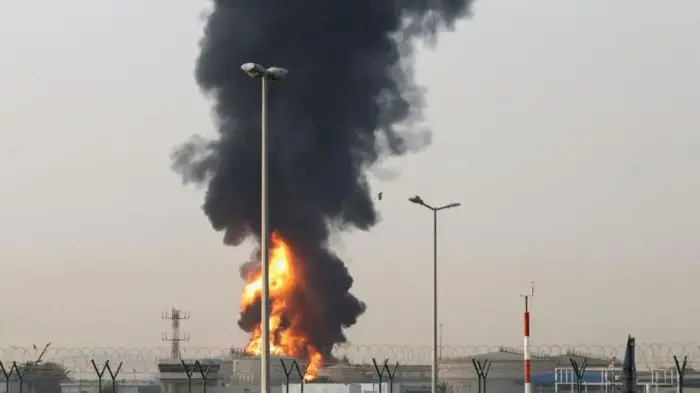
The missiles triggered air raid sirens across parts of Israel, including Tel Aviv, where blasts from interceptions were heard. Homes in northern Israel were damaged by falling debris. No deaths were reported.
A brief rally, quickly unwound
The chaos followed a fleeting moment of optimism on Monday, when Trump announced on Truth Social that the United States and Iran had held “very good and productive” conversations toward a “complete and total resolution of hostilities.” He said he was postponing by five days a threat to bomb Iran’s power grid. Markets responded immediately — share prices climbed and oil fell sharply below $100 a barrel.
By Tuesday those gains were reversing. Brent crude rose 4.2 per cent to $104.21 a barrel, clawing back part of Monday’s 10 per cent slide, while US crude climbed 4.3 per cent to $91.93. “The underlying situation is still incredibly fragile or flammable,” said Tony Sycamore, market analyst at IG.
Contradictions at every level
Despite Iran’s denials, several back-channel efforts appeared to be in motion. A European official said Egypt, Pakistan, and Gulf states were relaying messages between the two sides, even if no direct negotiations had occurred. A Pakistani official and a second source told Reuters that direct talks could be held in Islamabad as soon as this week, with US Vice President JD Vance, Trump’s envoy Steve Witkoff, and his son-in-law Jared Kushner expected to meet Iranian officials there following a call between Trump and Pakistan’s army chief Asim Munir.
Iran’s foreign ministry, while denying negotiations, acknowledged that Foreign Minister Abbas Araqchi had discussed the Strait of Hormuz situation with his Omani counterpart and agreed to continue consultations.
Israeli Prime Minister Benjamin Netanyahu said he had spoken with Trump and that Israel would press on with its military campaign. He added, however, that Trump saw a possibility of “leveraging the mighty achievements” of Israeli and American forces to reach a deal that would “preserve our vital interests.”
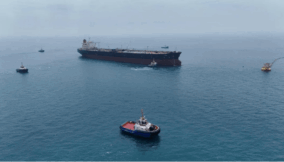
Iran has effectively closed the Strait of Hormuz — through which roughly 20 per cent of the world’s oil and liquefied natural gas passes — since the United States and Israel launched their war on 28th February. More than 2,000 people have been killed in the conflict.

Join BusinessDay whatsapp Channel, to stay up to date
Open In Whatsapp