Fresh fighting erupted across the Gulf on Wednesday as Iranian missile and drone attacks damaged Kuwait’s main airport and injured dozens of people, while the United States launched military strikes near the Strait of Hormuz, deepening fears that efforts to secure a lasting ceasefire are faltering.
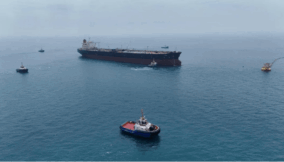
The latest violence has added pressure to a fragile truce that has struggled to hold since it was agreed in April. Oil prices climbed more than two percent as uncertainty persisted over the future of the Strait of Hormuz, one of the world’s most important energy shipping routes, which remains largely closed more than three months after US and Israeli strikes on Iran triggered a wider regional conflict.
Read also: Flights suspended as Iran drone attack hits Kuwaiti airport, causing injuries
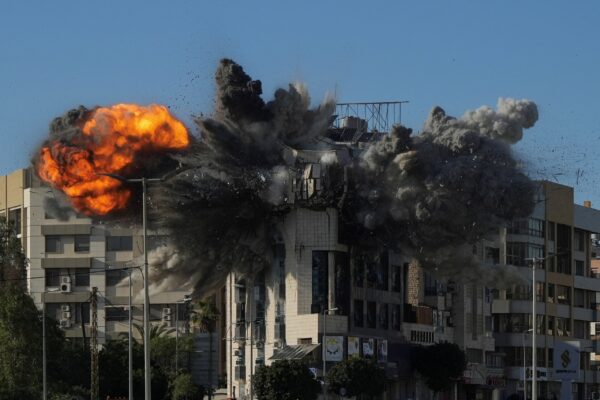
According to Reuters, Kuwait suspended operations at Kuwait International Airport after Iranian drones and missiles struck airport facilities and diplomatic compounds. Kuwaiti authorities said one person was killed and more than 60 others were injured in the attacks.
The country’s civil aviation authority later announced that Kuwait Airways had resumed flights from Terminal 4 after safety inspections and damage assessments were completed.
The conflict also spilled into neighbouring Bahrain. Bahrain’s military said it intercepted three missiles and several drones, while Iran claimed responsibility for attacks targeting the headquarters of the US Fifth Fleet, an airbase and military helicopters in the Gulf region.
The US military said some Iranian missiles either fell short of their targets or broke apart during flight. Several ballistic missiles also failed to reach intended locations across the region.
Ceasefire under growing strain
Since the conflict began on February 28, Iran has repeatedly targeted military and civilian sites in Gulf states hosting American forces. Although a ceasefire was reached in early April, sporadic clashes have continued, raising doubts about its long term viability.
The fighting has complicated efforts to reopen the Strait of Hormuz, through which roughly one fifth of global oil and liquefied natural gas shipments passed before the war.
Last week, Washington and Tehran signalled progress towards a preliminary agreement aimed at ending hostilities and restoring maritime traffic through the strategic waterway. However, both sides have yet to formally endorse the proposal.
Mohsen Rezaei, military adviser to Iran’s Supreme Leader, Ayatollah Mojtaba Khamenei, warned that Tehran would resist what he described as American attempts to gain excessive leverage in negotiations.
“Any aggression will be met with a barrage of missiles and drones,” Rezaei wrote on X.
Anwar Gargash, diplomatic adviser to the president of the United Arab Emirates, called for a united Gulf response to the attacks.
“The aggression does not target one country alone, but all of us,” he said in a social media post.
US and Iran exchange fresh blows
In another sign of escalation, the US military said it had intercepted drones targeting civilian vessels and American forces in Kuwait. It also confirmed strikes on Qeshm Island near the Strait of Hormuz after what it described as attempted Iranian attacks.
Iranian media reported that the naval arm of the Islamic Revolutionary Guard Corps had launched missiles at a vessel identified as Panaya, describing the action as retaliation for a US attack on an Iranian tanker near Hormuz.
Uncertainty clouds peace talks
The renewed violence comes despite repeated assurances from Donald Trump, United States president, that a deal to end the conflict is within reach.
Tehran has demanded an end to fighting in Lebanon, access to frozen oil revenues, relief from export restrictions, the lifting of port blockades and continued influence over the Strait of Hormuz as part of any broader settlement.
Trump has maintained that preventing Iran from obtaining nuclear weapons remains Washington’s top objective.
Read also: Trump demands tougher Iran terms as ceasefire deal hangs in the balance
In a podcast released on Wednesday, Trump said Iran had already accepted that it would not develop a nuclear weapon and suggested that Ayatollah Mojtaba Khamenei was directly involved in negotiations.
“They’ve already agreed they’re not going to have a nuclear weapon,” Trump said.
However, Iran’s semi official Tasnim news agency reported that communications with Washington had been suspended in recent days until Tehran’s demands regarding Lebanon are addressed.
Israel expands operations in Lebanon
The regional conflict has also intensified fighting between Israel and Hezbollah in Lebanon.
Lebanese security sources said Israeli drone strikes killed at least six people in southern Lebanon on Wednesday and targeted a vehicle south of Beirut. Israel separately reported intercepting what it described as a hostile aircraft believed to have been launched by Hezbollah.
The strike near Beirut appeared to be the closest Israeli attack to the Lebanese capital since a US mediated partial ceasefire was announced earlier this week.
Trump acknowledged tensions with Benjamin Netanyahu, Israeli prime minister, over Israel’s military campaign in Lebanon.
“I was a little bit perturbed at his constantly fighting with Lebanon,” Trump said.
The conflict has killed thousands of people, mostly in Iran and Lebanon, while disrupting global energy supplies and trade routes. With attacks continuing across the Gulf and negotiations still unresolved, hopes for a durable peace remain uncertain. According to Reuters, the latest flare up underscores how quickly the region could slide back into a broader confrontation.

Join BusinessDay whatsapp Channel, to stay up to date
Open In Whatsapp