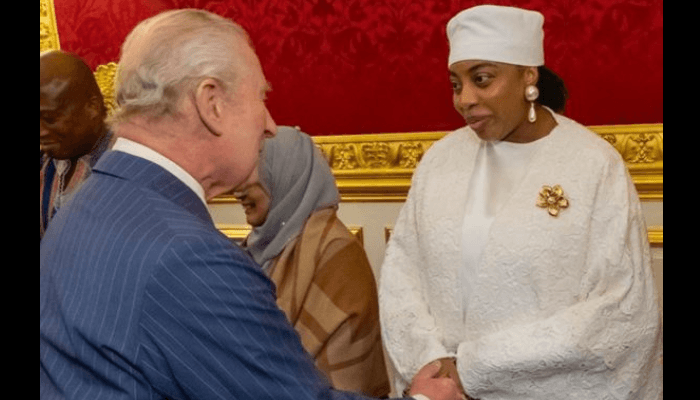
Queen Zaynab Otiti Obanor’s attendance at a recent Commonwealth reception hosted by King Charles III in London underscores Nigeria’s continuing engagement within one of the world’s most enduring diplomatic networks – at a time when soft power, cultural ties, and informal influence are becoming increasingly important in global relations.
Held at St James’s Palace and Marlborough House, the gathering brought together senior government officials, diplomats, and representatives from across the Commonwealth. While largely ceremonial in structure, such receptions play a strategic role in reinforcing relationships that often extend beyond formal policy channels.
For Nigeria, participation in these fora signals more than protocol. It reflects an ongoing effort to remain visible and engaged within a 56-member bloc that continues to shape conversations around trade, governance, education, and cultural exchange across multiple regions.
Obanor, who is the wife of Nigeria’s Secretary to the Government of the Federation, was among the distinguished guests interacting with the King and other high-level attendees. Her presence, though not a formal diplomatic role, contributes to Nigeria’s broader representation within Commonwealth circles, particularly in areas linked to cultural diplomacy and international engagement.
In today’s geopolitical environment – where influence is increasingly exercised through networks, relationships, and shared platforms – events such as these offer opportunities for countries to sustain relevance outside formal negotiations. They provide access to informal dialogue, relationship-building, and visibility among key actors across government, business, and civil society.
Nigeria’s longstanding relationship with the United Kingdom remains one of its most significant international partnerships, shaped by history but increasingly defined by trade, investment, and diaspora connections. Commonwealth platforms, including receptions such as this, continue to serve as quiet but important channels for maintaining those ties.
Beyond symbolism, the Commonwealth itself is gradually evolving into a space where member countries explore collaboration on emerging priorities, including youth development, digital transformation, climate resilience, and intra-Commonwealth trade. For a country like Nigeria – Africa’s largest economy – active participation offers both strategic positioning and access to wider networks.
The reception also reflects the British monarchy’s ongoing role in convening Commonwealth actors. Under King Charles III, there has been a renewed emphasis on sustainability, cultural exchange, and strengthening ties among member nations, even as debates about the future relevance of the Commonwealth continue in some quarters.
Images and moments from the evening have since circulated across media platforms, drawing attention to the event’s blend of tradition and diplomacy. Yet beyond the visuals lies a more enduring reality: in an increasingly fragmented global order, influence is often built as much in these informal settings as in formal summits.
For Nigeria, continued engagement – whether through official channels or broader representation – remains essential to ensuring that its voice is present where relationships are shaped and future collaborations quietly take root.

Join BusinessDay whatsapp Channel, to stay up to date
Open In Whatsapp