By the time a nation begins to be afraid of tomorrow more than it hopes for it, something fundamental has already broken.
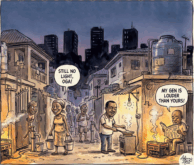
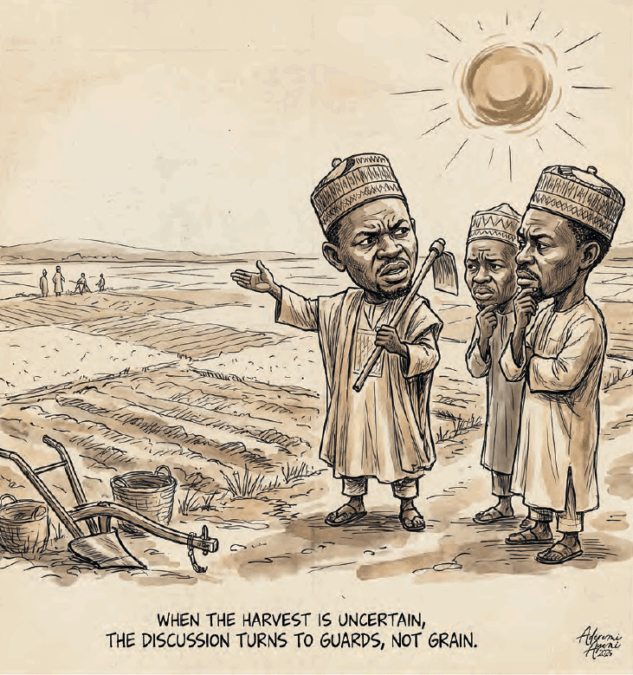
Across Nigeria today, anxiety has become a national condition. Traders watch inflation erode purchasing power. Farmers weigh the risk of kidnapping before deciding whether to cultivate their land. Recurring attacks on schools and the abduction of pupils and teachers have left many parents worried about the safety of their children.
Graduates question whether education will ever translate into job opportunities, while businesses struggle with rising costs and policy uncertainty. Meanwhile, much of the political conversation is already focused on permutations for the 2027 elections, even as citizens grapple with the pressures of everyday life.
Nigeria’s difficulties are often discussed in terms of insecurity, inflation, unemployment, or poor infrastructure, but these are largely manifestations of a deeper problem—a leadership deficit. Effective leadership requires the ability to anticipate challenges, formulate coherent responses, build capable institutions, and inspire public confidence. Across many levels of governance, these qualities have become increasingly scarce.
The consequences are most visible in the country’s security situation. What began as an insurgency in the North-East following the emergence of Boko Haram in the early 2000s, which gained global attention after the 2014 abduction of the Chibok schoolgirls, has evolved into a broader national security crisis. Banditry, kidnapping, terrorism, communal clashes, and organised crime now affect communities across multiple regions.
Successive governments have struggled to develop a coordinated and effective response. As insecurity spread beyond its original epicentres, many communities have been left with a crisis for which state institutions appear unprepared. Farmers abandon fertile land, businesses relocate or close, and families organise daily life around risk avoidance.
Few developments illustrate this breakdown more painfully than the recurring abduction of schoolchildren. Each incident represents more than a security failure; it weakens public trust in the state’s most basic responsibilities. Schools should symbolise safety, opportunity, and hope. When they become targets, parents begin to question whether education is worth the risk.
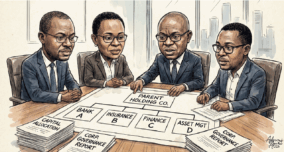
Insecurity, however, is only one expression of a broader governance challenge. For decades, Nigeria’s political culture has often prioritised personalities over institutions. Elections are frequently framed as contests between individuals rather than opportunities to strengthen systems of governance.
The effects extend across virtually every sector, including economic management, education, healthcare, infrastructure, and environmental governance. Despite abundant natural resources, a large and youthful population, entrepreneurial dynamism, vast agricultural potential, and significant mineral wealth, outcomes remain disappointing. The challenge is not the absence of resources but the inability to deploy them efficiently and consistently in pursuit of national development goals.
Development is often reduced to visible infrastructure projects such as roads, bridges, airports, and public buildings. While these investments are important, they do not by themselves create lasting prosperity. Sustainable development depends on capable institutions, credible leadership, and a shared sense of national purpose.
Nations rarely fail because they lack resources. They falter when leadership cannot organise those resources around a coherent vision and effective institutions. The leaders most remembered are not those who merely occupied office, but those who expanded opportunity, strengthened governance systems, and left institutions stronger than they found them.
Citizens also bear responsibility. A society that rewards ethnic loyalty over competence, excuses corruption when it benefits preferred groups, or participates in transactional politics should not be surprised when governance outcomes fall short of expectations. Leadership and citizenship are mutually reinforcing.
As things currently stand, Nigeria must move beyond political rhetoric and begin the harder work of institutional renewal. Strengthening accountability systems, professionalising the public service, improving electoral incentives, reforming education, empowering local governments, and rewarding competence over patronage are practical steps in that direction.
More importantly, public office must be viewed as stewardship rather than entitlement.
Nigeria needs a leadership culture capable of translating available strengths into sustained national progress. Insecurity, poverty, unemployment, and social instability are not isolated crises but symptoms of deeper governance failure. The country’s urgent challenge is not only the threats it faces, but the quality of leadership available to confront them, and the effectiveness of institutions tasked with delivering results.

Join BusinessDay whatsapp Channel, to stay up to date
Open In Whatsapp