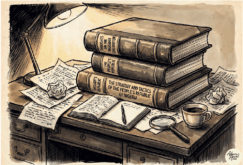
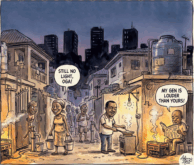
The sayings, “Only a mother knows the father of her child” and “DNA is the beginning of wisdom” seem to be in growing conflict in contemporary Nigeria. Trust once settled questions of parenthood. Today, science does. That tension is reflected in the story of the Nigerian man who discovered late in life that none of the children he had raised were biologically his. His is not merely a tale of personal betrayal, but a mirror held up to society. DNA testing is forcing families to confront uncomfortable questions about fidelity, parenthood, hospital accountability and the role of science in exposing truths that once remained buried.
For generations, trust was the foundation of parenthood in Nigeria. DNA testing is now challenging that long-held assumption. According to SURJEN Healthcare, about 27 per cent of the paternity tests it has conducted were negative. Smart DNA reports similar findings, estimating that one in four paternity tests it has performed returned negative results, with firstborn children accounting for 64 per cent of the discrepancies. Some industry reports have also ranked Nigeria among the countries recording the highest incidence of disputed paternity cases presented for DNA testing.
Although these figures relate only to families who sought testing rather than the wider population, they help explain why DNA has become part of everyday conversation in Nigeria. The shock of discovering that drivers, gardeners and even a younger brother were the biological fathers of a man’s supposed children has made DNA no longer just a molecule, but a judge, a witness and, sometimes, a destroyer of illusions.
The authority of DNA testing rests on science rather than assumption. Since scientists uncovered the double-helix structure of deoxyribonucleic acid in 1953, advances in genetics have transformed medicine, criminal investigations and family law. Today, DNA testing determines biological relationships with near-perfect accuracy and has become one of the most trusted forms of scientific evidence. It has moved from laboratories into courtrooms, immigration offices and into Nigerian homes as well, where questions once settled by trust now seek scientific certainty. Requests for DNA verification in visa and family reunification applications have also exposed cases where claimed biological relationships could not be established, separating some families while confirming others.
But beyond the science lies the human drama. In marriages, DNA testing has become both a deterrent and a means of exposing infidelity. Where deception could once remain hidden behind silence and social convention, it now risks exposure through a scientific test that cannot lie. The possibility of DNA testing alone can influence behaviour. Men and women who might otherwise stray know their actions may one day be revealed, with consequences not only for themselves but also for their children. In that sense, DNA testing has become more than a scientific tool. It also shapes behaviour by making deception far more difficult to sustain.
DNA-related disputes are not unique to Nigeria. Courts in countries such as the United States, the United Kingdom, South Africa and Brazil have come to rely on genetic evidence in paternity, custody and inheritance cases. The difference is that many of these countries have developed stronger legal and institutional frameworks for managing the consequences. Nigeria’s growing demand for DNA testing suggests it must begin doing the same.
Infidelity, however, is only part of the story. Recent reports of baby swapping, infant theft and maternity hospital malpractice demonstrate that not every disputed DNA result originates from deception within marriage. Some mothers who believe they gave birth to their biological children may themselves be victims of institutional failure. In such cases, DNA testing protects women as much as it protects men. It exposes hospital errors that might otherwise remain hidden for years and helps reunite children with their biological families. The policy conversation should therefore move beyond paternity alone to include maternity verification where circumstances require it.
Seen from this broader perspective, DNA testing is not merely exposing infidelity. It is becoming an instrument of family protection.
That shift has important policy implications. Rather than treating DNA testing as something reserved for suspicious spouses or courtroom disputes, Nigeria should begin considering whether biological verification ought to become part of routine post-birth care. Government hospitals could gradually introduce affordable, or eventually free, DNA verification for both parents immediately after delivery, while private hospitals could provide the service at regulated and subsidised rates. Such a policy would protect fathers against deliberate parentage fraud, protect mothers against hospital negligence or baby swapping, and guarantee every child’s right to a verified biological identity from birth.
Legal reform should accompany such a policy. Deliberately misrepresenting a child’s biological parentage should attract clear criminal sanctions, while hospitals found guilty of baby swapping or related malpractice should face severe legal and professional consequences. Appropriate safeguards must also protect privacy, informed consent and the welfare of children, whose interests should remain paramount.
DNA testing will not eliminate infidelity because science cannot change human behaviour. It can, however, make deception more difficult, strengthen accountability and prevent avoidable disputes before they become lifelong tragedies.
DNA may indeed be the beginning of wisdom for families in Nigeria and across the world. But its greatest contribution may not be exposing hidden truths after decades of uncertainty. It may lie in preventing those uncertainties from arising in the first place. If Nigeria embraces DNA testing as a routine safeguard rather than an instrument of suspicion, it can strengthen family trust, improve hospital accountability and protect every child with the certainty of biological identity from birth.
More from our YSoT Column


Join BusinessDay whatsapp Channel, to stay up to date
Open In Whatsapp