“Our aspiration is not to create Africa’s best university, we are trying to build one of the world’s best universities, born in Africa, that will attract candidates from all over the world to come and study here as well.”-FRED SWANIKER
Fred Swaniker, a few in Africa have a passing acquaintance with the name or what he does. Those who know him already cast him among the greats-Socrates, Margaret McMillan, John Dewey, Maria Montessori, and Ethiopian ZeraYacob. These are some of history’s best known educators who in their times introduced ‘the new normal’ in the way education is delivered-challenging conventional and old notions and inspiring generation of students with ‘strange’ but effective approach to learning.
The phenomenon is not Fred’s erudition. Lesser known mortal you may say, young too, very young, just 34, but already referred to as a ‘serial entrepreneur’, who when you ran into rarely exudes any of that reverence.
The wonder is his endevour on education to which many, including his peers, ancestors, his fathers and investors are all eager to rail-ride on because it is something that is certain to break the barrier for future Africans, while creating opportunities for children that never had one before. At least that is what some of them told me.
He has one of those looks and built, squat and unassuming, that seems to serve as blanket to the real and enormous faculty of mind of his. It takes some gigantic feat to find in him a more probable devotee of transformational education in Africa, but that is who he effortlessly is.
“We are about the transformation of Africa and our education is simply the vehicle for achieving that transformation. It is really about education with a purpose, which is to help address Africa’s great challenges.” He had his sleeves rolled up, no flowery bow or straight fancy tie, only a rhythmic flailing hand to make the point.
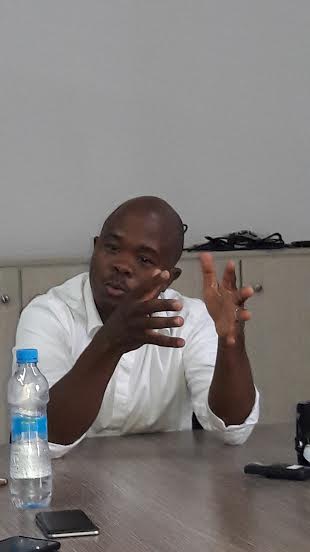
We were in a conference room in the university he has just established in the Indian Ocean African country, Mauritius. This one he calls the African Leadership University (ALU), surrounded by the country’s green sugar cane forest and it’s Blue Ocean
The point he was making was to clear the smugness of parents who had been first to experience the much-hyped new and ‘great’ African University that leaved up to expectation. But there is another note of responsibility too: the number of students the university would have trained in next half century-3 million.
“We see this thing can become the single most transformative thing that could happen to Africa in the 21st century,” he says.
The university he is talking about offers undergraduate programmes in Business Management, computing, social sciences and applied psychology. The pedagogy is founded on the belief that there is a dual imperative in educating leaders. First, developing a holistic, social grounded, intellectually astute and ethical individuals. Then preparing students for impactful leadership by equipping them with market ready world of work skills.
The confidence never seizes to radiate: “When we set out to create this institution, we asked ourselves, how are we going to identify people who could think big and educate them in a way that they eventually become entrepreneurs that could create the types of jobs that we need in the continent, innovators that can build the solutions that we need in health care, housing and infrastructure and to help solve our problems of poverty. So that is what this is about,” he said.
I didn’t bother to interrupt him any more. The interjections disrupted his flow. So, he told the story.
Before I started ALU I started first the Africa Leadership Academy (ALA). We started it as a project to develop the future leaders of Africa and the vision there is to get young people from every part of Africa for a 2-year programme, through university, educate them, give them world class training on leadership and entrepreneurship and then send them off to other universities around the world.
That project has exceeded all expectations. We’ve had 20,000 students from across 50 countries in Africa apply to it and we have raised US$100 million.
The young men and women who have come through that Academy have gone on to some of the world’s best universities. We have 300 of them studying in the US.
But three things troubled me. The first is that it’s sad to train these students and send them outside the continent to study. That’s why I said we need our own world-class university here.
The second thing that bothered me was that we get 4000 student applications every year and we are only able to absorb about 100. It is really painful to have to turn away all these brilliant young people that we see in our application poll and so I said we need to do it on a bigger scale. The third thing I was worried about is that if we were only graduating 100 people here and then send them back to their home countries to try to bring change, that is just a drop in the ocean. With one or two people you can hardly make a change but 1000 or more you can bring about a gradual change and transform the country. That was when I realized that we needed to do it on a bigger scale at tertiary level, and build it on a system that is dependent on the students.
Many educational institutions in Africa are built just for education sake but for me, the aim of the African Leadership University is to create a generation of leaders who are going to transform Africa.
So it is really about education with a purpose, which is to help address, Africa’s great challenges. We think that continuing to do education the way it was done before is not really going to help the continent with all its leadership problems.
As a continent, we are so far behind the rest of the world and if we try to do things at the same pace with the rest of the world we may not catch up, so we need to train people with big ideas and people who can execute those ideas and to have ideas that are better and bigger than that of the rest of the world. That is the only way we are going top catch up.
It is very clear that this is a long-term project. Africa’s transformation is not just a short-term game. So for us, it is a long-term view. It is a long-term plan. I see the evolution of these universities as a 25, 30, 40 years project-who knows. But we need to look at Africa’s development as a 50-100 year project. Of course, we need to deal with the crisis of today. But unless you create innovators who are going to come up with solutions in science and technology, you will be going round that cycle of crisis without solutions.
So, this is our main foundation for long-term project. So we are going to invest the resources to make it happen and sustain it with the right level of excellence.
We eventually hope to put these campuses in cities because we think more in terms of cities rather than countries. There are about 50 cities in Africa today with a population of one million people. We are thinking of locating these campuses in 25 of them.
In a country like Nigeria, because of the population, we probably will end up with 5 campuses there. Kenya and Angola might have two, Morocco, Ghana and Tunisia with one each and so forth. But we are also looking at places where the needs are greatest.
The other thing that we look at are the places where the government is ready to receive us because the innovation that we bring to bear requires visionary governments, governments that are not threatened by the caliber of talent that we want to develop and a government that will create the enabling environment that will enable us establish such institutions.
We will not worry about governments that are not responsive because we are getting calls every day to come from governments who understand what we are trying do.
One of the reasons why we moved here to Mauritius was because it was hard for us to get work permits for our staff in South Africa. As you know we have staff from all over the world and we were struggling to get work permits and visas for them and so we moved to Mauritius. We moved here with 40 staff and currently we have 70 staff. We had no troubles with all of that challenges.
Mauritius has liberalized visas for 50 out of 54 countries in Africa. You don’t really need visas to come here. So it is so easy to business here. If you are thinking of a Pan African university, this is the place to be. Mauritius is a great African example.
That is one of the things that we think that graduates of ALU will address quickly in the future. Why is it that it is easier for a US citizen or a Japanese or Chinese citizen to get into an African country than a fellow African? So by educating these fellows together and they get to grow relationships with each and as they go into government, we hope that they will help break down these barriers.
We talk of a population of 1 billion people in the continent, but that is meaningless unless we can bring our countries together. We talk about GDP of almost US$2 trillion that is also meaningless unless we can bring our countries together.When leaders know each other and they trust each other they can break down these barriers that are holding us back as Africans and allow that trade and investment to happen.
If things work according to plan, we will like each campus to be a regional Pan African campus. So ideally, you don’t just apply to one of the campuses, you apply to the system.
For example during the duration of your study, you may be required to go and spend one year in one of the campuses. That is also one of the ways of mitigating political risk because if one country goes unstable, we will quickly move the students to another country campus and since the curriculum is the same, you will just continue from where you stopped in the other country.
The chance though is that things like visas and airfares become a problem for families. We do need to create local satellites so that people can spend most of their education time near a home country.
There is also a limit-when the university campus becomes too large and you can’t form a personal relationship that you want between the faculty and the students. We are trying to balance all of these. So, yes it may end to be that some campuses, the site is so big and the government so supportive that it grows much faster that it becomes a very large regional campus with more than 10,000 students.
It hasn’t been that hard for us to get buy-in from students simply because they are very dissatisfied with what they are getting today in existing universities. I was shocked to learn that about 40% in the first class of ALU dropped out from existing universities. That tells you how dissatisfied they are.
When we opened admissions for this country, in 60 days we had 6000 applications from 54 countries in Africa for just 180 spots. We weren’t able to recruit Mauritius students for the first class because of the time we got accredited in Mauritius but we are selecting their students for next class in September. All we need is a few student from here coming in to experience this school and once they come, we will see many more coming.
It is an experience. Typically some companies like Mckinsey don’t give internship until you are in business school but here even in your first year you are going to work in Mckinsey& Company, IBM, Coca Cola-all these great companies and you are working on real world projects in there. So, the buy-in from the students has not been a problem.
The bigger problem that we have is getting regulators to give us the needed accreditation to get into their countries. We are asking for more vision from governments and regulators. They cant be so inflexible to people who have good intensions and are doing things in very high standards and quality. We really have to modernize things and we are hoping that ALU will show case Africa’s innovation at its best, when you really see a global innovation in tertiary education been born in Africa.
Our aspiration in not to create Africa’s best university, we are trying to build one of the world’s best universities, born in Africa, that will attract candidates from all over the world to come and study here as well.
So we wish to see about 25% of our students come from outside the continent, from the USA, China and India-those people. They could pay anything from US$20,000, which is still far cheaper than what they are paying back home. But if we are globally competitive, which we can be by building one of the best universities in the world, they will come here, that will be a source of revenue.
Then another 25% of the students will come from middle class African families and they will pay sayUS$7000 to US$10,000. The revenue that we get from that segment will then allow us fund a significant number of the disadvantaged families.
We are also exploring some innovative student loan schemes that will allow us to provide loans in a very affordable way to students so that they can get education as well. So, through all of that, we want to build a sustainable model that gives access to education.
For us the intersection between education, research and technology is part of our DNA from inception. In the 21st century, you cannot do anything without leveraging technology. We designed this institution from scratch with technology systems. We are leveraging technology to bring in curriculum from all over the place. We assess the students on a constant basis. We get feed backs immediately. We don’t have to wait until the end of the year to assess them on any subject. It allows us to identify students who are struggling and those that are succeeding so that we can intervene and help them out quicker.
We leverage technology also to quickly identify students who are emotionally at risk and how we can intervene and support them. The good thing about technology also is that it allows you to do a lot of research without having to spend a lot of money on facilities. I will say that we are fortunate to come in now when many universities have done most of the research work for us. The rest of the world has done so much on research and development. So we are lucky because what we only have to do now is to bring in the best in the class of technology. The nice thing about technology is that the cost keeps going down
One of the things I worry about is; can I scale myself fast enough as a leader to manage this growing organization.
Fred is a Young Global Leader at the World Economic Forum and Forbes Magazine in 2012 listed him one of the young ‘Power Men; of Africa. He began his career as a consultant with Mckinsey and Company in Johannesburg. He has an MBA from Stanford Business School where he was an Arjay Miller Scholar.
CHARLES IKE-OKOH

Join BusinessDay whatsapp Channel, to stay up to date
Open In Whatsapp