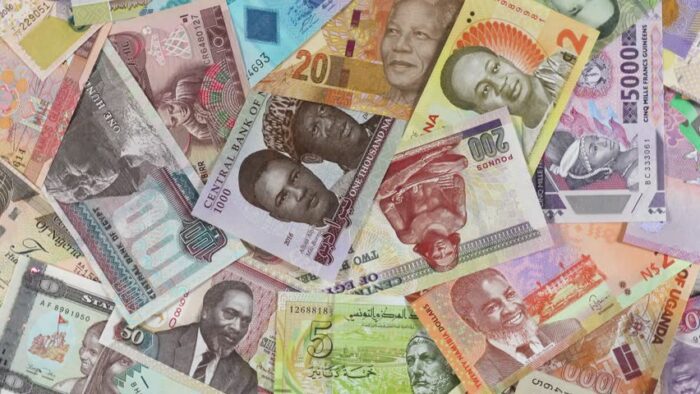
Despite the ceasefire between the United States and Iran in April 2026, global oil prices remained above $100 per barrel, keeping fuel prices elevated across many African countries and worsening inflationary pressures on households already battling a high cost of living.
Yet, despite the economic strain caused by the Middle East conflict, several African currencies showed resilience against the US dollar during the month.
According to data compiled by the real-time trading platform African markets, 12 of 17 major African currencies recorded gains against the dollar last month, reflecting stronger foreign exchange inflows, tighter monetary policies, and improving investor confidence in parts of the continent.
Here are 12 African currencies that appreciated despite the US-Iran war
Namibian dollar
The Namibian dollar appreciated by 2.32 percent, strengthening from 16.84 per dollar on April 1, to 16.72 on April 30.
The currency moved largely in line with the South African rand because Namibia’s currency is pegged to the rand. Improved regional investor confidence and stronger commodity prices helped support both currencies.
Zambian kwacha
The kwacha appreciated by 1.66 percent in strengthening from 19.2 kwacha per dollar to 18.88.
The currency gained support from rising copper export earnings and improved investor sentiment towards Zambia’s economic recovery efforts. Earlier debt restructuring agreements also continued to improve confidence in the country’s outlook.
Read also: Five African currencies with the biggest declines amid Middle East war
Egyptian pound
Egypt’s pound gained 1.58 percent against the dollar, improving from 54.23 pounds at the beginning of the month to 53.37 at the end.
Stronger foreign currency inflows from tourism, remittances and renewed investor interest in Egyptian debt markets drove the appreciation.
Tunisian dinar
The Tunisian dinar appreciated by 1.36 percent against the dollar, strengthening from 2.92 dinars per dollar to 2.88.
Tunisia continued to benefit from stronger tourism earnings and relatively controlled import demand. The dinar remains one of Africa’s strongest currencies due to the country’s managed exchange rate system and monetary controls.
CFA franc
The CFA franc appreciated by 1.09 percent against the dollar, moving from 565.93 CFA to 559.73 per dollar during the month.
The currency benefited largely from its peg to the euro, which gained strength against the dollar in April. Stability in monetary policy across the West African Economic and Monetary Union and the Central African Economic and Monetary Community also helped maintain investor confidence.
Moroccan dirham
Morocco’s dirham appreciated by 1.07 percent, strengthening from 9.33 dirhams per dollar to 9.23. The North African economy benefited from strong tourism revenues and export earnings, particularly from phosphate sales and automotive manufacturing. Morocco’s stable monetary framework and improving investor sentiment also supported the currency.
Read also: 7 African countries with the strongest currencies/$ as of March 2026
South African rand
The rand appreciated by 0.83 percent against the dollar in April, moving from 16.84 per dollar to 16.75. The currency was supported by easing fears around global energy disruptions after the Iran ceasefire announcement and improving commodity prices. Investor appetite for emerging market assets also returned gradually during the month, helping support the rand.
Kenyan shilling
The Kenyan shilling appreciated by 0.77 percent against the dollar in April, moving from 130.06 shillings per dollar to 129.05.
The currency remained relatively stable due to strong tea and horticulture exports, and continued interventions by Kenya’s central bank to support reserves. Lower import costs during the month also reduced pressure on demand for dollars.
Botswana pula
The Botswana pula appreciated by 0.78 percent against the dollar, strengthening from 13.93 pula per dollar at the start of the month to 13.82 by month’s end.
The currency was supported by Botswana’s prudent monetary management and relatively strong foreign reserve position. Stable diamond exports also helped cushion the economy despite pressure from global uncertainty. The Bank of Botswana has maintained a controlled exchange rate system that continues to support currency stability.
Ugandan shilling
Uganda’s shilling appreciated by 0.43 percent during April, improving from 3,734.72 shillings per dollar to 3,718.4.
Strong coffee export earnings and stable monetary policy helped support the currency. Uganda also benefited from steady inflows from development financing and remittances during the month.
Nigerian naira
The naira appreciated modestly by 0.21 percent in April, strengthening from N1,378.2 per dollar at the beginning of the month to N1,375 by the end.
Improved dollar liquidity, increased foreign portfolio inflows, and reforms in the foreign exchange market helped stabilise the currency. Analysts also pointed to stronger oil receipts and tighter central bank policies as factors behind the naira’s relative stability.
Zimbabwean ZiG
Zimbabwe’s ZiG appreciated slightly by 0.11 percent in April, moving from 25.37 ZiG per dollar to 25.34. Authorities continued efforts to stabilise the currency through tighter monetary controls and foreign reserve backing linked to gold and other assets. Although gains remained modest, the ZiG showed relative stability compared to previous periods of sharp volatility.
The other currencies, however, weakened against the dollar in April amid persistent foreign exchange pressures and rising import costs.
Ghana’s cedi depreciated by 1.35 percent to 11.22 per dollar by the end of April, while Malawi’s kwacha slipped by 0.11 percent to 1,742 per dollar. Rwanda’s franc also weakened by 0.31 percent to 1,463.85 per dollar. Mauritania’s Rupee recorded a 0.25 percent decline to 39.23 per dollar, while Tanzania’s shilling depreciated by 0.38 percent to 2,608.79 per dollar.

Join BusinessDay whatsapp Channel, to stay up to date
Open In Whatsapp