There are two stories running through NJ Ayuk’s Crude Oil: Power, Turnaround and Transformation in Angola. The first is the familiar African resource story: a country blessed with oil, trapped by dependence, damaged by corruption and exposed to the violence of global commodity cycles. The second is the more hopeful story: a country attempting, through political leadership and institutional reform, to turn oil from a source of elite accumulation into a platform for broader national transformation.
The tension between these two stories is what gives the book its force.
Energy Poverty as the Moral Starting Point
Ayuk opens the book with a deceptively ordinary scene: a virtual conversation in which both parties are relieved that the electricity has not failed. That moment becomes a metaphor for Africa’s larger energy crisis. It is also the emotional doorway into the book’s central argument. Angola matters, Ayuk suggests, because it offers one of the clearest examples of an African country trying to confront energy poverty not by abandoning hydrocarbons, but by managing them better.
The introduction is direct about the scale of Africa’s energy challenge. Hundreds of millions of people across sub-Saharan Africa still lack access to electricity, while many more depend on solid biomass for cooking. For Ayuk, this makes the argument against African oil and gas development morally and economically incomplete. A continent still struggling to power homes, hospitals, industries and schools cannot be expected to follow the same transition timetable as Europe or North America. Angola, in this framing, becomes a test case for a more practical African energy future.
Angola Beyond the Oil Fields
What makes the book more ambitious than a standard energy-sector account is its structure. The contents show that Ayuk is not interested in writing only about production figures, reforms and investment flows. He begins with Angola’s land, people and resources, then moves into colonial history, slavery, war, self-determination and the long shadow of the dos Santos presidency. This broad sweep matters because Angola’s oil industry cannot be understood without the history of the Angolan state itself.
Oil in Angola has never been just a commodity. It has been a source of political power, a tool of postwar reconstruction, a magnet for foreign capital, a driver of state revenue and, at times, a symbol of everything that went wrong in the management of national wealth. The book recognises this duality. Angola’s oil boom after the civil war brought spectacular economic expansion. Production rose, global companies competed for access, and the country briefly appeared to be one of Africa’s great postwar economic success stories. But the foundation was dangerously narrow.
When the Boom Exposed the Weakness
The introduction’s treatment of the 2008 oil-price collapse is central to the book’s argument. The crash exposed the weakness beneath Angola’s boom. A country whose exports and public finances were overwhelmingly tied to oil suddenly found itself vulnerable. Investment slowed, production declined, reserves came under pressure and the economy struggled. More importantly, the crisis exposed a deeper failure: Angola had not sufficiently diversified, had not built enough institutional resilience and had not converted oil wealth into broad-based welfare.
From Political Will to Sector Reform
This is where the book becomes a study in reform. The dos Santos era is treated as a period whose consequences continued to shape Angola long after its peak. The Lourenço presidency, by contrast, is presented as the beginning of a new attempt to restore credibility. João Lourenço’s anti-corruption stance, his effort to restructure the petroleum sector and his administration’s attempt to separate regulatory authority from commercial operations are positioned as decisive moves in Angola’s turnaround.
The Three Reform Architects
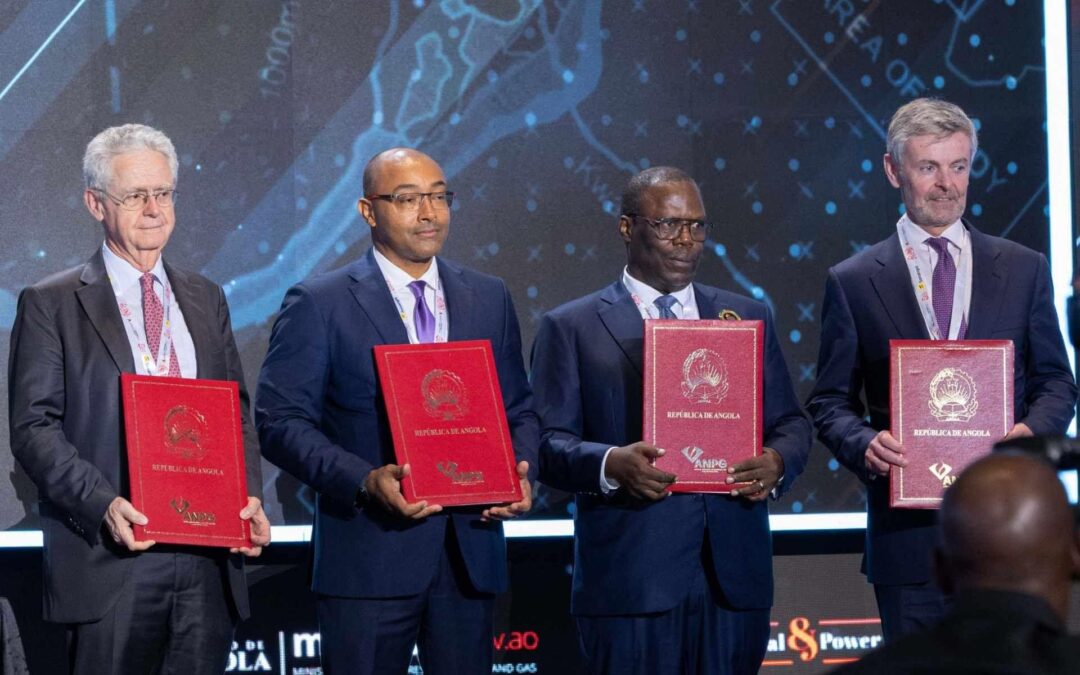
But Ayuk’s reform story is not built around the presidency alone. One of the most important implications of the book is that Angola’s turnaround required key institutional architects who could translate political intent into sector reform. This is where Diamantino Azevedo, Minister of Mineral Resources, Petroleum and Gas; Paulino Jerónimo of the National Agency for Petroleum, Gas and Biofuels; and Gaspar Martins of Sonangol become central to the narrative.
Azevedo represents the policy and ministerial spine of the reform process. He is not presented merely as a minister occupying a formal office, but as a reform technician helping to rebuild confidence in Angola’s petroleum sector, improve governance, attract investment and reposition oil and gas as instruments of national development. His role matters because reform in a resource economy is never simply about announcing a new direction. It requires discipline, coordination and the credibility to persuade investors that the rules of engagement are changing.
Paulino Jerónimo’s significance lies in the regulatory transformation of the sector. The creation of the National Agency for Petroleum, Gas and Biofuels marked one of Angola’s most important institutional reforms because it separated regulatory oversight from Sonangol’s commercial role. That shift was not merely administrative. It was designed to improve transparency, reduce conflicts of interest and give investors greater confidence that licensing, supervision and sector governance would be handled by a dedicated regulator. In that sense, Jerónimo represents the regulatory architecture of the new Angola.
Gaspar Martins, at Sonangol, represents another vital side of the reform story: the transformation of the national oil company itself. For decades, Sonangol was more than an oil company. It was a commercial operator, a state instrument, a political symbol and, in many respects, the centre of Angola’s petroleum economy. Reforming Angola’s oil sector therefore required not only the creation of a new regulator, but also the repositioning of Sonangol into a more focused, commercially disciplined and competitive national oil company. Martins’ role is important because no Angolan oil-sector reform can be credible if Sonangol remains trapped in its old structure and habits.
Together, Azevedo, Jerónimo and Martins give the book’s reform narrative greater institutional depth. They show that Angola’s turnaround was not a vague political slogan. It had identifiable centres of responsibility: the ministry setting direction, ANPG redefining regulation, and Sonangol undergoing strategic repositioning. Their combined roles allow Ayuk to frame Angola’s reform not as the achievement of one office, but as a coordinated effort across the state’s energy institutions.
The Strength and Risk of Optimism
This is both the strength and the potential vulnerability of the book. Its reform narrative is compelling, but it is also generous. Ayuk clearly admires Angola’s recent direction and sees in it a model for other African producers. That optimism gives the book energy, but it also raises important questions for the reviewer. How deep are the reforms? How much has changed beyond the architecture of institutions? Are ordinary Angolans seeing the benefits? Can an oil-dependent state truly diversify while still relying heavily on oil and gas revenues? These questions do not weaken the book; rather, they show why the book is worth engaging seriously.
A Country Still in Motion
The chapter progression suggests a book that wants to move from history to accountability, and from accountability to future strategy. After dealing with political reform and industry restructuring, Ayuk turns to Angolan change-makers, current sector outlook, natural gas, renewables, critical minerals and a just energy transition. This gives the book a forward-looking arc. Angola is not being frozen in its past. It is being examined as a country still in motion.
Natural Gas and the African Transition Argument
The natural gas section appears especially significant. Ayuk argues that gas should not be treated as an embarrassment in Africa’s transition story. For Angola, gas represents industrial potential, export opportunity and a bridge toward a more diversified energy system. This view aligns with the book’s broader philosophy: Africa’s energy transition must be just, realistic and development-centred. Renewable energy, hydropower, green hydrogen and critical minerals all have a place, but they cannot erase the immediate urgency of energy poverty.
An Unapologetic Argument for African Agency
As a work of advocacy, Crude Oil is unapologetic. Ayuk writes from the perspective of someone deeply invested in Africa’s right to use its natural resources for development. That standpoint gives the book clarity. It also means the reader must understand the book not as detached academic history, but as a purposeful argument for African agency in energy policy. Ayuk is not neutral about the question of whether Angola should develop its oil and gas resources. He believes it should — but with better governance, stronger institutions, transparency, local participation and a broader development agenda.
Measuring Transformation Beyond Barrels
The most effective part of the book’s framing is its refusal to separate oil from people. The introduction repeatedly returns to the human cost of energy poverty and the failure of oil wealth to reach ordinary citizens. That moral concern is what lifts the book beyond industry analysis. Angola’s real transformation, the book implies, will not be measured only by barrels per day, licensing rounds or investor confidence. It will be measured by whether energy wealth improves lives.
The Real Test of Angola’s Turnaround
In the end, Crude Oil: Power, Turnaround and Transformation in Angola is a serious and timely contribution to the debate over African resource governance. It tells the story of a country that has suffered from the excesses of oil dependence but is now trying to reform the system that made such dependence dangerous. It is optimistic, sometimes strongly so, but its optimism is anchored in a clear argument: Angola’s future will depend not on whether it has oil, but on whether it can govern oil differently.
That is the book’s most important message. Angola’s crude oil built power. The question now is whether reform — shaped by political will, ministerial leadership, regulatory credibility and national oil company renewal — can turn that power into transformation.

Join BusinessDay whatsapp Channel, to stay up to date
Open In Whatsapp