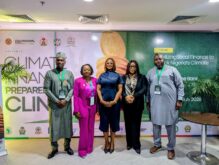
As African governments seek fresh sources of funding for infrastructure and industrial growth, Adeyemi Aduwo, chief finance officer of Sunbeth Global Concepts, says attracting long-term capital will depend less on rhetoric and more on creating stable, investor-friendly economies. In this interview with BusinessDay’s Wasiu Alli, Aduwo explains why policy consistency, efficient institutions, and clearer economic priorities are essential to unlocking financing from institutional investors, development finance institutions, and the private sector. Excerpt:
In your view, what is the single biggest financial barrier holding back Africa’s economic transformation today, and why does it persist despite the continent’s abundant resources?
The biggest barrier is not the absence of resources, but the absence of long-term capital structured around Africa’s development realities. Most funding available to African businesses is short-term, expensive, and not aligned with the time required to build infrastructure, processing capacity, and industrial scale.
This persists because risk perception remains high, capital markets are still shallow in many countries, and a large portion of available capital flows into low-risk instruments rather than productive sectors. Africa has the resources, but the financing architecture needed to convert those resources into long-term economic value is still developing.
Long-term or patient capital is often discussed but rarely well understood in African business circles. How would you explain it simply, and why is it particularly suited to Africa’s development needs at this moment?
Patient capital is simply capital that gives businesses and projects enough time to grow, mature, and generate returns. It is not money seeking quick repayment or immediate profit. It is designed for the reality that building factories, ports, energy systems, logistics networks, and value chains takes time.
This kind of capital is particularly important for Africa right now because the continent is at a stage where it must move from trading raw materials to building productive capacity. That shift cannot happen on short-term loans alone. It requires capital that is patient, strategic, and committed to long-term value creation.
Read also: Sunbeth to launch 70,000 MT cocoa, 80,000 MT cashew processing plants in March 2027
Africa is increasingly moving away from exporting raw commodities towards processing them locally. What role does patient capital play in making that shift from extraction to industrialisation actually happen on the ground?
Patient capital is what makes the shift from extraction to industrialisation practical. Take any country planning to stop exporting raw agricultural commodities and start processing locally — it needs world-class factories, reliable power, efficient logistics, storage infrastructure, quality systems, skilled labour, and access to export markets. All of these require significant upfront investment before any returns begin to materialise.
Patient capital gives businesses the runway to build that capacity. Without it, companies remain trapped in the easier model of exporting raw commodities, forfeiting the jobs and economic value that local processing would otherwise create.
One of the persistent challenges is that long-term investors often perceive Africa as too risky. How do we change that narrative, and whose responsibility is it — governments, institutions, or the private sector?
We change the risk narrative by improving both the perception and the reality. Governments must provide policy consistency, stronger institutions, and better enforcement. Development institutions must help de-risk projects and draw in private capital. The private sector must improve governance, transparency, reporting, and execution discipline.
It is a shared responsibility. Africa cannot simply ask investors to see it differently — we must also present better-structured and bankable opportunities. Risk will always exist, but the real question is whether that risk is properly understood, priced, and mitigated.
There is a growing argument that Africa does not need to look outward for capital — that the continent has enough within its own pension funds, sovereign wealth funds, and institutional savings. Do you agree, and what needs to change for that capital to be deployed effectively?
Africa has significant capital locked within pension funds, sovereign wealth funds, banks, insurance companies, and other institutional pools. The conversation needs to shift from simply raising capital to effectively channelling African savings into productive investment. The two are not the same thing.
What needs to change is the framework for deployment. Institutional investors need investable products, proper credit enhancement, strong project preparation, and regulatory support. They also need confidence that long-term infrastructure and industrial projects can deliver stable, competitive returns — because they can.
Read also: Sunbeth Shipping seeks to ride on AfCFTA to expand across Africa
Patient capital is closely tied to infrastructure financing — roads, energy, ports, and industrial corridors. How does infrastructure investment create the conditions for broader economic growth and job creation across Africa?
Infrastructure is the foundation on which broader economic growth is built. Roads reduce the cost of moving goods. Ports improve trade efficiency. Energy drives productivity. Industrial corridors connect producers to markets.
When infrastructure works, businesses become more competitive, investment increases, and jobs are created across multiple sectors. It is not simply about building roads or power plants — it is about creating the conditions for agriculture, manufacturing, trade, services, and exports to grow together.
Development finance institutions like the AFC, Afreximbank, and the African Development Bank are increasingly stepping up. How important are these homegrown institutions in building a financing ecosystem that truly serves Africa’s long-term interests?
These institutions are critically important because they understand Africa’s context in ways that many external financiers do not. They are not simply providing capital — they are helping structure transactions, de-risk projects, support regional trade, and build confidence around large-scale infrastructure and industrial investments.
Homegrown institutions also help ensure that Africa’s long-term financing agenda is driven by Africa’s own priorities, not shaped entirely by external investor preferences. Institutions such as AFC, Afreximbank, and the AfDB are central to building a financing ecosystem that is more patient, more strategic, and more genuinely development-focused.
Read also: Inside Sunbeth’s push to scale Nigeria’s cocoa exports
You recently attended the inaugural Africa We Build Summit hosted by the Africa Finance Corporation in Nairobi. What was your biggest takeaway from that gathering, and what does it say about where Africa’s finance and infrastructure conversation is heading?
My biggest takeaway was that Africa’s financing conversation is becoming more practical and more self-aware. The summit was not simply about identifying funding gaps — it was about how Africa can mobilise domestic capital, prepare bankable projects, and move infrastructure from concept to execution.
The inaugural Africa We Build Summit in Nairobi focused on infrastructure as the engine of industrialisation and brought together public and private sector leaders around bankable projects, domestic capital, and regional integration.
For me, it showed that the conversation is shifting from dependency to delivery — from asking who will fund Africa to asking how Africa can better organise its own capital, institutions, and partnerships to build at scale. That is a significant and necessary evolution.
If you could speak directly to one group — whether African governments, institutional investors, or young African entrepreneurs — about what they must do to accelerate the Africa we all want to see, who would you address and what would you say?
I would speak to the government. My message would be direct: create an environment that allows long-term capital to trust your economy. That means policy consistency, investment in project preparation, faster approvals, stronger institutions, and clear industrial priorities.
Capital follows confidence. If governments can build and sustain that confidence, then institutional investors, development finance institutions, and the private sector will have the foundation they need to fund the Africa we all want to see.

Join BusinessDay whatsapp Channel, to stay up to date
Open In Whatsapp