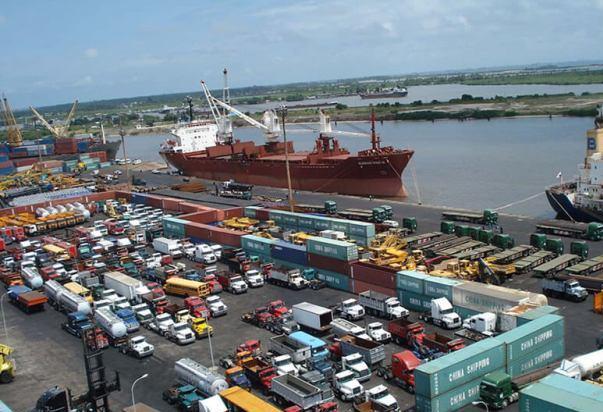
Port users have called for an out-of-court settlement in the legal tussle between the Nigerian Shippers’ Council (NSC) and the Seaport Terminal Operators Association of Nigeria (STOAN). The STOAN and Association Shipping Lines Agencies (ASLA) sued the Council over its decision to reverse the storage charges collected by the terminal operators and for mandating the terminal operators to increase free storage days at the seaports from three to seven.
ASLA, which is the umbrella body of shipping companies in Nigeria, also went to court to stop the port regulator from reducing their shipping line agency charges (SLAC), mandating shipping lines to refund container deposits within 10 days of returning the empty containers.
Recall that the two legal battles questioned the powers of the ports regulator to carrying out such actions but Ibrahim Buba of the Federal High Court Ikoyi had in December 17, 2014, given judgement in favour of the NSC, upholding its appointment as the ports economic regulator for the ports industry and affirming its decision on the charges.
Dissatisfied with the judgment, members of STOAN and SLAC had gone to the Appeal Court soon after the ruling of the lower court. However, freight forwarders and maritime lawyers, who commented on the lingering legal tussle, suggested that the best way out for the three parties in the case is to embrace out-of-court-settlement.
They argued that this was for the good of all the parties and for the benefit of the Nigerian economy, which is currently facing recession. Eugene Nweke, former president of the National Association of Government Approved Freight Forwarders (NAGAFF) said that the alternative dispute resolution or out of court settlement was better for the industry and the economy at large.
To Nweke, court would take time to study the case and give resolution, which is not in favour of the port industry. He called on all the parties, including the port economic regulator, STOAN and ASLA, to consider reaching a compromise as part of the out of court settlement.
Nweke argued that such out of court settlement was desirable considering that the issues involved were those bordering on international trade. Emma Ofomata, a maritime lawyer, who spoke on the issue, also said it was time for the parties in the suit to embrace alternative dispute resolution.
“Out of court settlement is encouraged because the court is always willing to address issues between parties, not necessarily to punish a particular person but to achieve amicable resolution of issues.
That is the essence of court. In modern day, the court always encourages alternative dispute resolution because the primary objective of the law is for all parties to have their cases resolved, ”Ofomata said. Ofomata, who believed that quick resolution of the case will be of immense benefit to the ports industry and the economy, suggested the parties need to sit down to determine the actual cost of doing business in Nigeria and ensure that government comes in to create an enabling environment to reduce cost.

Join BusinessDay whatsapp Channel, to stay up to date
Open In Whatsapp