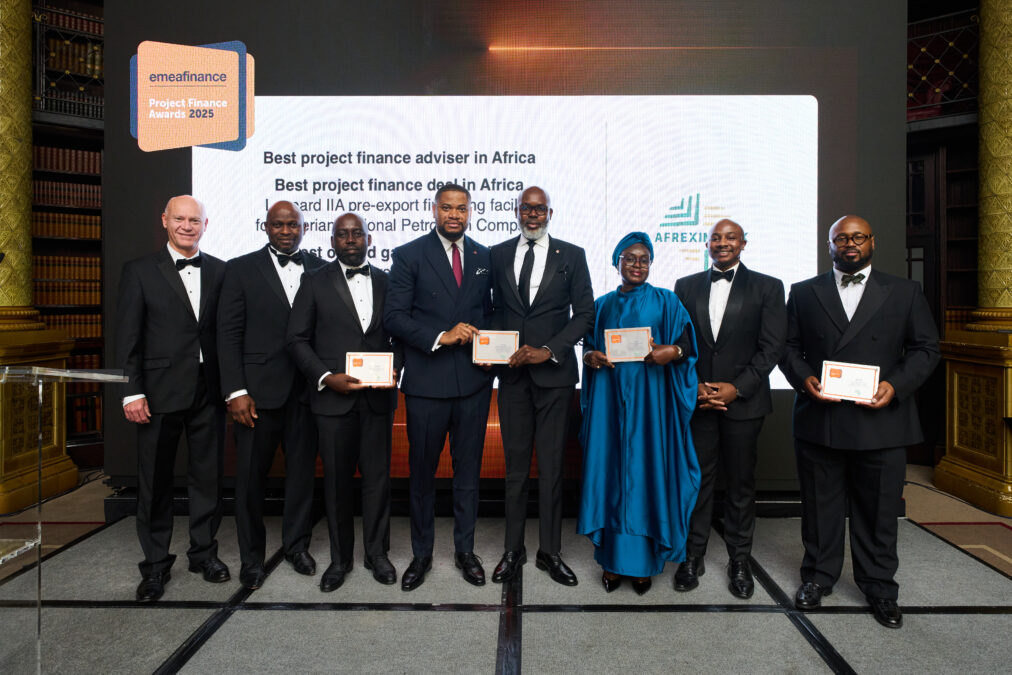
Heirs Energies Ltd. has taken home one of project finance’s most coveted prizes for a $750 million debt deal that its backers say rewrites conventional assumptions about what indigenous African energy companies can pull off in international capital markets.
The Lagos-based producer, which operates Oil Mining Lease 17 in Nigeria’s Niger Delta, was named Best Oil & Gas Deal of the Year at the EMEA Finance Project Finance Awards on June 3 in London. The honour went to a dual-tranche senior secured reserve-based lending facility the company closed with the African Export-Import Bank.
Reserve-based lending is a financing structure common among upstream oil producers, where the borrowing capacity is tied directly to the value of proven hydrocarbon reserves. For Heirs Energies, the deal marked a decisive shift away from the acquisition financing it relied on when Chairman Tony Elumelu’s Heirs Holdings first took over OML 17 from Shell in 2021.
“This recognition reflects the confidence that African and international financial institutions continue to place in Heirs Energies,” Osa Igiehon, the company’s chief executive said in a statement.
The transaction is notable for what it signals about the changing architecture of African energy finance. For decades, African producers have leaned heavily on Western banks and export credit agencies to fund development.
This deal was anchored instead by Afreximbank, the Cairo-headquartered pan-African multilateral lender, raising questions about whether the continent’s own financial institutions are beginning to close that gap.
“This recognition underscores the importance of well-structured, Africa-focused financing in supporting indigenous energy companies,” said Haytham ElMaayergi, Afreximbank’s executive vice president for global trade banking.
Since assuming operatorship five years ago, Heirs Energies has more than doubled oil output to over 50,000 barrels per day and tripled gas production to north of 135 million standard cubic feet per day. The company now accounts for roughly 5 percent of Nigeria’s total oil production and the same share of domestic gas supply, metrics that give lenders a cleaner line of sight into the asset quality underpinning the debt.
Samuel Nwanze, executive director and chief financial officer, said the facility was structured to fund continued field development and production optimisation rather than near-term asset acquisition, a distinction that matters to investors watching how the company manages leverage through the commodity cycle.
Nigeria remains Africa’s largest oil producer, though years of infrastructure underinvestment, crude theft, and community conflict have suppressed output well below the country’s OPEC quota.
Deals like the Heirs Energies financing are being watched closely by analysts who track whether private indigenous operators can absorb operational and capital burdens that international majors have progressively shed across the region.
The EMEA Finance awards cover project and structured finance transactions across Europe, the Middle East and Africa. Past honorees have included infrastructure deals spanning power, transport and telecoms.

Join BusinessDay whatsapp Channel, to stay up to date
Open In Whatsapp