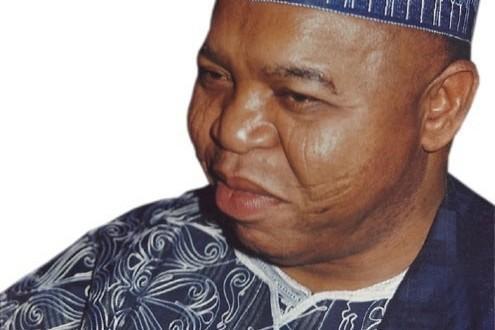
As palpable tension trails the demise and burial of Abubakar Audu, the All Progressives Congress (APC) candidate in Saturday’s governorship election in Kogi State, a constitutional crisis looms in the state over his replacement in the forthcoming supplementary poll.
This is complicated by the fact that the APC standard bearer was leading in the poll, which the Independent National Electoral Commission (INEC) had declared inconclusive.
Results earlier declared by the
Returning Officer, Emmanuel Kucha, had indicated that the late Audu scored 240,867 votes while incumbent governor, Idris Wada of the Peoples Democratic Party (PDP) garnered 199,514.
BusinessDay findings show that the death of the 68-year old politician has thrown up legal and political quagmire ahead of the supplementary election in the state.
This is because both the 1999 Constitution (as amended) and the 2010 Electoral Act (as amended) are silent on the demise of a leading candidate in a supplementary election.
While the two legal documents envisage what happens if a candidate dies before and after the polls, it is silent on the demise of a leading candidate before a supplementary poll.
Specifically, Section 36 of the Electoral Act 2010 (as amended) states that: “If after the time for the delivery of nomination paper and before the commencement of the poll, a nominated candidate dies, the Chief National Electoral Commissioner or the Resident Electoral Commissioner shall, being satisfied of the fact of the death, countermand the poll in which the deceased candidate was to participate and the Commission shall appoint some other convenient date for the election within 14 days”.
However, some legal experts have argued that this section of the Act is not applicable to the current situation in Kogi since election has already commenced.
In the same token, Section 181 (1) of the 1999 Constitution (as amended) provides that: “If a person duly elected as governor dies before taking and subscribing to the oath of allegiance and oath of office, or is unable for any reason whatsoever to be sworn in, the person elected with him as deputy governor shall be sworn in as governor and he shall nominate a new deputy governor who shall be appointed by the governor with the approval of a simple majority of the state House of Assembly.”
Other legal experts have also argued that this constitutional provision does not hold water, as the leading candidate, Abubakar Audu, has not been declared “duly elected governor’ before his demise.
Speaking on the development, legal luminary, Olisa Agbakoba (SAN), called for a fresh election to accommodate APC.
“The election is voided, it has to restart. You need a candidate with a party to complete a legal ticket. If a candidate is not available by reason of death, then there can be no election”, he said.
Agbakoba was however, countered by Dafe Akpadeye (SAN) who likened conducting a fresh poll to shifting the goal post in the middle of a football match.
According to Akpedeye, the nation’s laws anticipated a situation where a candidate can be substituted before the commencement of polls and not when the exercise has commenced.
Speaking with BusinessDay, Abuja-based lawyer, Kayode Ajulo said Audu has not been duly elected, his running mate, Abiodun Faleke, cannot replace him in the supplementary election.
He added that Audu has been ‘disqualified’ by death, thus creating what he termed ‘doctrine of wasted votes’. Consequently, he submitted that APC cannot present any candidate in the exercise.
He said: “As it is now, the APC doesn’t have any gubernatorial candidate and if you check Section 181 of the Constitution, it talks about if a governor-elect has not been sworn in and he dies, his deputy will take over. But in this case, he is not governor-elect, he is a candidate of a party. And as it is, he has been disqualified by death. As it is, APC does not have candidate and the time within which to do another nomination has elapsed. This should be seen as an act of God. APC can’t field a candidate as a result of Audu’s death”.
On his part, constitutional lawyer, Mike Ozhekome (SAN), declined to comment on the matter when BusinessDay sought his views, saying: “I can’t speak on it now because I was with him (Audu) up to Friday. He is my personal friend and client, so I have resisted all interviews so far”.
Findings showed that INEC is currently consulting its legal team, with a view to adopting the closest option available in the nation’s law.
A source in the Presidency who spoke on condition of anonymity, revealed that if the decision of the electoral body does not go down well with the APC, it could use its influence as a ruling party to ask Attorney General of the Federation, Abubakar Malami, through the Federal Government, to approach the Supreme Court for interpretation on the matter.
It is left to be seen how this will be possible, since President Muhammadu Buhari was absent at the electioneering campaigns of the party in the state.
Meanwhile, the electoral body on Monday said it is yet to be formally informed of the demise of the APC candidate in the Kogi guber poll, Abubakar Audu.
At a meeting which lasted for several hours at the Commission’s headquarters in Abuja to discuss the outcome of last Saturday’s guber election in Kogi State, the electoral umpire also met with its legal team on issues arising from the exercise.
According to INEC’s Director of Voter Education and Publicity, Oluwole Osaze-Uzzi: “The meetings are still going on. We are still consulting with our lawyers. In the next 24 to 48 hours we will issue a release on the matter”.
He, however, assured that INEC would apply available legal provisions on the recent developments in the state.
“We are yet to be formally informed of the death of the APC candidate. But we are being proactive in tackling the issue,” he explained.
Deputy Director of Publicity of the Commission, Nick Dazang, who corroborated that the APC was yet to inform the Commission of the demise of Audu, said “APC has to do proper notification, and accompany it with the certificate of death issued by a medical doctor”.
He however assured that INEC would apply relevant laws in taking a decision on the election, immediately it receives official notification of his death.
The Commission, he said, has a consortium of Senior Advocates of Nigeria (SAN) that provide counsel to the commission, adding that: “Once the commission is notified, it will look at relevant clauses of the 1999 Constitution as amended, the Electoral Act 2010 as amended and also the Constitution of APC itself”.
Dazang assured that the Kogi election would not affect that of Bayelsa slated for December 5, saying the Commission had the capacity to handle the two elections.
OWEDE AGBAJILEKE

Join BusinessDay whatsapp Channel, to stay up to date
Open In Whatsapp