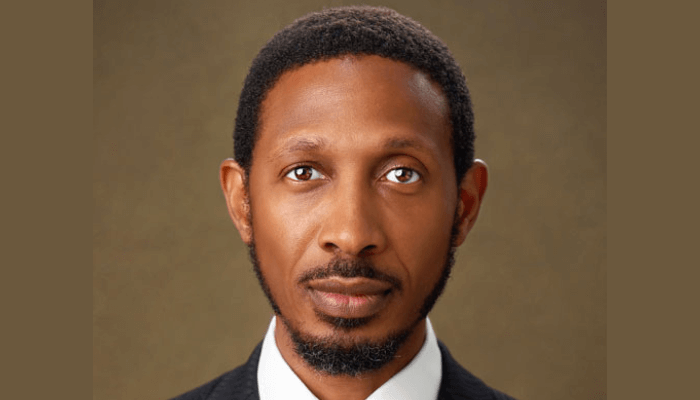
Ahonsi Unuigbe’s story is not the familiar tale of an executive arriving in oil and gas by chance. It is the story of a builder who came to the sector with a financier’s eye, a strategist’s patience and an operator’s appetite for risk. At a time when Nigeria is trying to prove that indigenous companies can do more than hold licences, Unuigbe has become one of the figures showing what local ownership can mean when it is backed by capital, governance and execution.
His name has become increasingly associated with Petralon Energy and the Dawes Island Field, a project that has placed him at the centre of one of the most important arguments in Nigeria’s upstream industry: whether indigenous operators can revive assets, produce barrels, attract credible partners and strengthen national output in a sector long dominated by international oil companies.
Dawes Island has made that argument concrete. It has moved Petralon from ambition to evidence. It has been shown that marginal fields, often treated as secondary assets, can become serious production platforms when placed in capable hands. For Unuigbe, the project is more than a corporate milestone. It is the clearest expression yet of his belief that Nigerian capital and Nigerian operatorship can compete at the level required by a modern energy economy.
From capital insight to upstream ambition
Unuigbe’s route into energy gives his work a particular character. He did not emerge only from the technical side of oil and gas. His grounding in investment banking, project finance and corporate leadership shaped the way he approached the sector. That background matters because upstream energy is not sustained by acreage alone. It requires financing discipline, partner confidence, regulatory stability, technical delivery and the ability to manage long-term risk.
This is where Unuigbe’s career becomes interesting. He understood that Nigerian independents would not earn credibility by simply acquiring assets. They would have to prove that they could mobilise capital, respect governance standards, work with regulators, build strong teams and deliver measurable results. Petralon Energy became the platform for that thesis.
Under his leadership, the company has tried to represent a different kind of indigenous operator: ambitious, but not careless; locally rooted, but commercially sophisticated; willing to take risks, but aware that energy assets only become valuable when they are worked responsibly.
Petralon and the meaning of local ownership
The rise of Petralon fits into Nigeria’s broader local content story. For years, policymakers have argued that indigenous participation must deepen in the oil and gas sector. Yet participation is only meaningful when it produces capacity. A local company that merely owns a licence does not change the structure of the industry. A local company that invests, drills, produces, hires, pays royalties and builds operational competence begins to shift the balance.
That is why Unuigbe’s work matters. Petralon’s growth has been tied to the larger question of whether Nigerian independents can become credible production companies rather than passive asset holders. The Dawes Island project has given the company a platform to answer that question in practical terms.
It has also strengthened the case for a new generation of indigenous energy entrepreneurs. These are not operators asking for sentimental support. They are companies asking for a fair operating environment in which capital, risk and performance are protected.
Dawes Island: the project that changed the conversation
The Dawes Island Field has become the defining chapter in Unuigbe’s energy journey. The project represents the kind of asset Nigeria’s marginal field programme was designed to unlock: a field that could be moved from underdevelopment to production through focused indigenous operatorship.
Petralon’s progress on the field has given Unuigbe a stronger voice in the industry. It has been shown that local players can attract serious commercial partners, execute field development plans and contribute to national production goals. In a country where oil output remains tied to public revenue, foreign exchange earnings and investor sentiment, that kind of progress carries significance beyond one company.
But Dawes Island has also become a test case. The legal and regulatory dispute around the field has raised larger concerns about investor protection, regulatory certainty and the future of marginal field reform. For indigenous operators, the lesson is clear: Nigeria cannot call for local investment and then allow uncertainty to undermine companies that have taken the risk to develop assets.
That point was made forcefully by NJ Ayuk, executive chairman of the African Energy Chamber, whose defence of Petralon placed the Dawes Island matter within the larger debate about African operatorship and investor confidence. Ayuk argued that Petralon had not merely claimed a place in Nigeria’s upstream sector, but had earned it through compliance, investment and performance. “Petralon is a Nigerian independent that has followed every rule, complied with every regulation and worked hand-in-hand with government to increase production. They drilled. They invested. They paid royalties. They delivered results,” Ayuk said, warning that any attempt to derail such progress would be “unjust” and would send “the wrong signal to the market.”
His intervention captures the heart of the Dawes Island debate. The issue is not simply whether one company wins a dispute. The larger question is whether Nigeria will stand behind indigenous operators who have put real capital and technical effort into national production. If companies like Petralon are expected to help grow output, they also need confidence that investment, compliance and performance will be recognised and protected.
A leadership model built on credibility
What separates Unuigbe from many energy promoters is the seriousness of his approach. His profile is not built around loud claims or speculative positioning. It rests on a combination of finance, governance and operating delivery. That mix is increasingly important in Nigeria’s energy sector, where investors are watching not only the quality of assets but also the quality of leadership behind them.
Unuigbe brings to Petralon the instincts of someone who understands that reputation is an asset. The company’s progress depends not only on what it produces, but on how it is perceived by regulators, lenders, partners and communities. That is why the Dawes Island story has become so important. It allows Petralon to point to evidence: investment made, milestones reached, production achieved and value created.
In that sense, Unuigbe’s leadership is less about personality and more about proof. He has helped move the conversation from whether Nigerian independents should be trusted with upstream assets to what they can deliver when given the opportunity.
Why his exploits matter now
Unuigbe’s exploits matter because Nigeria is at a turning point in its energy history. International oil companies are repositioning. Indigenous operators are taking on more responsibility. The country needs higher production, stronger revenue performance, better local capacity and more confidence from investors. In that environment, every successful indigenous project becomes part of a wider national test.
Dawes Island is one of those tests. It speaks to the future of marginal fields. It speaks to the credibility of the local content agenda. It speaks to the need for stable regulation. It also speaks to the ability of Nigerian entrepreneurs to move beyond advocacy and deliver tangible outcomes.
For Unuigbe, the project has become a defining marker. It shows a leader willing to operate in one of the most difficult sectors in the economy, where success requires patience, capital, relationships and resilience. It also shows that indigenous leadership in energy is no longer only about access to assets. It is about performance.
Beyond one field
The strongest part of Unuigbe’s story is that it does not end with Dawes Island. The project may be his most visible achievement, but it reflects a larger philosophy: build institutions, not briefcases; pursue value, not optics; treat local ownership as a responsibility, not a slogan.
Nigeria’s energy future will depend heavily on operators who understand that distinction. The country needs companies that can transform assets into output, output into revenue, and revenue into wider economic value. It needs indigenous leaders who can work with regulators, communities, financiers and global partners without losing the national purpose of their work.
Ahonsi Unuigbe represents that emerging class. Through Petralon, he has placed himself among the Nigerian operators trying to prove that the next phase of the country’s upstream sector can be locally led and commercially credible.
Dawes Island has given that argument its strongest evidence. It has been shown that when Nigerian operators are properly backed, they can do more than participate. They can produce. They can attract partners. They can create value. They can carry the local content agenda from policy language into the field.
That is why Unuigbe’s story matters. It is not just about one executive or one company. It is about the future shape of Nigerian energy — and the growing conviction that indigenous operators are no longer waiting at the margins of the industry. They are beginning to define its next chapter.

Join BusinessDay whatsapp Channel, to stay up to date
Open In Whatsapp