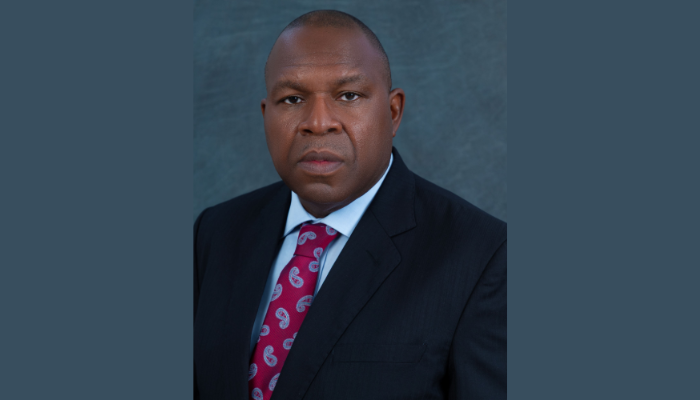
In every generation, nations are shaped not only by those who make grand speeches, but by those who build the systems that make progress possible. Roads, schools, hospitals, security, enterprise support, digital infrastructure and social protection all require one invisible engine: credible public revenue. Without it, ambition becomes rhetoric. With it, reform becomes reality.
This is why the work now being driven through the Joint Revenue Board under the leadership of Mr Olusegun Adesokan deserves serious attention. It is not merely an administrative exercise. It is the patient construction of a new operating system for Nigeria’s fiscal future.
Adesokan, an alumnus of TEXEM, represents a leadership style that is increasingly needed across Africa: disciplined, reform-minded, technically grounded, yet practical enough to understand that public institutions do not transform by slogans. They transform when leaders build trust, reduce friction, simplify rules and make compliance easier than avoidance.
The initiatives emerging from the JRB tell a larger story. The Taxpayer Identification Portal, already live, is more than a digital platform. It is a foundation for a modern revenue state. By enabling individuals and corporate entities to retrieve Tax IDs through NIN and CAC registration numbers, it gives Nigeria something every serious economy requires: a more coherent view of who participates in the economy and how the state can engage them fairly.
The JRB PAYE Tax Calculator, also live, speaks to a different but equally important principle: simplicity. In many countries, tax systems fail not because citizens reject contribution, but because the process is confusing, inconsistent or intimidating. A calculator that allows people to compute personal income tax in a simple and reliable way may appear modest, but reforms often win legitimacy through such practical tools. When people understand the rules, they are more likely to respect them.
The Digital Intervention in States is perhaps one of the most consequential reforms. By promoting data sovereignty for State and FCT revenue authorities and reducing dependence on third-party consultants, the JRB is moving revenue administration from rented capacity to owned capability. With Phase 1 already completed across 12 states, this is not theory. It is implementation. In a federation as complex as Nigeria, that matters.
Equally significant is the Model Taxes and Levies Law, which seeks to harmonise more than 100 state and local government taxes and levies into nine collection heads. This is the kind of reform that may not make dramatic headlines but can transform the investment climate. For entrepreneurs, transporters, small businesses and investors, multiple levies are not just financial burdens; they are signals of uncertainty. When tax heads are rationalised, cash collections restricted, roadblocks prohibited and arbitrary stickers curtailed, government sends a message that order can replace harassment and that revenue mobilisation need not be hostile to enterprise.
The Presumptive Tax Regulations 2026 also show an important sensitivity to economic reality. By exempting nano businesses with annual turnover not exceeding ₦12 million and setting simplified rules for eligible informal operators, the JRB is recognising that taxation must be broad-based but not predatory. The informal sector cannot be bullied into formalisation. It must be guided into it through fairness, clarity and proportionality.
The ongoing Consolidated Haulage Levy points in the same direction. A one-time automated payment system with revenue sharing between loading and offloading states could reduce the culture of multiple collections that has long frustrated trade, logistics and food distribution. If implemented with discipline, it could become a practical example of how technology can reduce leakage, improve transparency and support commerce.
There is also a strategic intelligence in the JRB’s less visible work: capacity building, standard operating procedures for sub-national revenue authorities, guidelines on personal income tax administration, gaming and betting withholding tax, and the emerging virtual assets tax remittance system. These are not isolated projects. They are pieces of a broader architecture: uniformity, digitalisation, fairness, compliance, capacity and accountability.
What distinguishes Adesokan’s leadership is not simply that these initiatives exist. It is that they appear to be connected by a coherent philosophy: revenue reform should make the state more capable and the taxpayer less burdened by confusion. That is the difference between extraction and institution-building.
For younger professionals, public servants and private-sector leaders, there is an important lesson here. Excellence is rarely accidental. It is built through years of discipline, learning, resilience and quiet preparation. Adesokan’s example shows that meaningful leadership is not always loud. Sometimes it is found in the careful redesign of forms, portals, laws, guidelines, data systems, training routines and enforcement norms. These are the instruments through which nations become more predictable, competitive and governable.
Dr Alim Abubakre, Founder of TEXEM, captures the significance of this kind of leadership powerfully:
“Mr Olusegun Adesokan exemplifies the kind of alumnus TEXEM is proud to celebrate: a leader who combines intellectual humility with strategic courage. His work reminds us that transformation is not achieved by noise, but by disciplined execution, ethical conviction and the capacity to build systems that outlive individuals. Nigeria needs more leaders who can turn complexity into clarity and ambition into measurable national value.”
That observation goes to the heart of the matter. Africa does not lack ideas. It often can improve on execution discipline. It does not lack talent. It often needs more systems that allow talent to produce durable results. The JRB’s current initiatives suggest an attempt to close that gap in one of the most consequential areas of national life.
The wider message is clear. If Nigeria can build a revenue system that is fairer, simpler, more digital, more transparent and more coordinated across levels of government, it can unlock far more than tax receipts. It can improve trust. It can attract investment. It can reduce friction for business. It can strengthen fiscal independence. It can give government the resources to invest in the future without constantly mortgaging that future.
Reform of this nature is not glamorous work. It requires patience with bureaucracy, courage to confront entrenched interests, and the stamina to keep moving when progress is slow. It demands leaders who are willing to do the uncelebrated work that later generations may take for granted.
That is why the story of Adesokan and the JRB should be read not only as a tax-administration story, but as a leadership story. It is a reminder that the most valuable public servants are not always those who chase applause. They are often those who build the rails on which national progress can travel.
For those looking for inspiration, the lesson is direct: work hard, learn deeply, serve with integrity, master your craft and build institutions wherever you are planted. Titles may open doors, but only substance keeps them open. Adesokan’s journey shows that preparation, competence and commitment still matter.
In an age where many seek visibility before value, his example offers a different standard: build first, reform patiently, let impact speak, and allow service to become the signature.

Join BusinessDay whatsapp Channel, to stay up to date
Open In Whatsapp