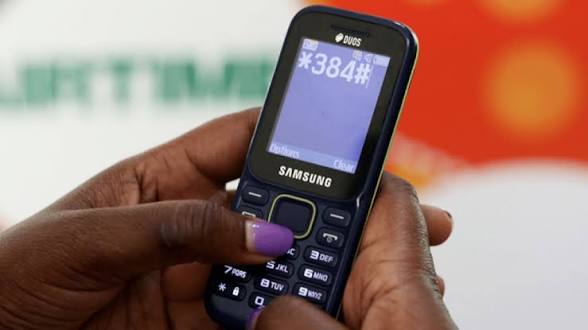
Millions of Nigerian bank customers have experienced repeated failures in Unstructured Supplementary Service Data (USSD) transactions in recent days, even with sufficient funds in their accounts.
The disruptions stem from a major industry-wide shift to the End-User Billing (EUB) model for USSD services, combined with enhanced anti-fraud measures by regulators.
The core change
For years, banks deducted USSD session charges directly from customers’ bank accounts before settling with telecommunications operators.
This model has been replaced with End-User Billing, under which customers now pay for USSD sessions directly through deductions from their mobile airtime balance.
Under the new framework, approved by the Central Bank of Nigeria (CBN) and the Nigerian Communications Commission (NCC), users are charged a flat rate of N6.98 per 120-second USSD session. This fee is deducted from airtime by the Mobile Network Operator (MNO), not the bank.
This represents one of the most significant changes to Nigeria’s digital banking architecture since USSD services were introduced, ending the previous inter-corporate billing arrangement between banks and telcos.
Read also: UK cracks down on Russia’s use of Nigerians in Ukraine war
Why the Switch?
The transition to EUB resolves a long-running dispute between banks and telecommunications operators over unpaid USSD fees.
In early 2026, the Association of Licensed Telecommunications Operators of Nigeria (ALTON) confirmed the resolution of a nearly N300 billion debt accumulated over approximately four years.
Gbenga Adebayo, ALTON chairman described the debt as a systemic risk to both sectors.
The new direct billing model prevents future accumulation by having telcos collect fees straight from customers.
The NCC’s Determination of USSD Pricing and Services, developed in collaboration with the CBN, introduced the EUB model to ensure sustainability and transparency. Implementation rolled out progressively from June 2025.
The NCC has emphasised safeguards against double billing. In its official FAQs on the EUB policy, the commission stated that banks must not charge customers for USSD sessions under this model, only MNOs can do so, similar to voice, SMS, or data charges. MNOs are required to provide end-of-session notifications detailing the exact amount deducted.
The CBN and NCC have jointly directed that customers report any unauthorised bank deductions for USSD to the CBN.
In April 2026, the CBN and NCC signed a Memorandum of Understanding (MoU) to strengthen collaboration on consumer protection and combat electronic fraud.
Olayemi Cardoso, CBN governor highlighted the importance of the Telecom Identity Risk Management Portal (TIRMS/TIRMP), which allows banks to verify SIM status in real time, checking for recent swaps, recycling, or suspicious activity,.before approving transactions.
Aminu Maida, NCC executive vice chairman has stressed that such inter-agency collaboration is essential for the integrity of Nigeria’s growing digital economy.
Beyond billing changes, some transaction failures may result from stricter security protocols. The TIRMS platform and tighter rules on BVN-linked phone number changes (limited in frequency) aim to curb SIM-swap fraud and identity theft.
The FG’s 7.5 percent Value Added Tax applies to the N6.98 USSD service fee itself, not the transferred amount. The CBN has also abolished certain traditional bank charges as part of broader reforms to encourage efficient digital services.
Impact on customers
The shift to End-User Billing has triggered widespread frustration among retail customers, small traders, and Point of Sale (POS) operators who rely on USSD for daily transactions, especially in areas with unreliable internet access.
At a busy market in Ikeja, trader Chinedu Okoro recounted his experience after several failed attempts to pay suppliers. “I had over N850,000 in my account but couldn’t send N150,000 to my wholesaler because my airtime was low. The code kept failing with an error message. I do not have data in my phone to do the transfer. I eventually had to borrow airtime from a friend before the transaction went through. This is causing delays in my business,” he said.
Okoro, who deals in provisions and household items, noted that many of his customers who pay via transfer now face similar issues, sometimes forcing him to turn down sales.
Another customer, Mrs. Fatima Yusuf, a civil servant who visited an Access Bank branch in Surulere, expressed disappointment over poor communication. “Nobody told us clearly that we now need airtime for USSD to work. I tried to pay my daughter’s school fees urgently but it failed repeatedly until I bought credit. It is stressful, especially when you’re in a hurry,” she lamented.
POS operators are also feeling the heat. Ifeanyi Okeke, who runs a POS outlet in Agege, said he has witnessed an increase in customer complaints and abandoned transactions in recent days.
“Yesterday alone, four customers left without completing their transfers because of USSD issues. They blamed me at first, thinking it was my network or device. I had to explain the new airtime rule to them. Some went elsewhere to buy airtime, but others just walked away. This is affecting my daily turnover,” Okeke explained.
He added that prolonged failures could erode trust in digital payments, stating “Many people in this area don’t use smartphones for apps. USSD is what they know. If it keeps failing, they may go back to cash, and that will hurt all of us.”
These experiences reflect broader challenges in Nigeria’s informal economy, where instant USSD transfers have become a lifeline for small businesses and unbanked or under-banked populations. While regulators maintain that the changes promote sustainability and security, the immediate effect has been inconvenience and, in some cases, lost business opportunities for merchants.
Read also: Banks settle N300bn USSD debt, boosting telecom investor confidence
What Nigerians should do
◇Ensure sufficient airtime before initiating USSD transactions.
◇Watch for consent messages confirming the N6.98 deduction.
◇Top up airtime or use alternative channels (internet banking/apps) where possible.
◇Report double charging or issues to your bank, NCC, or CBN.
The CBN and NCC have positioned these reforms as steps toward a more robust, fraud-resistant, and financially sustainable digital payment ecosystem that continues to support financial inclusion across Nigeria.
Customers are advised to adapt to the new requirements while regulators monitor implementation for smoother service delivery.


Join BusinessDay whatsapp Channel, to stay up to date
Open In Whatsapp