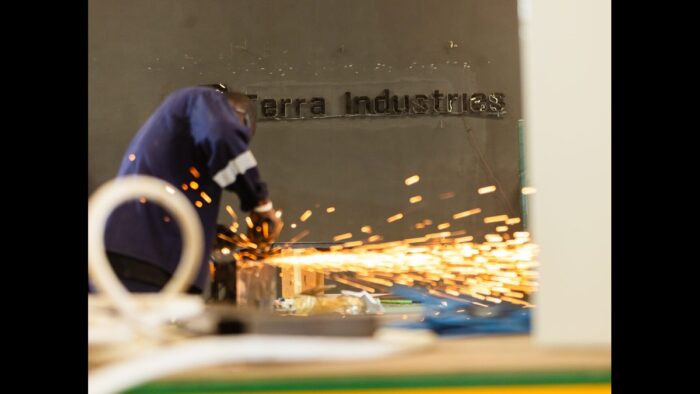
Africa’s most-funded defence technology startup, Terra Industries, is expanding beyond Nigeria with a major new drone factory in Accra, as insecurity and drone warfare rise across the Sahel region.
The company said the new facility, called Pax-2, will be the largest drone manufacturing plant on the continent when it opens in June 2026. The 34,000-square-foot factory is more than double the size of its current base in Abuja and marks Terra’s first production hub outside Nigeria.
Terra plans to scale output rapidly, targeting 50,000 drones per year by 2028. The move comes at a time when armed groups linked to al-Qaeda and Islamic State are increasingly using drones in attacks across West Africa’s Sahel region.
Recent data shows that Jama’at Nusrat al-Islam wal-Muslimin (JNIM), an al-Qaeda-linked group active in Mali and Burkina Faso, carried out dozens of drone operations between 2023 and 2025. In early 2026, an affiliate of Islamic State used suicide drones to strike an international airport in Niger, highlighting how fast the threat is growing.
Nathan Nwachuku, Terra’s co-founder and CEO, , said the expansion is part of a broader plan to strengthen Africa’s ability to defend itself without relying on foreign military systems.
“The only way Africa can have lasting peace is by building its own defence systems,” he said, adding that Ghana was chosen because of its skilled workforce and strong political support for defence manufacturing.
The new plant is expected to create about 120 engineering jobs and will produce three of Terra’s main drone systems. These include the Archer VTOL, designed for long-range surveillance and strikes; the Iroko UAV, built for quick tactical missions; and Kama, a new high-speed interceptor drone developed to counter enemy drones.
Founded in 2024 by Nwachuku and Maxwell Maduka, Terra has raised $34 million in funding this year, making it the most-funded defence-tech startup in Africa. Investors include global venture firms and backing linked to Flutterwave CEO Olugbenga Agboola.
The company operates a business model that combines hardware and software, selling drones alongside its ArtemisOS platform on a subscription basis. This approach is similar to leading US defence firms that offer integrated systems rather than standalone equipment.
Terra says it already helps protect about $11 billion worth of assets across eight African countries. These include key infrastructure such as hydropower plants, mining sites, and oil facilities, areas increasingly targeted by armed groups.
The Ghana expansion follows a partnership with the Defence Industries Corporation of Nigeria (DICON), which allows Terra to work more closely with the Nigerian military under a public-private framework.
The timing of Terra’s growth reflects a major shift in modern conflict across Africa. At least 11 countries on the continent have experienced drone-related attacks, often using modified commercial drones fitted with explosives.
While countries like Mali and Burkina Faso have invested in advanced foreign drones for offensive operations, defence against smaller, low-flying drones remains weak. Reports from the Institute for Security Studies highlight major gaps in detection and interception systems.
Terra is positioning its new Kama drone to fill that gap, offering African governments a locally built solution to counter these threats.
Construction of the Pax-2 facility is already in its final stage, with full operations expected by the end of June 2026.
However, the company’s long-term success will depend on whether it can secure large government contracts, especially from Sahel countries that are increasing defence spending and shifting away from traditional Western partners.
As drone warfare reshapes conflict in Africa, Terra’s bet is that the continent will increasingly turn to homegrown technology to protect its borders and critical infrastructure.


Join BusinessDay whatsapp Channel, to stay up to date
Open In Whatsapp