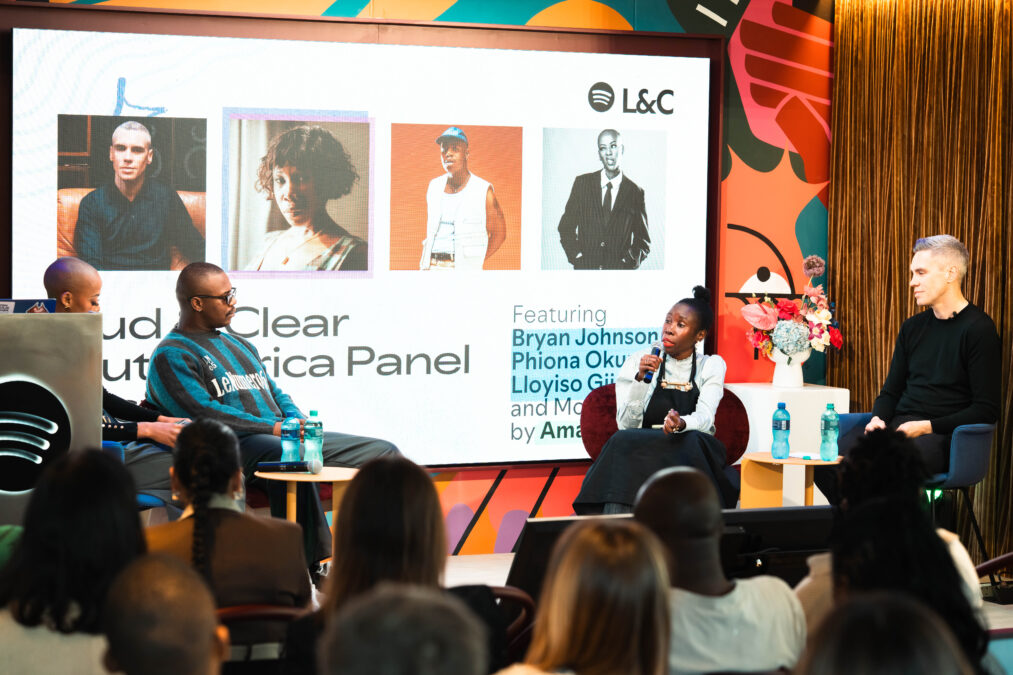
Music streaming platform Spotify has revealed that South African artists generated more than R504 million in royalties on the platform in 2025, highlighting the growing global demand for local music and the rising influence of independent artists.
The figures were released on Wednesday during the company’s annual Loud & Clear report presentation held at Spotify’s new offices in Rosebank, South Africa.
According to the report, royalties earned by South African artists on Spotify alone rose by 28 percent year-on-year in 2025, nearly doubling what artists earned in 2023. The growth also outpaced the broader South African recorded music market, which recorded an 18 percent increase in streaming revenue, based on data from IFPI South Africa.
Read also: Nigerians spent over 1.3bn hours listening to music, podcasts on Spotify in 2025
Spotify said the latest figures show that local artists are increasingly building sustainable careers from streaming, with independent musicians and labels accounting for more than half of all royalties generated by South African artists on the platform.
The report also showed that South African music is gaining strong international traction. Nearly 74 percent of royalties earned by local artists came from listeners outside South Africa, underlining the country’s growing export strength in music.
Spotify disclosed that South African artists were discovered by first-time listeners more than 1.6 billion times in 2025, representing a 40 percent increase compared to 2024. In addition, nearly 3,550 South African artists were added to Spotify editorial playlists during the year.
Local music also continued to dominate listening trends at home. South African artists accounted for 67 percent of tracks featured on Spotify South Africa’s Daily Top 50 chart in 2025.
The report highlighted fast-growing genres in the country over the last five years, including cloud rap, pop country, acoustic country, pop rap and worship music.
Female artists also recorded strong growth. Spotify said local streams of South African female artists increased by 22 percent year-on-year, while international streams of their music rose by 20 percent.
Music performed in Zulu also saw major gains, with global royalties from Zulu-language music growing by 37 percent year-on-year and more than 120 percent over the past two years.
Speaking at the event, Jocelyne Muhutu-Remy, managing director of Spotify Sub-Saharan Africa, said the report confirms South Africa’s rising position in the global music economy.
She said South African artists have become a globally dominant creative force, driven by strong worldwide demand and growing international discovery.
Read also: Spotify Wrapped 2025 is here, see your top songs, podcasts, and listening age
Solly Malatsi, South Africa’s minister of Communications and Digital Technologies, who was unable to attend the event, praised Spotify for choosing South Africa as its African hub and for investing in local creative talent.
In his statement, the minister encouraged Spotify to deepen support for African languages, promote skills development within the music industry, and improve transparency across the digital music ecosystem.
Responding during a panel session, Phiona Okumu, head of Music for Sub-Saharan Africa at Spotify, said Spotify accepts the challenge to do more in supporting African creators and languages globally.
Spotify added that African music has become a major cultural force shaping global entertainment, with cities such as Johannesburg, Lagos, Accra and Nairobi now influencing worldwide listening trends in real time.


Join BusinessDay whatsapp Channel, to stay up to date
Open In Whatsapp