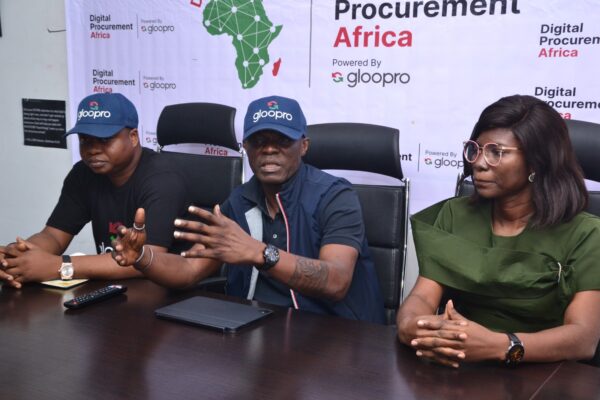
Nigeria’s vast informal supplier network could gain greater access to formal markets, financing and enterprise opportunities as business leaders prepare for the inaugural Digital Procurement Africa Summit, following a press conference held ahead of the main event scheduled for May 26 in Lagos.
The summit is being convened by Olumide Olusanya, founder and CEO of Gloopro, and organised in partnership with Remi Ibitoye of PRO-ALLY Strategic Event Management for Digital Procurement Africa.
Speaking at the press conference, Olusanya and Ibitoye outlined how digital procurement can help African businesses improve governance, reduce costs and integrate more local suppliers into formal supply chains, while positioning procurement as a strategic lever for enterprise growth and economic development.
The summit will bring together procurement executives, chief financial officers, multinational corporations, international oil companies and development institutions at Eko Hotels & Suites on Tuesday, May 26, beginning at 8:30 a.m.
Read also: NIMC turns to WhatsApp, live chat to ease identity service pressure.
Olusanya said the initiative was inspired by the lack of a dedicated platform in Nigeria for procurement leaders to discuss digital transformation. After attending the Procurement Strategy and Innovation Conference in 2025 alongside global firms such as Amazon Business, SAP and Ivalua, he returned convinced that Africa needed its own forum.
“We cannot sit back while the rest of the world is moving ahead. If not us, then who? If not now, then when?” Olusanya asked.
A key focus of the summit is bridging the gap between global enterprise systems and Africa’s largely informal supply chains. Many large organisations use enterprise resource planning platforms such as SAP and Oracle, but these systems are designed for structured markets and often struggle to capture local supplier data.
Olusanya said Gloopro has developed a procurement control layer that enables multinational companies to connect these systems to African suppliers, converting unstructured market information into usable enterprise data. In one case, a multinational client used the platform to integrate Nigerian supplier catalogues into its global procurement infrastructure.
According to him, the summit will feature procurement leaders who have already implemented digital procurement initiatives, sharing practical lessons on how organisations can reduce procurement cycles from several weeks to just days, strengthen compliance and improve efficiency.
Read also: Interswitch deploys smart parking system at Asaba International airport to improve operations.
Beyond operational gains, Olusanya said digital procurement could significantly boost financial inclusion. By capturing supplier transaction and performance data, small vendors can build credible business profiles and gain access to financing without traditional collateral. This potential has attracted interest from Moody’s, which sees opportunities to use procurement data to assess vendor creditworthiness and support business expansion.
The approach is particularly relevant in sectors such as oil and gas, where local content regulations require multinational companies to source from domestic suppliers, creating new opportunities for indigenous businesses to participate in formal supply chains.
Ibitoye said the summit was designed to foster collaboration among procurement leaders and accelerate Africa’s adoption of modern procurement practices. “The vision is to bring procurement executives, C-levels and CFOs into one room to examine how digital procurement is evolving globally and how Africa can move in that direction. Procurement must become a strategic issue for Africa,” he said.
The event will also explore the role of artificial intelligence in procurement, although Olusanya stressed that AI can only deliver value when organisations first establish reliable and structured data systems.
The initiative is described as the beginning of a long-term effort to modernise procurement across Nigeria and sub-Saharan Africa, improve operational efficiency, strengthen governance and expand economic inclusion through more connected supply networks.


Join BusinessDay whatsapp Channel, to stay up to date
Open In Whatsapp