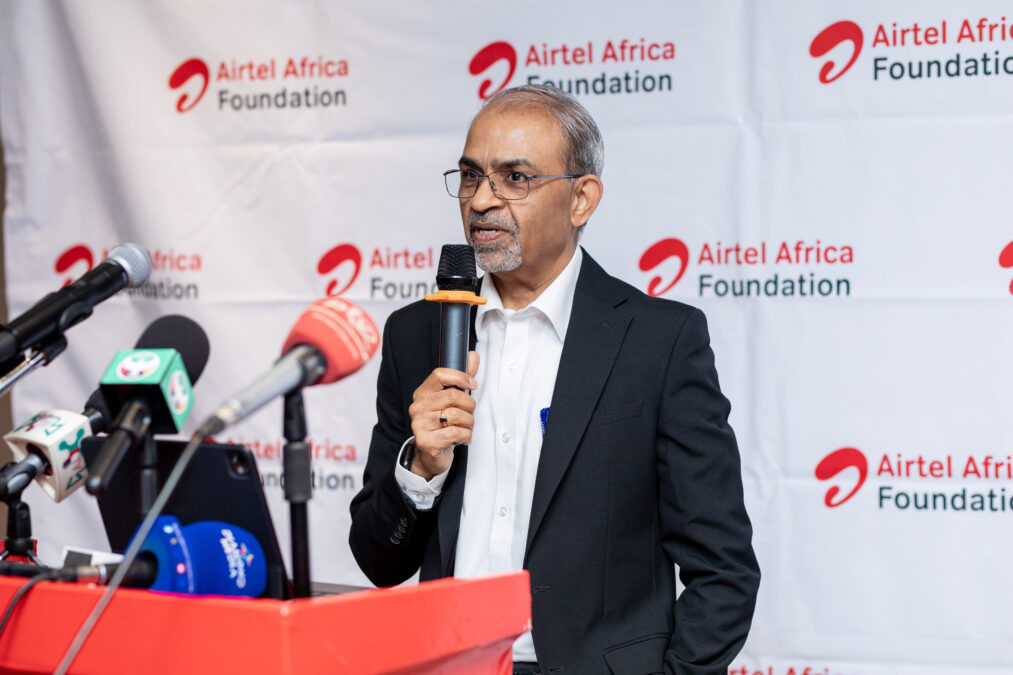
Airtel Africa says it has cut its diesel consumption by 9.1 million litres in one year, signalling a major shift towards cleaner and more efficient network operations, even as African telecom operators face rising energy costs, stricter climate expectations and increasing demand for network expansion.
The company announced that the reduction was achieved during its 2025/2026 financial year by reducing dependence on diesel generators and expanding the use of lower-carbon energy sources across its operations in 14 African countries.
Read also: Nigeria’s tycoon Elumelu to step down as UBA chair after 12 years
Speaking during a media roundtable in Lusaka, Zambia, Sunil Taldar, Airtel Africa chief executive officer, said the company converted 390 telecom infrastructure sites from diesel-powered operations to national electricity grids during the year. The move, he said, improved operational efficiency while significantly lowering carbon emissions.
The announcement highlights a growing trend among African telecom companies to reduce the high cost of powering network infrastructure. With unreliable electricity supply in many countries forcing operators to rely heavily on diesel generators, energy has become one of the biggest operating expenses for the industry.
Reducing diesel consumption not only lowers operating costs but also strengthens long-term business sustainability as investors increasingly pay attention to companies’ environmental performance.
Beyond cutting diesel use, Airtel Africa said it recycled 94 percent of all waste generated during the financial year as part of its efforts to promote a circular economy and reduce its environmental footprint.
Taldar said responsible business growth remains at the centre of Airtel Africa’s strategy.
According to him, the company aims to expand digital connectivity across Africa while ensuring that growth does not come at the expense of the environment.
He noted that Airtel Africa’s network now reaches 81.9 percent of the population across its 14 markets, giving millions of people greater access to communication services, digital information, education and economic opportunities.
The company also reported significant progress in financial inclusion through its mobile money business.
Airtel Money now serves 54.1 million customers through a network of 2.4 million agents, making it one of the continent’s largest digital financial services platforms.
One notable achievement, according to the company, is that women account for 44.1 percent of Airtel Money users, reflecting increasing access to formal financial services for female entrepreneurs and underserved communities.
The expansion comes at a time when digital financial services are becoming increasingly important in Africa, where millions of people remain outside the traditional banking system.
Beyond its commercial operations, Airtel Africa said its charitable arm, the Airtel Africa Foundation, invested $6.2 million during the year in projects focused on financial inclusion, education, environmental sustainability and digital inclusion.
Education remained a major focus of the company’s social investment programmes.
Working with UNICEF, Airtel Africa connected 3,296 schools to free internet services, helping more than two million students and 38,868 teachers gain access to online educational resources.
The company also supported 64 zero-rated digital learning platforms, enabling more than 11 million learners to access educational content without paying for data.
Recognising the growing demand for digital skills across Africa, Airtel Africa said it trained more than 30,000 young people in digital skills during the year.
It also awarded more than 250 undergraduate STEM scholarships through its Airtel Africa Tech Fellowship Programme to help develop the next generation of scientists, engineers and technology professionals.
The latest sustainability figures suggest that Airtel Africa is increasingly linking its commercial growth strategy with environmental responsibility, digital inclusion and social development.
The company currently serves more than 183.5 million customers across sub-Saharan Africa through its telecommunications and mobile money businesses.
As demand for mobile broadband, cloud services and digital payments continues to rise, telecom operators will face mounting pressure to expand their networks while reducing carbon emissions and improving energy efficiency.
For Airtel Africa, the latest results indicate that sustainability is becoming more than a corporate responsibility initiative, it is increasingly shaping how the company manages costs, attracts investment and competes in Africa’s rapidly evolving digital economy.

Join BusinessDay whatsapp Channel, to stay up to date
Open In Whatsapp