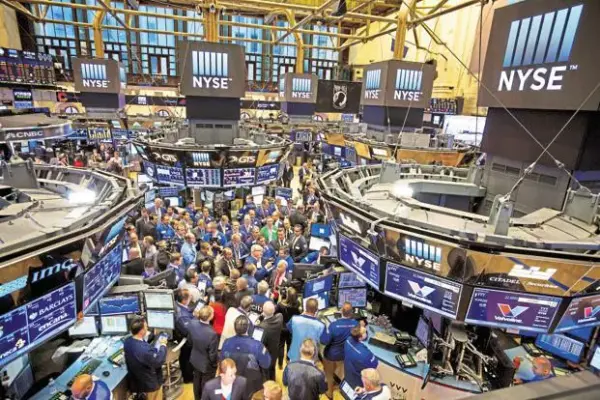
US equity markets are moving more money than ever, with daily share turnover surpassing $1 trillion even as volatility remains subdued — underscoring a structural shift in trading activity rather than a short-term surge driven by market stress.
New data compiled by Bloomberg Intelligence show equity turnover averaged a record $1.03 trillion in January, roughly 50 percent higher year on year compared with the same period in 2025. More than 19 billion shares changed hands daily during the month, the second-highest level on record.
One explanation is straightforward: the rally itself. As stock prices rise, more capital is required to transact the same number of shares. The S&P 500 gained 15 percent in the 12 months through January, mechanically lifting the dollar value of trading.
Yet the persistence of elevated activity points to deeper structural forces. Trading volumes have exceeded 15 billion shares per day for 13 consecutive months — a threshold that had been breached only three times before 2025.
“There’s more trading from retail, pod shops, hedge funds and market makers, while automated trading is more prevalent than ever,” said Jackson Gutenplan, intelligence market-structure analyst at Bloomberg. “To a certain extent, trading incentivizes more trading. Greater liquidity makes it easier to enter and exit positions.”
Participation broadens despite valuation concerns
The jump also reflects rising participation across both retail and institutional investors as US equities hover near record highs. However, the influx is unfolding alongside concerns about stretched valuations, increasing the stakes for investors crowding into the market.
Notably, last month’s surge in turnover occurred without a spike in volatility. The Cboe Volatility Index averaged 16.2, suggesting market calm rather than turmoil. Some analysts described the pattern as evidence of “strong, sustained liquidity” rather than episodic stress-driven trading.
Across 2025, 93 trading sessions saw volumes exceed 18 billion shares — about 37 percent of all trading days. In January alone, 14 of 20 sessions crossed that mark, or 70 percent, compared with four percent of days in the previous year.
Structural shifts reshape market behaviour
Market participants point to several structural drivers behind the surge, including the rise of zero-day-to-expiry options, deeper retail engagement via brokerage platforms such as Robinhood and Schwab, and the continued expansion of exchange-traded funds, all of which can amplify turnover.
Sector rotation also played a role. Investors shifted away from megacap technology stocks toward lagging sectors such as energy, materials and industrials, producing the sharpest market broadening in five years, according to Société Générale.
With trading volumes increasingly decoupled from volatility, there are expectations from Bloomberg that elevated turnover to remain a defining feature of US equity markets. “Even in the absence of market shocks, we expect this heightened level of activity to persist.”

Join BusinessDay whatsapp Channel, to stay up to date
Open In Whatsapp